Excavator Export Map Shifts: Africa Up 47%, Latin America Up 61%
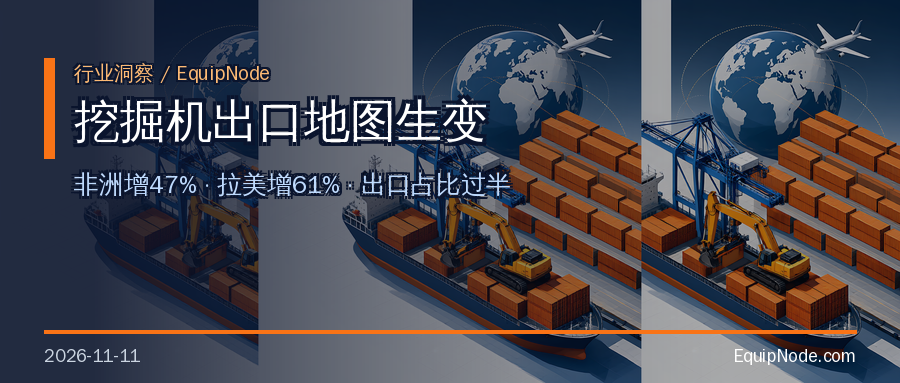
China's construction machinery export map is being redrawn. Data from the China Construction Machinery Association shows that cumulative excavator exports reached 109,744 units in January–September 2026, up 30.4% year on year, with exports accounting for 56.4% of total sales and posting 26 consecutive months of positive year-on-year growth. On the same basis, the industry's total export value was $53.514 billion, up 22% year on year, with September alone exporting $6.952 billion, a 31.9% surge. But the real story is not the total — it is the direction. Growth in Asia and Europe, the two traditional core markets, has slowed to single or low double digits; what is carrying the increment is Africa and Latin America. In the first eight months, excavator exports to Africa reached $2.31 billion, up 47% year on year, while exports to Latin America reached $1.03 billion, up 60.7%.

The export map shifts: the growth is no longer in Europe or America
According to General Administration of Customs data, China's construction machinery exports totaled $46.614 billion in January–August 2026, up 20.8% year on year. Broken down by region: Asia $2.90 billion (+13.9%), Europe $1.59 billion (+4.2%), Africa $2.31 billion (+47%), and Latin America $1.03 billion (+60.7%). Europe is now the slowest of the four regions, while Africa's export volume is approaching 1.5 times that of Europe and continues to widen the gap.
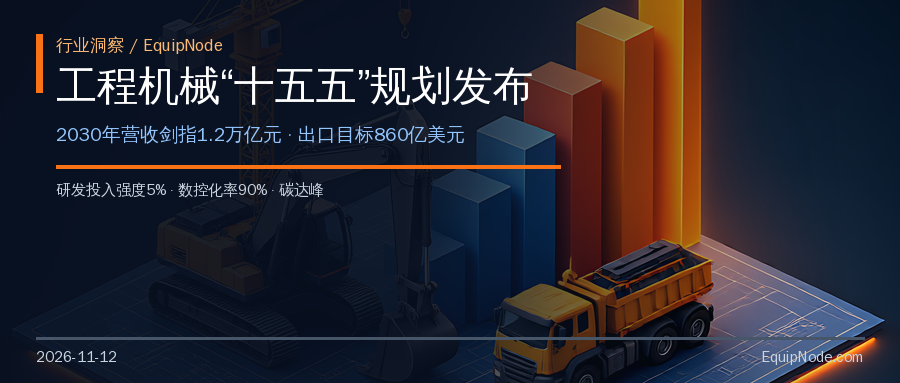
This is fundamentally different from the previous export cycle (2017–2019). That round was driven by replacement demand in European and American markets and complete-package projects along the Belt and Road; this round's growth is clearly shifting to emerging markets: Africa, Latin America, Southeast Asia, and the Middle East. The loader trend is even steeper — loader exports reached 58,717 units in January–September, up 34.2% year on year, 17.5 percentage points faster than domestic sales, with exports exceeding domestic sales by volume for the first time.
Why Africa and Latin America took the baton
Chasing Securities' breakdown points to the core reason: about 75% of excavator demand in Africa comes from mineral extraction, and emerging markets are markedly less sensitive to the commodity cycle than Europe and America — commodity prices fluctuate, but mine capital expenditure plans do not turn on a dime the way US and European housing starts respond to interest rates. On top of that, Chinese manufacturers have spent the past five years steadily deepening their channels, service, and spare parts networks, so "easy to buy, quick to repair" is no longer a question in Nigeria, Indonesia, and Chile — it is a real competitive advantage.
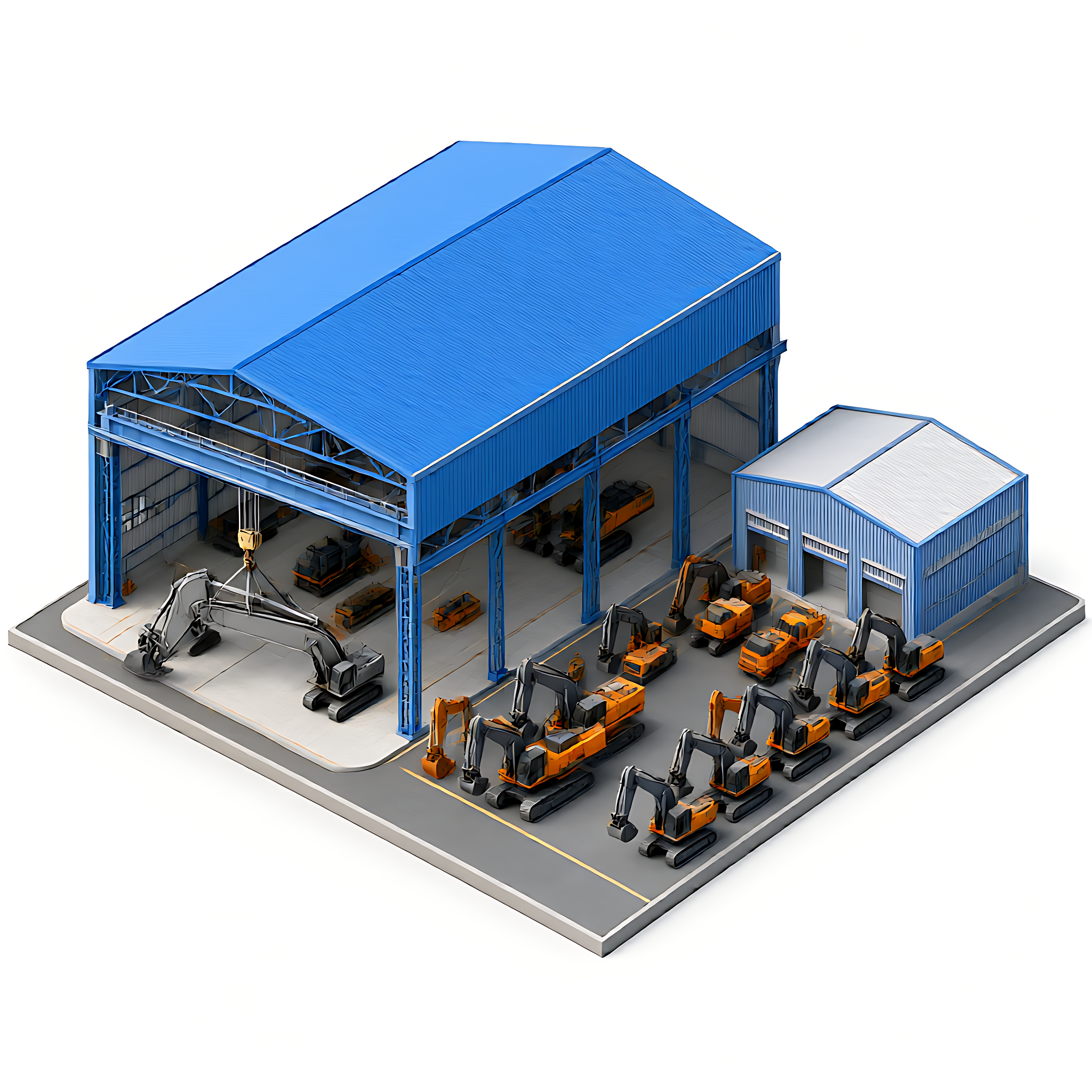
By country: among tracked excavator export destinations in January–February, the United States ranked first with 10,037 units, followed by Indonesia with 4,745 units — yet Indonesia ranked first by export value ($220 million). The volume is in the emerging markets, and the money is increasingly concentrating there too. Indonesia has topped the export value ranking for multiple months, backed by steady local mining and infrastructure activity.
From selling equipment to industrial expansion: building plants at the doorstep
Export value is only the first half of the story. Sany Heavy Industry reported overseas sales revenue of RMB 32.040 billion in the first half of 2026, up 21.82% year on year, with overseas revenue reaching 61.33% of main business revenue — the first industry leader to exceed a 60% overseas share. Its Indonesian plant's localization rate for complete machines has risen to 75%, cutting complete-machine production costs by 9.6%, and its Brazil base has capacity for 3,000–4,000 excavators per year. XCMG Machinery recorded overseas revenue of RMB 45.41 billion in the first three quarters, up 20.8% year on year, and its Indonesia new-energy plant has begun production at the Weda Bay Industrial Park. Zoomlion reported overseas revenue of RMB 23.137 billion for the first three quarters, a 57.81% share, with a localization rate of service exceeding 60%, supported by more than 30 first-tier business aviation ports and over 550 sales and service outlets. LiuGong's India plant phase two is in production, and its Indonesia plant is expected to be completed next year.
This is why manufacturers are accelerating overseas plant construction even as exports hit $53.5 billion in the first nine months — any swing in tariffs, exchange rates, or logistics costs will eat into the margin of a pure-export model, and local manufacturing is the only hedge.
The cost of going global: profits consumed by currency conversion
Going global has a less glamorous side. Among the 22 listed construction machinery companies tracked by Wind, currency movements alone cut aggregate profit by roughly RMB 7.9 billion in the first half alone. Sany posted an exchange loss of about RMB 2.97 billion in the first three quarters (against an exchange gain of about RMB 280 million in the same period last year); XCMG's financial expenses were about RMB 2.15 billion in the first three quarters; Zoomlion's net profit attributable to shareholders, excluding exchange effects, was RMB 3.781 billion, up 1.87% year on year. Industry-wide revenue for the first three quarters was RMB 335.8 billion, up 13.4% year on year, yet net profit fell 4% — classic revenue growth without profit growth, and the culprit is not demand but the mismatch between accounting currency and revenue currency. How much currency conversion actually ate into profits in the Q3 reports — we broke this down in full previously.
For buyers, this is in fact a negotiation signal: manufacturers' overseas profit cushions vary widely, and pricing room, payment terms, and spare parts policies in emerging markets are often more flexible than in mature markets.
The electrification gap: 9.84% versus 58.64%
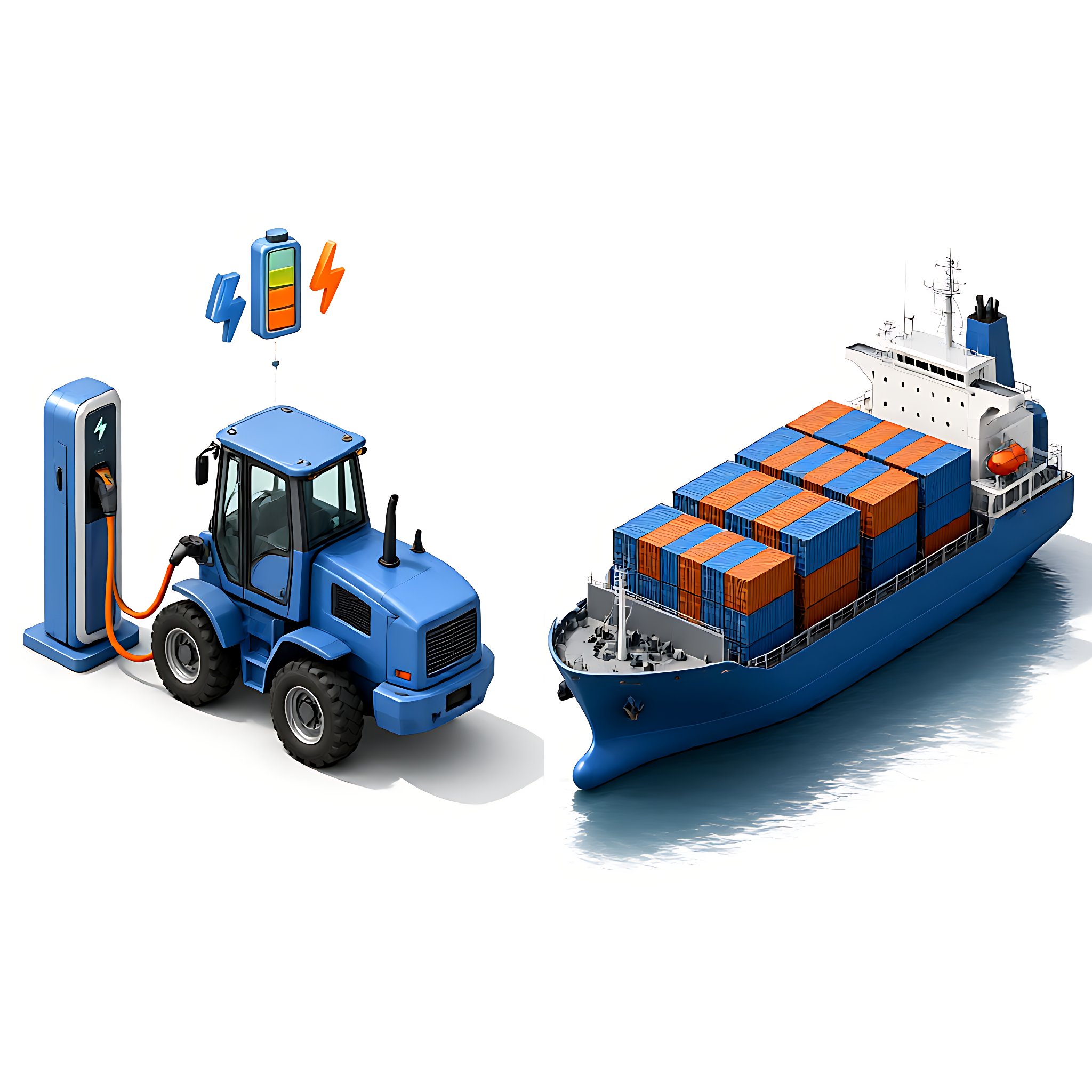
One last contrast is worth recording: electric products accounted for 58.6% of domestic loader sales in September 2026, with 33,865 domestic electric loaders sold cumulatively in January–September; yet electric loader exports over the same period were only 3,229 units, an export electrification rate of just 9.84%. The benefits of electrification are currently staying almost entirely in the domestic market. Whoever carries it overseas — selling charging solutions, battery maintenance networks, and localized service together — may rewrite the next round of the export map. Cumulative excavator exports exceeded domestic sales for the first time in October already shows the weight of external demand; the next watershed is not unit counts, but structure.
In closing
With exports now more than half of sales, competition in China's construction machinery has shifted from "selling out" to "rooting in": chasing growth from Africa and Latin America by region, chasing profit from localization in manufacturing, and chasing premium from electrification in products. For overseas buyers, this means denser service networks, more localized spare parts supply, and a more competitive procurement window.
For the latest export quotes and lead times on Sany concrete pumps, electric loaders, or mining equipment, contact our sales team. EquipNode provides one-stop support for machine selection, cross-border logistics, and localized after-sales service.