5G Remote Excavator: How SANY Holds 120 ms Latency
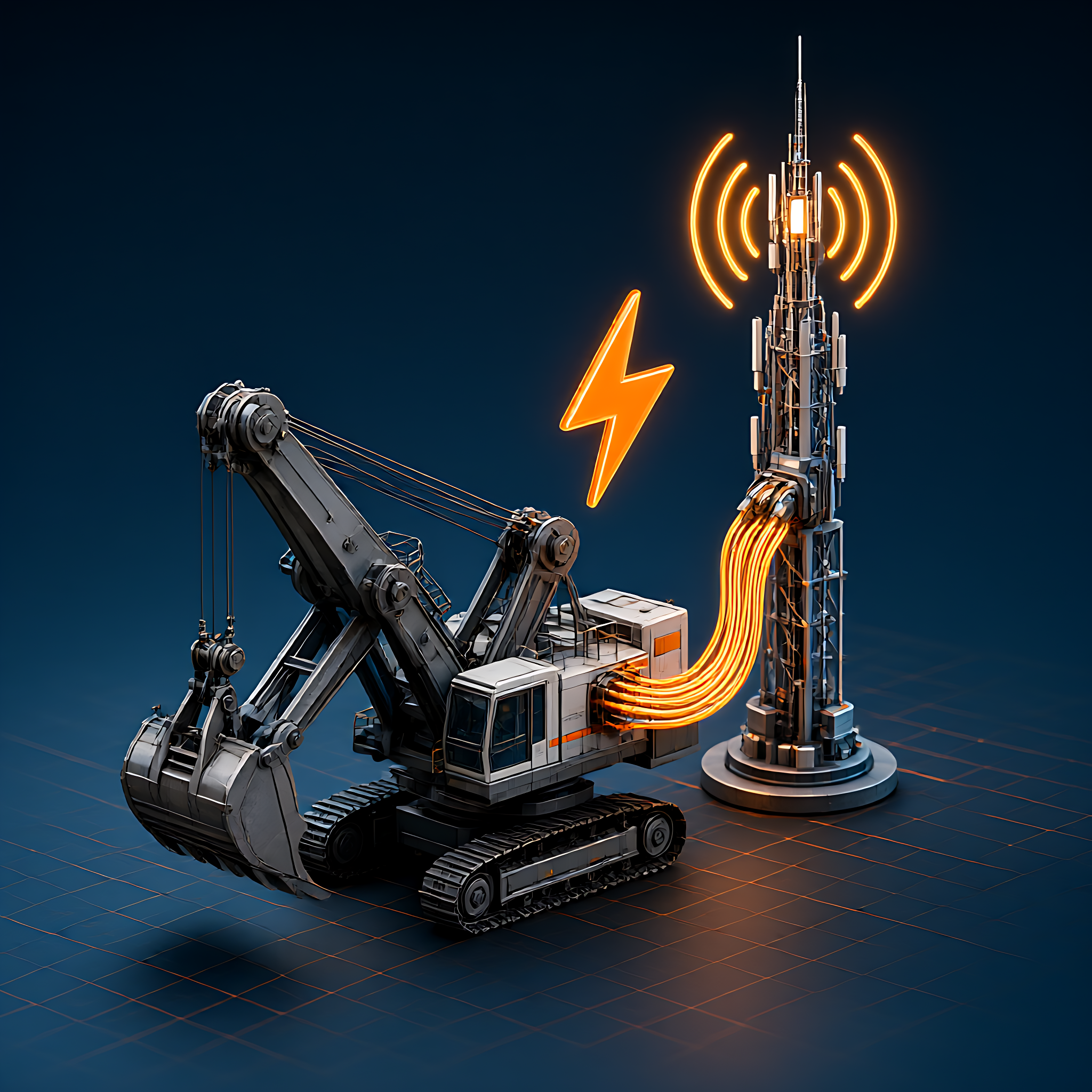
Moving the operator console out of the cab and a thousand kilometers away, while still doing millimeter-precision work — this is not a concept film, it is a product you can already order. On May 7, 2026, SANY Group announced that its 1,000th electric excavator rolled off the production line, and at the same time disclosed that the SY550HD 5G remote-controlled excavator has completed nearly a decade of R&D and entered commercial deployment: end-to-end latency holds steady at 120 to 140 milliseconds, and it can be operated in real time from as far as 8,500 kilometers away. Meanwhile, Hitachi Construction Machinery launched "physical AI" R&D in September to let machines learn the techniques of veteran operators, Caterpillar partnered with FieldAI in September on equipment automation, and Silicon Valley Bank's October report directly concluded that autonomous construction machinery has reached a "tipping point." Remote operation and unmanned operation are moving from trade-show demonstrations to formal line items on procurement lists.
120 Milliseconds: Where Is the Threshold for Remote Operation?
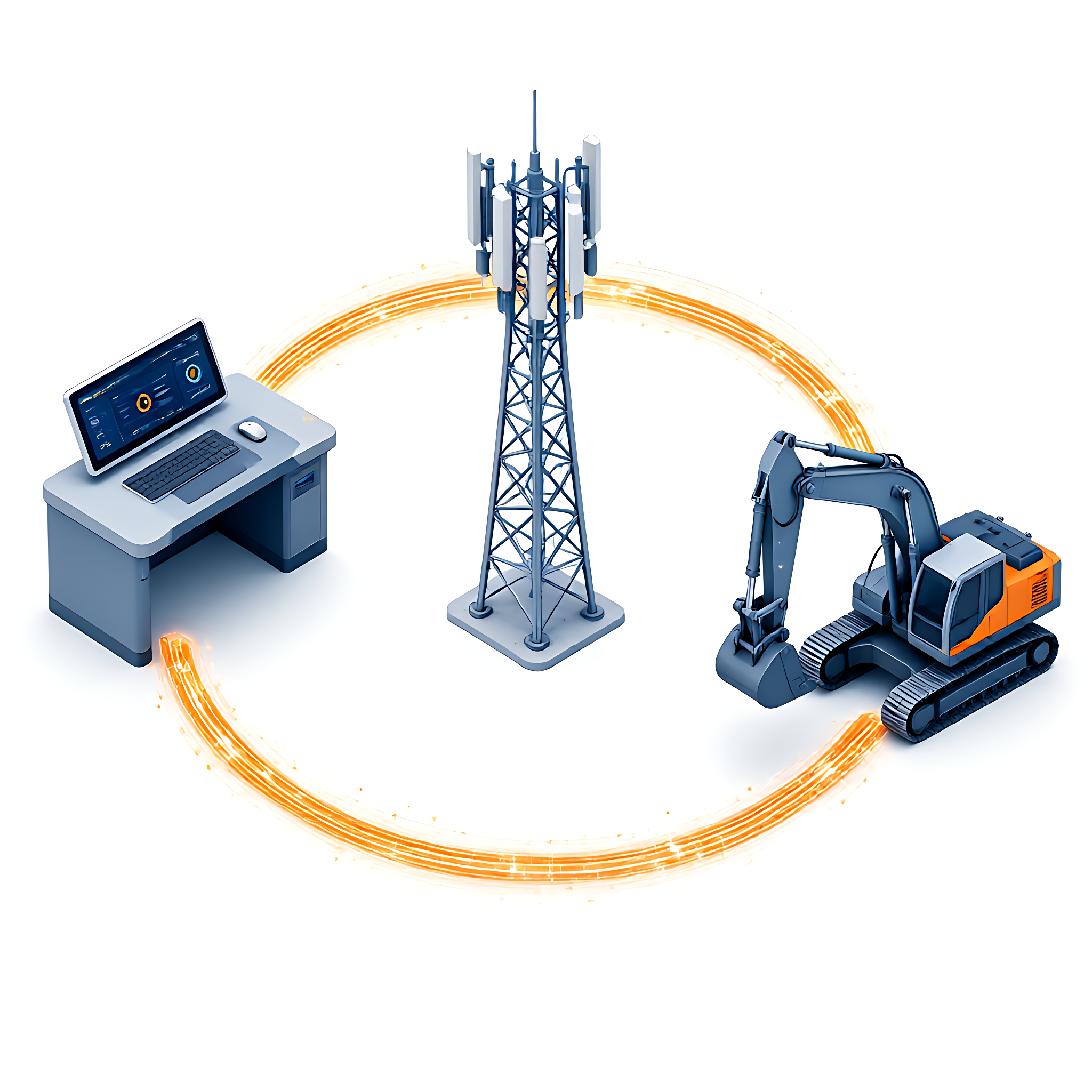
The industry's common end-to-end latency is 120 to 180 milliseconds, and within that range the feel differs a great deal. SANY's published figures show 5G plus AI algorithms pressing latency steadily down to 120 to 140 milliseconds — roughly equal to a person's natural "see-to-act" reaction time sitting in the cab, so the operator's subjective feel is close to driving the machine on site. Once it exceeds 200 milliseconds, swing and bucket movements visibly "lag behind the hand," producing overshoot and secondary corrections, and loading efficiency drops noticeably.
Holding latency down relies on more than bandwidth. Early remote-control solutions had poor experience and unstable connections; SANY invested nearly a decade of R&D into this, and the resulting SY550HD supports public networks, private networks, and hybrid networks, and can work across regions and across network types — a dedicated network at the mine, a public network at the jobsite, no dropped link when switching between them. That is the precondition for its claim of "real-time control from 8,500 kilometers away." The same approach has a more practical landing in SANY's product line: remote control plus semi-autonomous unmanned digging and loading work, with official efficiency rated at 80% of human labor.
Precision: Millimeter Level Comes from 3D Perception, Not Luck
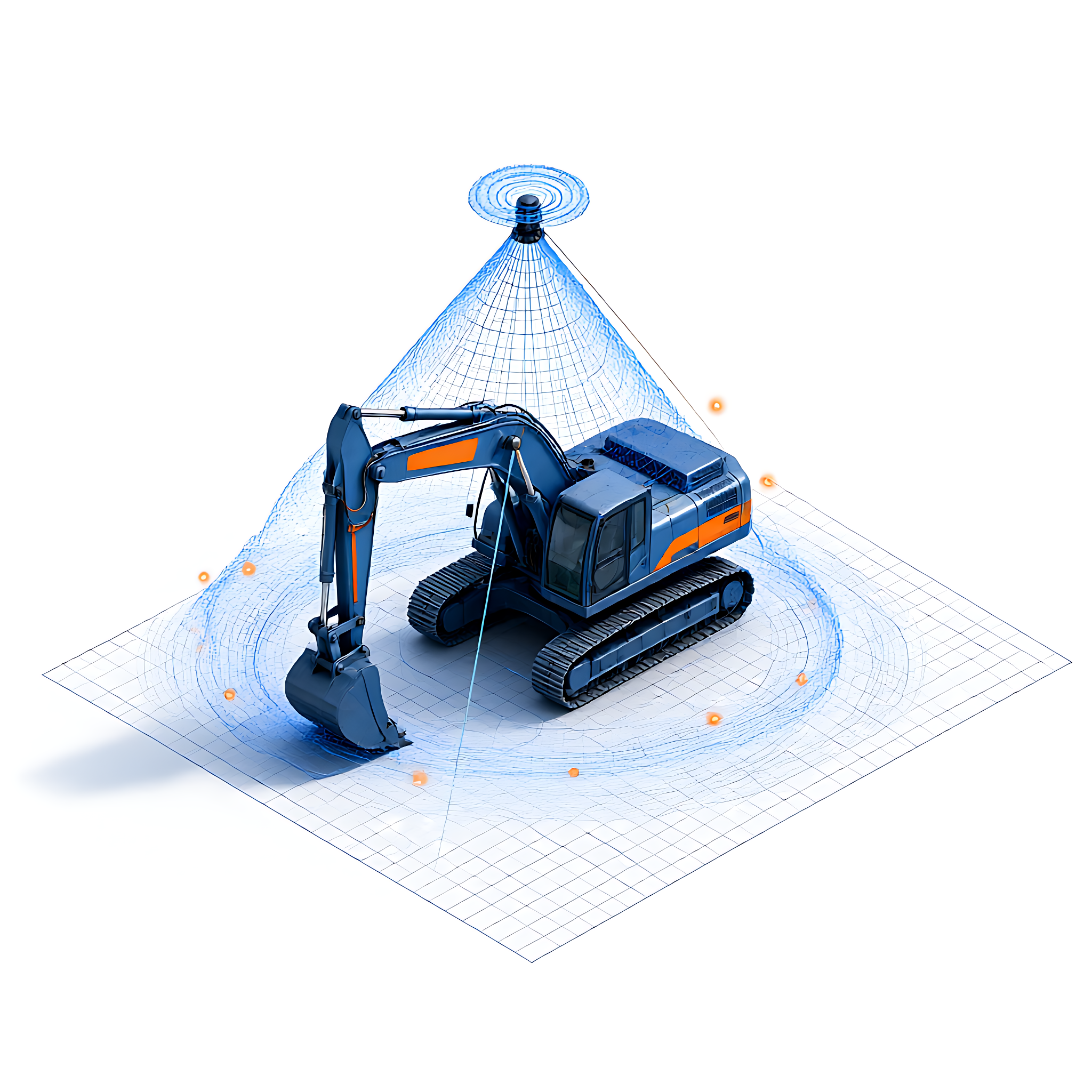
Latency solves "keeping up with the hand"; precision solves "daring to let someone do fine work remotely." SANY's self-developed 3D motion and depth perception technology, paired with an intelligent loading assistance system, can recreate on-site operating conditions and give the operator operation-grade situational awareness — in scenarios where people cannot go or should not go, such as mines, remote jobsites, and emergency response, executing millimeter-level movements on the strength of 3D spatial perception.
The safety side is a separate system: multi-dimensional sensors plus AI algorithms form a millisecond-response digital safeguard, covering personnel detection, intelligent anti-collision, and equipment health monitoring; the machine autonomously collects point-cloud data and real-time video, supporting environmental awareness, risk identification, and task adaptation. The official summary of this division of labor is one line — the machine handles perception, the human stays in control, and the remote system coordinates execution. Note the order: at this stage nobody dares to let the machine decide everything; the human is always in the loop.
Product Lineup: Three Tiers — Short-Range, Remote, Semi-Unmanned
All of them are called "remote-controlled excavators," but the three tiers differ completely in capability and applicable scenarios, and are easy to confuse when purchasing:
| Tier | Configuration | Key specifications | Typical scenarios |
|---|---|---|---|
| Short-range remote | On-site remote console | Continuous operation ≤20 hours; four links: data, video feed, mobile app, RC transmitter | Emergency takeover, confined spaces, tunnels |
| Remote | Cross-regional 5G console | 120–140 ms latency, up to 8,500 km, public/private hybrid networking | Mines, remote jobsites, hazardous zones |
| Semi-autonomous unmanned | Remote control + automated digging and loading | 80% of manual efficiency, one-key multi-machine control | Ports, batch loading and hauling at mines |
Supporting capabilities also include: adaptive fast switching between 5G and Wi-Fi networking, all-weather remote wake-up (one-key power on/off, engine start, engine stop), real-time vehicle monitoring and alerts, plus an upgrade path into a dispatch middleware and emergency supervision platform for smart mines and unmanned terminals. Put plainly, what you are buying is not just a machine but an operating system that can expand outward.
The AI Second Track: From "Operating for People" to "Learning the Master"
Remote control solves "the person is not on site"; AI has to solve "the person on site may still not be optimal." This track has seen dense moves over the past three months:
- Hitachi Construction Machinery (September 9, 2026) launched "physical AI" R&D, letting the system learn the real skills of hydraulic excavator operators;
- Caterpillar (September 4, 2026) partnered with FieldAI to advance equipment automation;
- Silicon Valley Bank (October 2026) concluded across two consecutive reports that autonomous construction machinery has arrived at "AI's tipping point";
- Xuzhou (October 31, 2026) released an "AI + Construction Machinery" development initiative; in the same period the industry's first "Embodied Intelligence Empowering High-Quality Construction Machinery Dataset" debuted (October 20), and the full text of the Construction Machinery Industry "15th Five-Year Plan" development plan was also released in October.
Chinese manufacturers' investment is real money: SANY spends more than 6 billion RMB a year on R&D, with an explicit goal of shifting from a traditional manufacturer to a company "centered on robotics and empowered by AI." Precedents already exist — fully unmanned excavators winning orders and a contract for 300 unmanned mining trucks (see Six Hundred Million Dollars Collected, Unmanned Excavators Have Really Started Working) — technological reserves and capital bets are both in place.
Electrification and Unmanning Are Converging
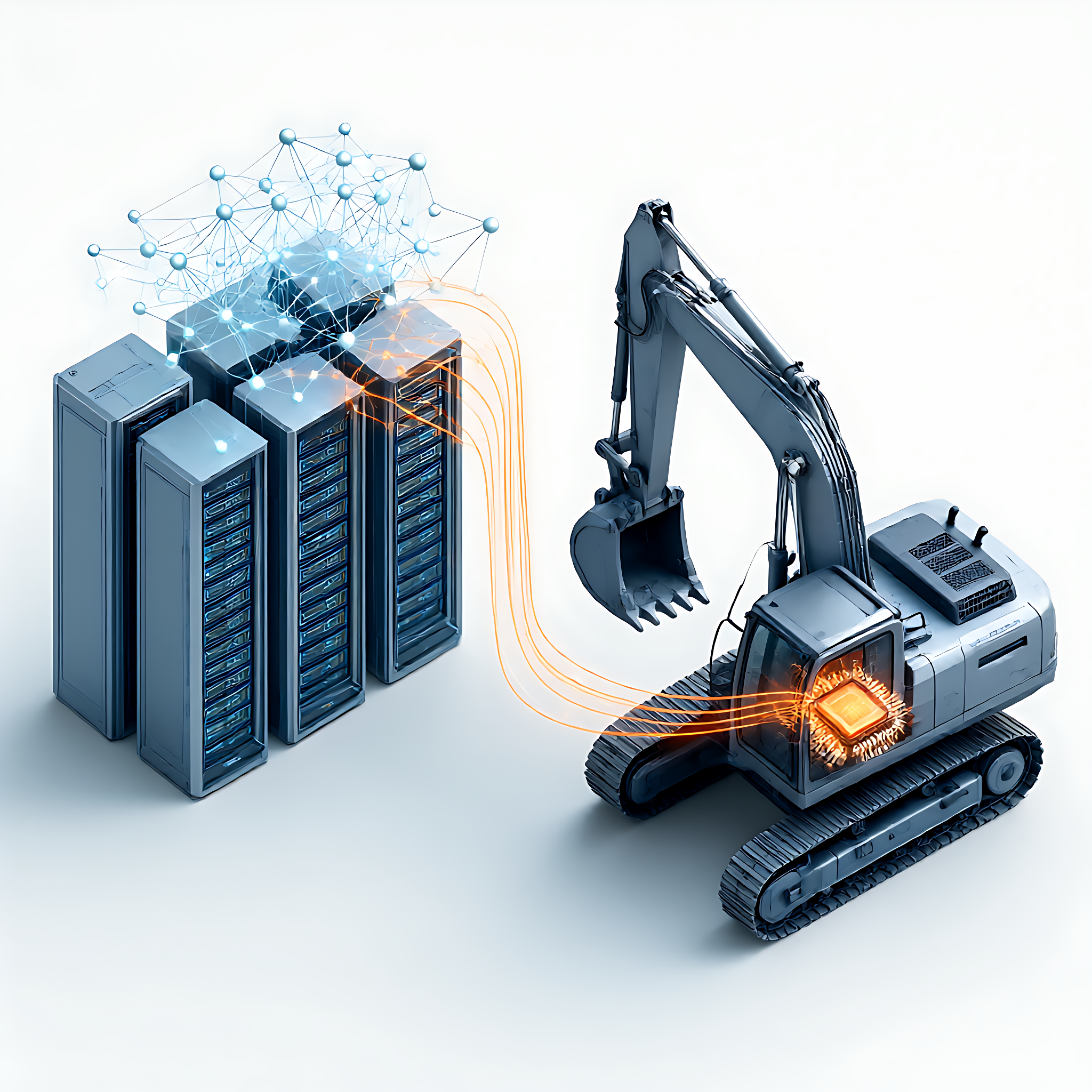
The two tracks originally went their own way; now they clearly intersect. Electric equipment is inherently easier to remote-control: low-voltage electrical architecture, fast drive-by-wire response, no engine noise or vibration, so the operator is more comfortable at the remote console. Conversely, unmanned operation depends heavily on "predictable motion," and the precisely controllable torque of electric platforms fits that perfectly. As SANY's 1,000th electric excavator rolled off the line, a fleet of unmanned rollers was already in service, and integrated smart solutions for ports and mines have gone live; Yutong Heavy Industry's unmanned equipment entered commercial batch application in April 2026. The bigger backdrop is the penetration of electrification — domestic excavator sales in October 2026 already included 183 electric excavators (see October Excavator Sales Up 11.8%, Cumulative Exports Surpass Domestic Sales for the First Time), and electrification of large mining equipment is accelerating too, with the Liebherr 250-tonne electric excavator the latest example. To see which electric and unmanned new products launched that month, also read Electric and Unmanned Land Together: A Review of October's New Construction Machinery Models.
bauma CHINA 2026: The Real Test in Two Weeks
This batch of technologies will soon face a public exam. bauma CHINA 2026 will run November 23–26 at the Shanghai World Expo Exhibition and Convention Center and November 24–27 at the Shanghai New International Expo Center in a "one show, two venues" format, covering 400,000 square meters total, expected to bring together more than 4,000 exhibitors from over 30 countries and regions, under the theme "New Quality Without Boundaries · Symbiotic Future." The show has set aside a dedicated zone for new-energy technology and intelligent solutions, covering battery-electric, hybrid and hydrogen machines, charging and swapping equipment, remote intelligent control systems, communications and navigation, and 5G — every technology track mentioned above will give its own answer on the show floor.
Three Judgments Every Buyer Must Make
Network: Does the mine or port have a 5G dedicated network or a stable public network? Does the equipment support public/private hybrid networking and degraded operation when the link drops? This is the precondition for remote control being usable at all.
Conditions: highly repetitive loading and hauling suits the semi-autonomous tier best (the 80%-of-manual one); emergency scenarios with lots of variation and sudden situations still need a human watching at this stage.
Takeover: What is the degradation strategy when latency spikes or the link drops? Have operator training and on-site standby costs been counted in?
Answer these three questions clearly; only then do brand and price mean anything.
EquipNode provides machine selection and quotation services for SANY, XCMG, LiuGong, Zoomlion and other brands. For the latest quotes and delivery lead times on the SANY SY550HD remote-controlled excavator, electric excavators, or unmanned equipment, feel free to contact us; our team will recommend a configuration based on your working conditions.