Global Excavator Sales Hit 570,000 Units as China Share Climbs to 30%
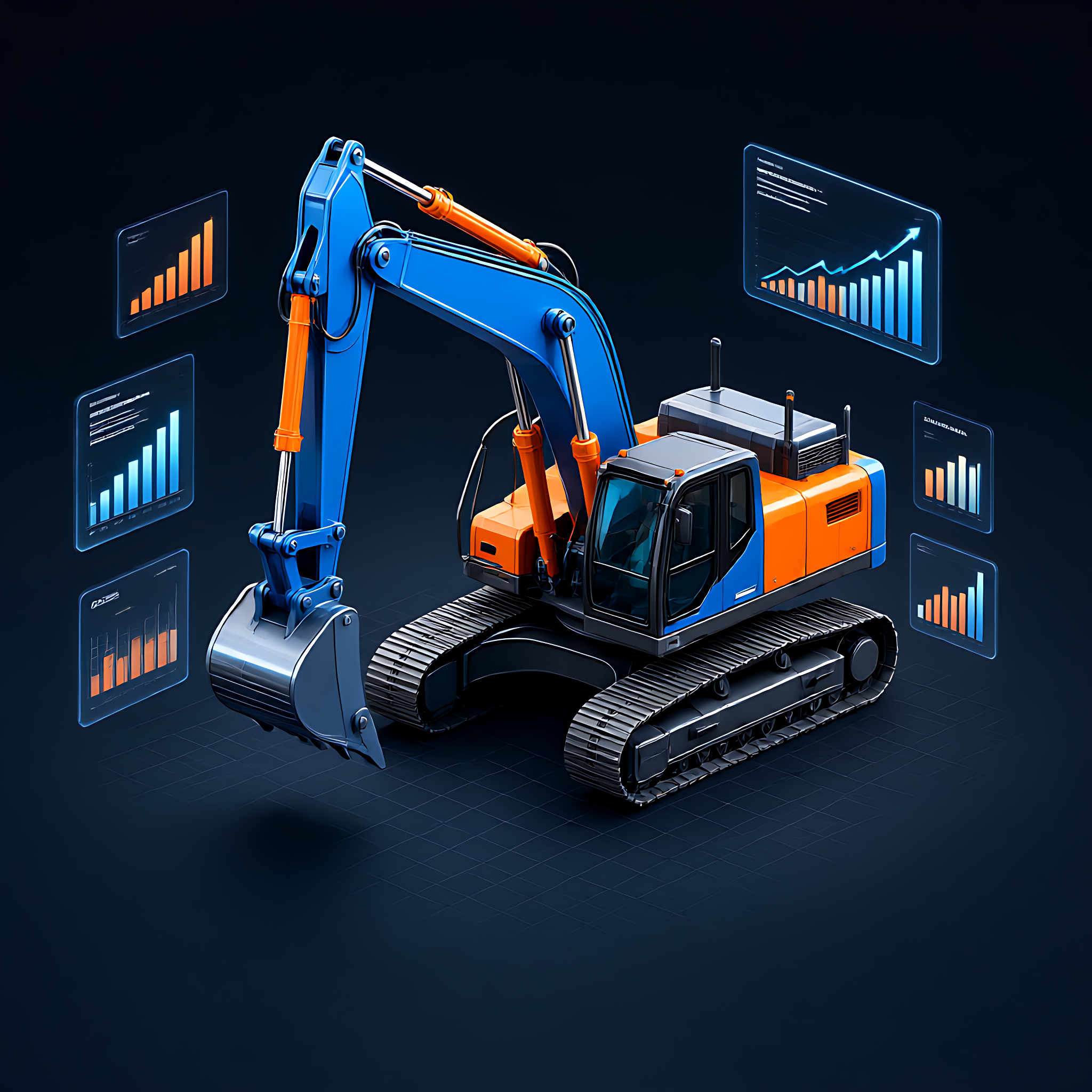
International analysis firm Off-Highway Research published a special report, *Global Hydraulic Excavators*, in September 2026, and Construction Briefing carried its core conclusions on October 15: excavators now account for roughly half of all construction equipment sold worldwide — a share that stood at only about one-third twenty years ago. For equipment makers, exporters and buyers alike, this set of figures says more about the structural shift underway in the industry than any monthly sales table.
Half of All Construction Equipment Is an Excavator

The report shows that more than 570,000 units of excavators were sold worldwide in 2025, covering the three major categories — mini excavators, wheeled excavators and tracked excavators — with total retail value of about US$65 billion. On average, for every two pieces of construction equipment sold anywhere in the world, one is an excavator.
This is a lead in volume, but also a concentration of value. A US$65 billion retail pool makes the excavator the single largest slice of the pie within any one category, and it explains why OEMs, component suppliers and rental companies are all building their strategies around it.
| Metric | Excavators | Construction Equipment Overall |
|---|---|---|
| 2025 global unit sales | More than 570,000 | — |
| 2025 retail value | About US$65 billion | — |
| Long-term annual CAGR | 4.6% | 3.5% |
| Share of global unit sales | About 50% | 100% |
4.6% vs 3.5%: Why Excavators Keep Outperforming the Market
The long-term compound growth comparison in the report is straightforward: excavator demand compounds at 4.6% a year, while construction equipment overall grows at 3.5%. Over the past two decades, excavators have beaten the wider industry, and the firm expects that trend to continue.
The reasons are not complicated. The excavator is the most versatile earthmoving platform: fitted with a breaker, grapple or hydraulic shear, it can work across completely different job types. The first machines to arrive on urbanization, infrastructure and mining projects are usually excavators. Growth is especially pronounced in emerging markets: in some developing countries, excavator sales have grown 7-fold to more than 20-fold over the past twenty years, the most elastic segment in the entire industry.
A Decade of Chinese Comeback: From 6% to 30%

Share movement is the most persuasive metric. Ten years ago, Chinese brands held just about 6% of global excavator sales, while Japanese makers stood as high as 49%. By 2025, China's share had climbed to 30% and Japan's had fallen to 34%, narrowing the gap to 4 percentage points. A decade ago, no one would have imagined that a market dominated by Japan could be reeled in this far within a single decade.
Worth noting: about 10% of the excavators produced globally in 2025 were made in China but sold under non-Chinese brands — China is at once the largest source of incremental growth and the most important manufacturing base. This dovetails with the overseas expansion of SANY, XCMG and Zoomlion: the Q3 construction-machinery reports show that leading OEMs are earning an increasing share of their profits overseas, while excavator exports cumulatively overtaking domestic sales for the first time in September is the direct footnote to this structural change.
Units Are Not Dollars: North America Sells 10% Fewer but Earns 50% More
The most easily overlooked comparison in the report: North America sells about 10% fewer excavators than China, yet its market size in dollar terms is about 50% higher. The gap comes from machine class and tonnage, specification standards, customer requirements and pricing — North American jobsites favor large-tonnage models built to high emission standards, so the price of each unit is naturally higher.
For exporters this is a clear signal: selling units is not the same as selling value. Chasing unit-sales rankings can mislead you about market quality; what actually matters is gross margin per machine and aftermarket retention. To understand how equipment specifications differ by region, start with the piece on excavator operating principles and model selection — once you grasp hydraulic systems and how models are positioned, selection decisions become much clearer.
Emerging Markets: Big Upside, Deep Potholes
Off-Highway Research issues a warning at the same time: although emerging markets delivered 7-fold to 20-fold growth over twenty years, their cycles are far more volatile than mature markets. When demand takes off, machines are impossible to get; when it recedes, inventory and bad debt pile up together. China's own domestic market staged exactly this kind of roller coaster in 2015-2020, and players going overseas need to build that curve into their cash-flow projections in advance.
For buyers, the flip side is an opportunity: equipment bought at a trough in the cycle usually delivers better second-hand residual value and rental returns. Five hard metrics for buying used machines can be applied directly to cross-border scenarios.
The Electrification Tipping Point Arrives in 2026
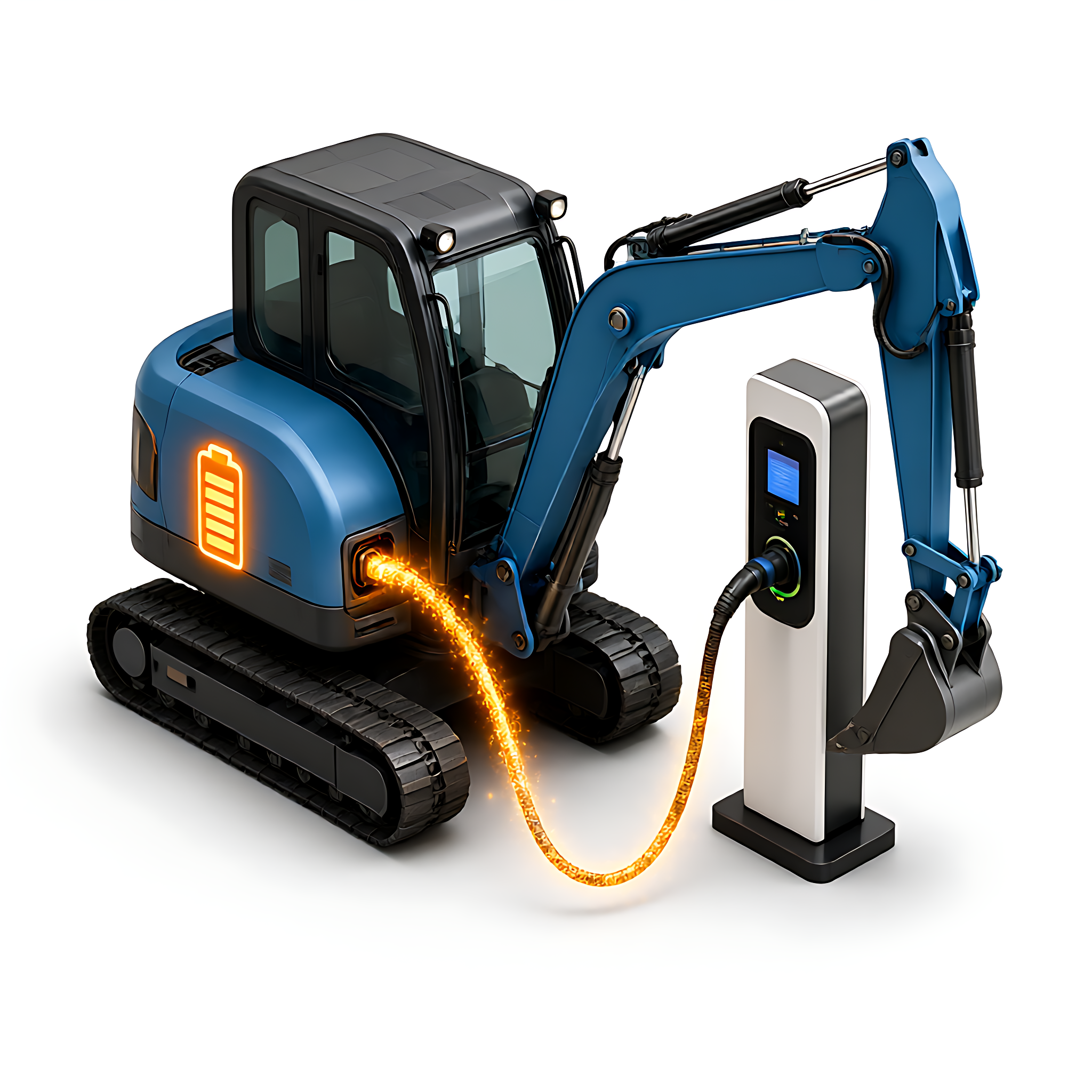
The report notes that electric excavators have consistently lagged behind electric wheel loaders and wide-body mining trucks, but 2026 marks the turning point: several Chinese cities are restricting diesel construction equipment to improve air quality, and rising oil prices on top of that have rekindled interest in electric machines. The firm believes faster electrification in China will drive charging infrastructure and technology development — the prerequisite for electric excavators to be accepted by the global market.
For buyers, this means two time windows: how many years diesel models remain usable in emission-restricted zones, and the point at which the total cost of ownership of an electric model overtakes a diesel one. For a full breakdown of how the two drivetrains differ, see the piece on electric loaders dropping the torque converter.
What This Data Means for Buyers
Watch share, not just unit counts: Chinese brands may draw level with Japan within three years; the maturity of after-sales networks and parts supply is the real dividing line in model selection.
Go after value markets overseas: North America and Europe deliver higher value per unit, but also carry higher entry barriers; emerging markets offer big upside, so leave enough buffer for the cycle.
Plan electrification early: projects operating in emission-restricted cities should be budgeting electric models in 2026.
EquipNode tracks global excavator market data over the long term and supplies and exports complete machines from mini excavators to large tracked excavators. For the latest quotations and stock availability on SANY concrete pumps, electric excavators and other equipment, contact our sales team — we will recommend a specific configuration based on your working conditions and budget.