Emission Rules Tighten: Ban Zones Expand and China VII Nears
In 2026, emission regulation of non-road mobile machinery has clearly accelerated. Domestically, ban zones are rolling out from first-tier cities to prefecture-level cities; overseas, the US EPA is revising heavy-duty engine rules and India is preparing BS-VII. This policy baton is simultaneously reshaping both equipment purchase lists and export thresholds. This article reviews the latest policy developments and offers advice for machine owners and procurement teams.
1. China: Ban Zones Shift from "Sectors" to "Whole Cities"
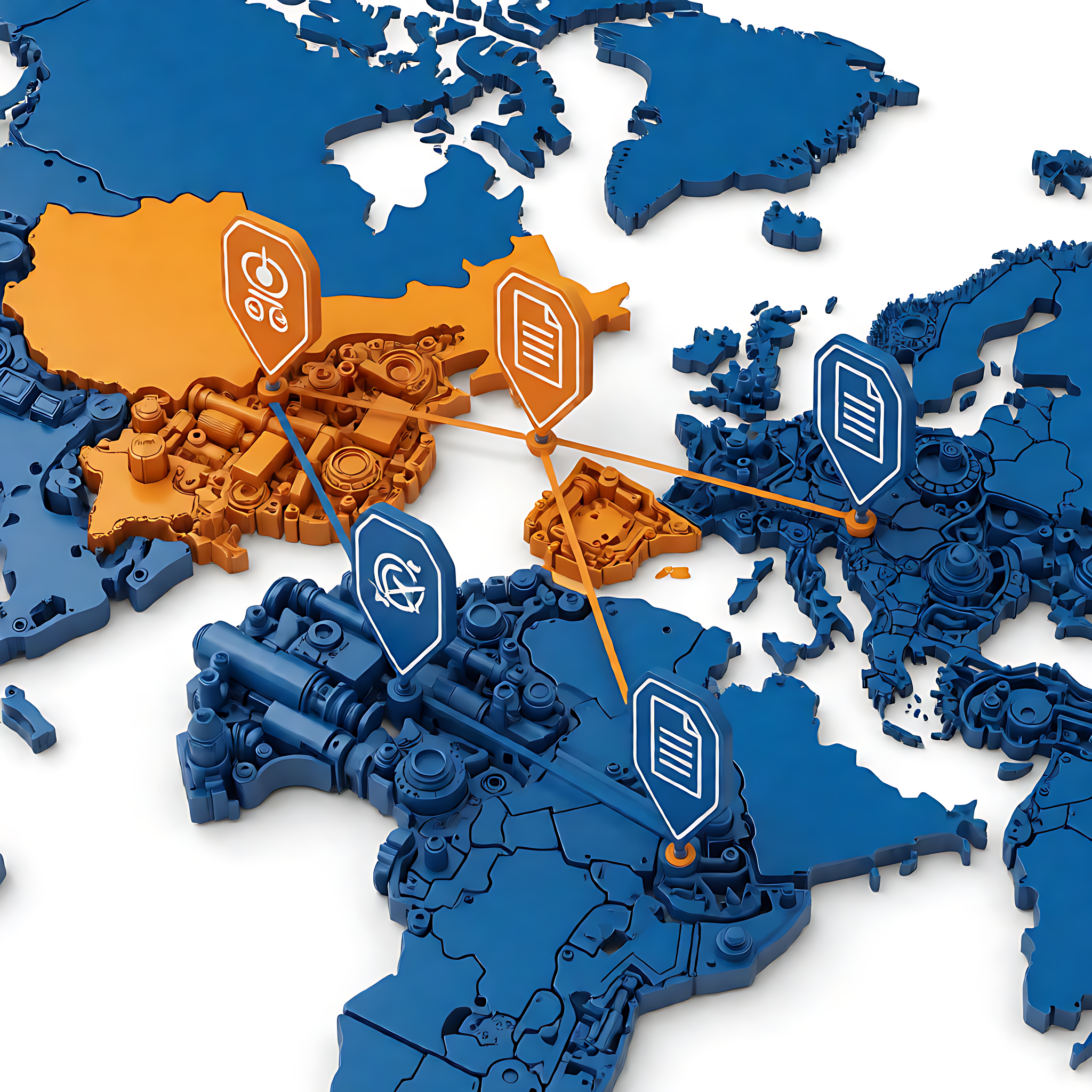
Over the past few years, ban zones for high-emission non-road machinery were mainly confined to core areas of first-tier cities such as Shenzhen and Beijing. The change in 2026 is that ban zones now cover the entire administrative area of prefecture-level cities.
- Jinan: From August 15, 2026, the use of non-road mobile machinery meeting China I emission standards or below is banned across all areas of the city (per a July 14, 2026 report by The Paper / Pengpai News).
- Guangzhou: In August 2026, the Guangzhou municipal government issued a notice defining, and simply revising, the scope of areas where high-emission non-road mobile machinery is prohibited.
- Shenzhen: Ban zones were already designated back in 2024; in 2026 the enforcement criteria have been further refined, with stricter verification of machinery environmental information codes.
One clarification of terms: non-road mobile machinery (excavators, loaders, forklifts, rollers, etc.) follows the China I–III emission standard sequence, which does not correspond to the China V/VI stages used for road vehicles. China I covers the earliest machines put into service around 2007 — nearly two decades ago, two generations behind in engine and aftertreatment technology. Jinan's new rule targets "China I and below" and thus provides a replicable enforcement template for other cities.
For machine owners, this means that "China I and below equipment can no longer enter the city to work" is no longer a trend forecast but a fact already in force. The room for existing older equipment is being squeezed down to rural self-build housing projects and small earthworks, and second-hand residual values are falling accordingly.
2. China VII Standard: The Timeline Is Closing In
In March 2025, People's Daily reported that China would study and formulate a China VII emission standard. Although the implementation date for China VII in the non-road sector has not yet been formally announced, the industry broadly expects that diesel engine manufacturers have already reserved technical headroom for China VII in the development of their new platforms.
The supporting market is sizable. Some industry analysis indicates that the global off-highway diesel engine market will reach approximately RMB 312.6 billion in 2026. With every step of the emission upgrade, the per-unit value of aftertreatment systems (DOC+DPF+SCR) rises to a new level, and a batch of smaller manufacturers that cannot keep up with the technology will be weeded out.
For a comparison of the cost differences between diesel and electric power, see our earlier analysis: Why Did the Electric Loader Drop the Torque Converter? A Primer on the Drivetrain.
3. United States: EPA Eases DEF Restrictions, but the Direction Is Unchanged
US policy may look contradictory, but it is in fact consistent. In July 2026, the EPA proposed revising the heavy-duty engine rules to remove the DEF (diesel exhaust fluid) power-reduction / shutdown logic triggered by emission non-compliance; in August, several advocacy organizations publicly supported the proposal, arguing that forced shutdowns are too disruptive to user operations.
It is important to emphasize: what the EPA has relaxed is only the "enforcement of penalties" — the emission limits of SCR itself have not been loosened. Equipment must still meet existing compliance requirements, and construction machinery exported to the United States cannot afford to be complacent. For an overview of the export landscape, see From Selling Machines to Selling Solutions: Construction Machinery Goes Overseas with a New Playbook.
4. India: BS-VII on the Agenda
On October 22, 2026, the ECT 2026 industry conference of the relevant association of Indian equipment manufacturers listed BS-VII emission specifications as a focus topic. Prior to this, in July 2026, India had already tightened emission requirements for tractors and agricultural equipment.
India is one of the key export markets for Chinese construction machinery. Once BS-VII takes effect, equipment exported to India will need to re-undergo emission certification, a process that typically takes 6–12 months. Planning certification ahead of time is the key to getting a head start in this market.
5. Europe: Electrification Moves from Demonstrations to Procurement Criteria
In June 2026, the International Council on Clean Transportation (ICCT) held an off-highway electrification summit; in August, Volvo CE disclosed a case study of Nuremberg's progress on zero-emission municipal construction. In Europe, electrification is no longer a talking point but an entry threshold for municipal procurement.
September excavator sales in China continued to grow, with domestic and export policies working in step (institutional commentary dated October 14, 2026); within the export mix, the share of electric models is rising rapidly. For historical data, see September Excavator Sales Up 14.4%: Cumulative Exports Surpass Domestic Sales for the First Time.
6. How Owners and Procurement Teams Should Respond
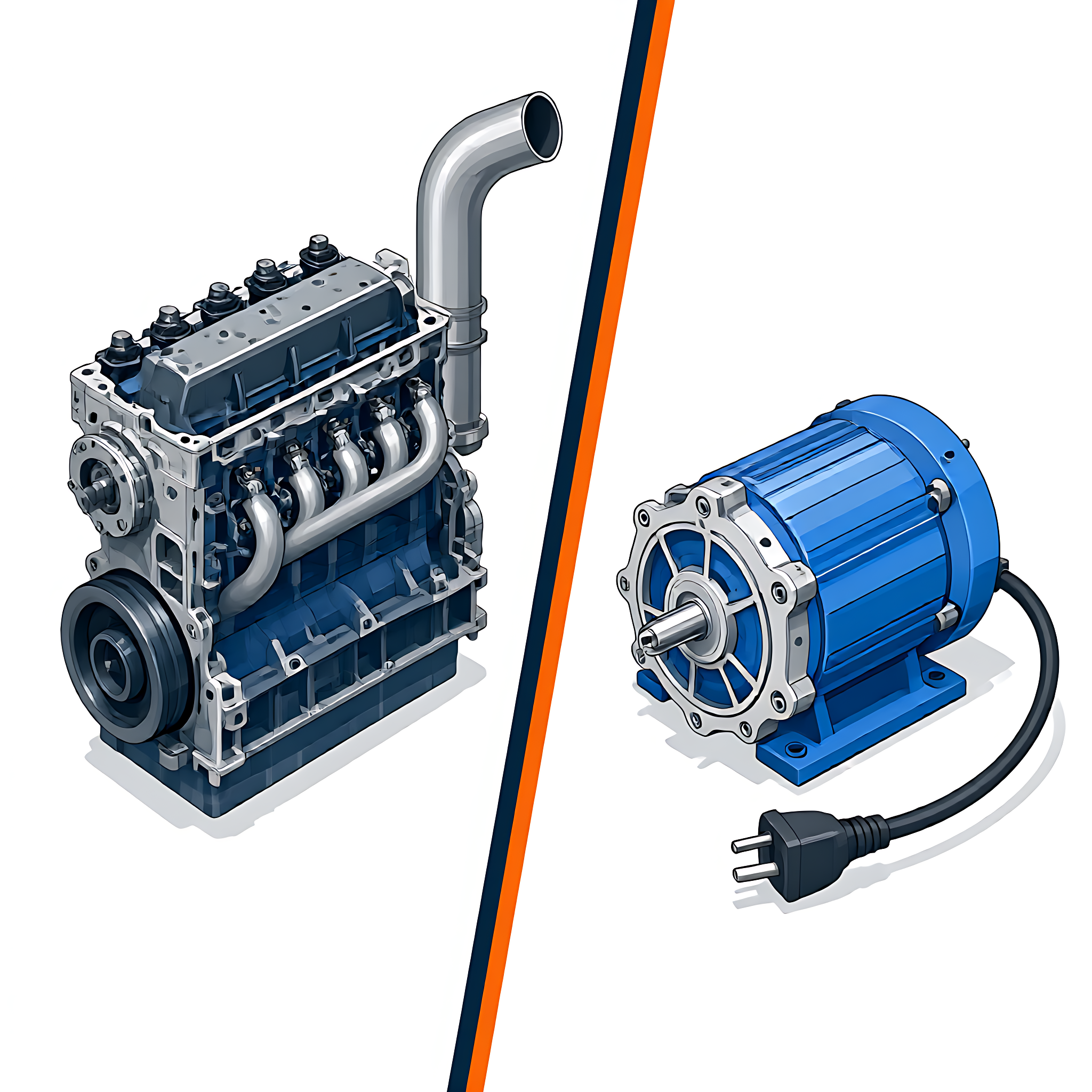
Take stock of existing inventory: Identify the emission stage and environmental information code of your own equipment, and for China I and below equipment, draw up an exit or replacement plan as soon as possible.
Buy with three years in mind: When purchasing, choose the emission standard based on "whether the machine can still work in this city three years from now," not based on today's lowest price.
Mind the certification cycle: For orders exported to India or the EU, start emission certification 6 months in advance to avoid machines arriving at port but being unable to be registered.
Run the full electrification numbers: Electric equipment costs more to buy, but energy consumption and maintenance costs are lower. Take the electric loader as an example — under fixed operating conditions such as ports and mines, hourly cost has already overtaken that of diesel models.
There is no turning back on tighter emission policy. Whether you are looking to offload older equipment or select a new model for your next project, the earlier you factor policy variables into your cost, the more proactive you will be.
EquipNode provides global construction machinery selection and export compliance consulting, covering electric loaders, excavators, pump trucks and other core models. For specific equipment quotations or export certification solutions, please feel free to contact our sales team.