From Selling Machines to Selling Solutions: Construction Machinery Goes Global
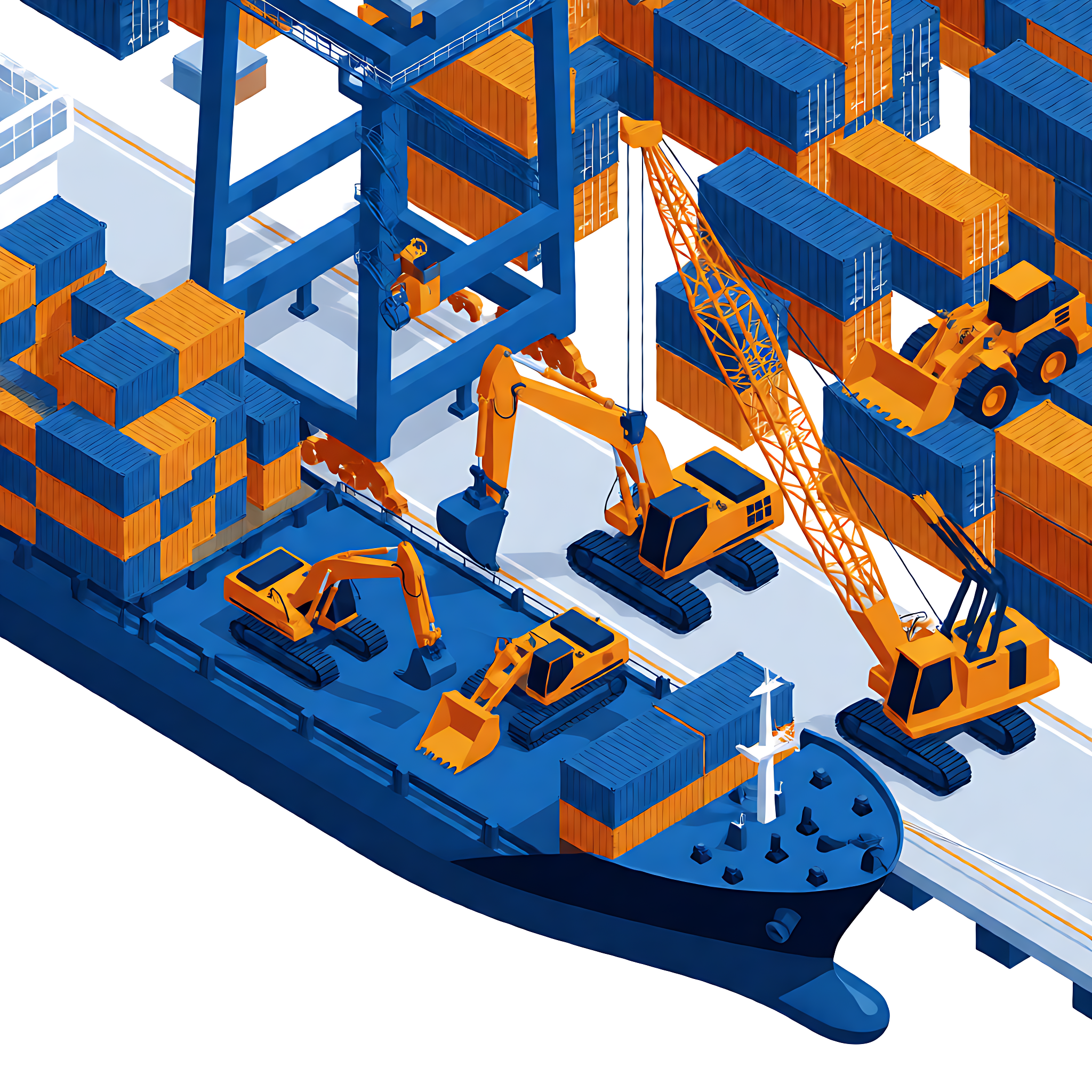
The story of Chinese construction machinery going global is entering its second act. The first act relied on price and capacity — shipping domestically built excavators and loaders overseas. The second act is about the business model: once the machines are sold, can parts, service, financing and used-equipment residual values be covered as well? Several sets of data disclosed in mid-October 2026 all point to this shift.
Exports Outsell the Domestic Market for the First Time: The Tipping Point Has Arrived
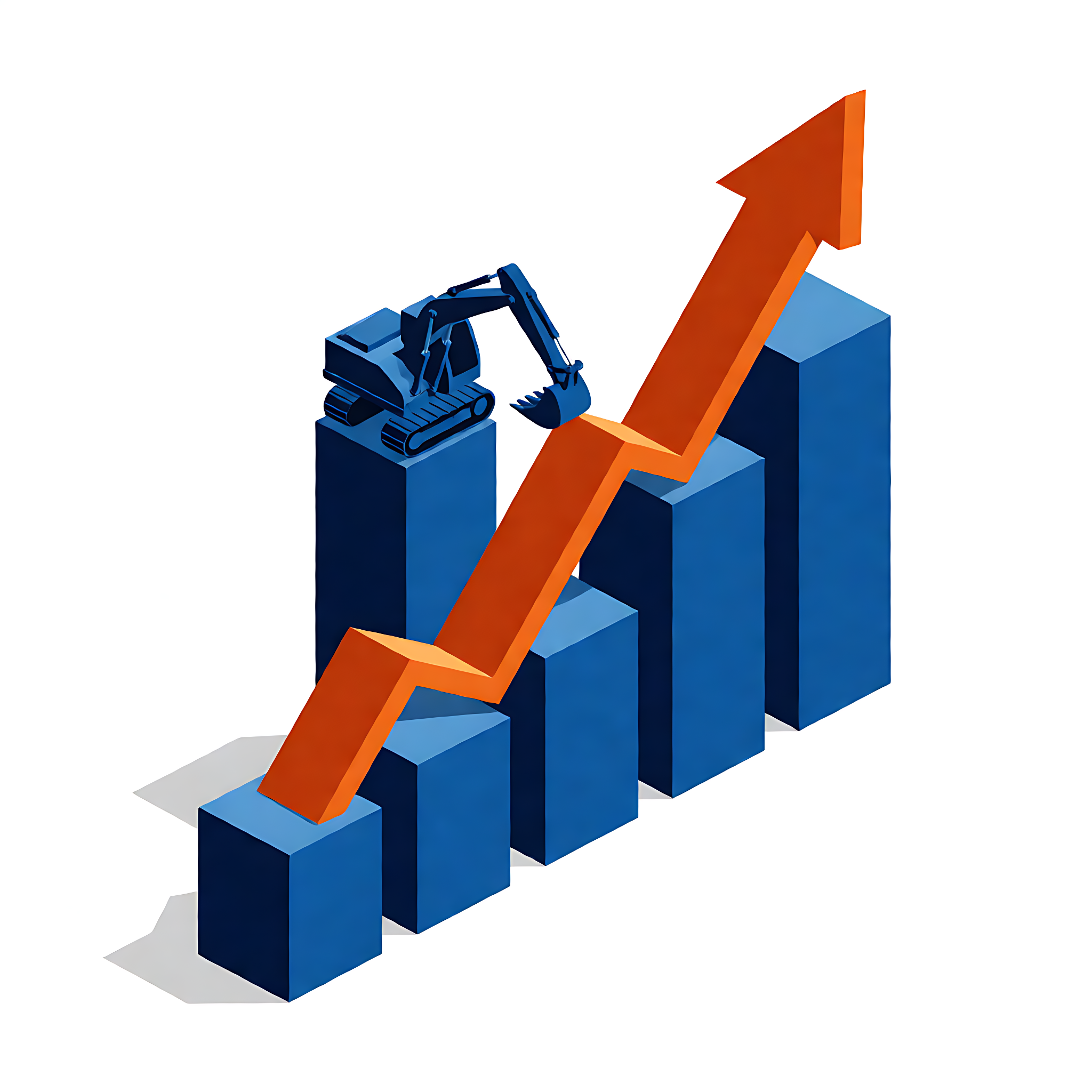
Monthly data from the China Construction Machinery Association shows that in the first nine months of 2026, China's excavator exports approached 110,000 units, accounting for more than half of total sales and marking the 26th consecutive month of year-on-year growth. In September alone, excavator sales rose 14.4% year on year and exports climbed 20.7%. This is the first year in which cumulative exports have exceeded domestic sales — exports are no longer a "supplement" trotted out when the domestic market weakens; they are the industry's main growth engine.
| Indicator | Latest Data | Period and Source |
|---|---|---|
| Excavator exports, first nine months | Nearly 110,000 units, over half of total sales | October 2026, industry association monthly report |
| September excavator exports, year on year | +20.7% | September 2026 sales flash report |
| Construction machinery export value, first half | US$34.373 billion | August 2026 industry statistics |
| Sany Heavy Industry overseas revenue, first half | Over RMB 32 billion | 2026 semi-annual report |
| Shantui overseas revenue share | Above 60% for the first time | 2026 semi-annual report |
We broke down the structure behind these numbers in our September excavator sales analysis: domestic sales ride on the delivery of physical infrastructure workloads, while exports keep expanding in emerging markets — and this year the two curves swapped places for the first time.
Compared with the previous export peak, this round is different: the last one was largely a trial run on price, while this one comes with overseas channels, service networks and product certifications built up in step — the "quality" of exports has changed.
A Foundation Held Up by the Belt and Road
The confidence to go global comes from the breadth of the market. Customs data shows that in the first three quarters of 2026, trade between China and Belt and Road countries exceeded RMB 20 trillion, with construction machinery among the fastest-growing categories. Industrial parks and ports across Southeast Asia, the infrastructure boom in the Middle East, mineral development in Africa and road upgrades in Latin America together form a multi-polar demand landscape, in which no single market's swings can determine the industry's fate on their own.
Geography has also changed how companies compete. Take Changsha as an example: over the past three years the city's total construction machinery export value has grown by 77.52%, and "small equipment" such as skid steer loaders and truck-mounted cranes has become the single-product lever that unlocks large international markets. A Xinhua News Agency report in October described how a group of private enterprises won overseas orders precisely by responding quickly in niche categories — the barrier to going global has shifted from "scale" to "fit."
The drivers differ by region: Southeast Asia is driven by industrial parks and ports, keeping equipment demand steady; the Middle East is pulled by large infrastructure and energy projects, with higher acceptance of premium equipment such as concrete pumps and cranes; Africa's mineral development drives volume for mini excavators and loaders, with a notably higher share of used equipment. Choosing the region often comes before choosing the machine.
From Selling Whole Machines to Selling Integrated Solutions
The model upgrade is already showing up in earnings reports:
- Sany Heavy Industry posted overseas revenue of more than RMB 32 billion in the first half, with the overseas share continuing to climb;
- Shantui Construction Machinery saw its overseas revenue share surpass 60% for the first time while net profit rose 19% year on year — evidence that high-margin overseas business genuinely converts into profit;
- XCMG Machinery has made "integrated solutions" an explicit pillar of its global strategy, and industry outlet Construction Kenya put it bluntly in its coverage: selling machines alone is no longer enough.

For the buyer, an integrated solution comes down to four things: spare parts supply from local warehouses, resident service engineers, mortgage and finance leasing, and used-equipment buyback and residual value management. The case of a Norwegian blogger who ordered 70 Chinese mini excavators in a single order says a lot — overseas buyers care about far more than the sticker price of the machine; they care whether anyone looks after it after it arrives. See our mini excavator overseas case study for details.
Electrification: The New Calling Card Overseas
An August report in the People's Daily noted that green construction machinery is gaining recognition in overseas markets; industry statistics show that exports of electric excavators and electric loaders are growing significantly faster than their diesel counterparts. For overseas buyers, the appeal is a matter of arithmetic: calculated on two shifts a day, an electric loader can save on the order of RMB 100,000 in fuel costs per year, and the replacement pace is especially fast in fixed applications such as ports, batching plants and steel mills.
That is also why electric products appear with increasing frequency in overseas inquiries this year. For an explanation of how electrification allows the torque converter — a fixture of the drivetrain for more than half a century — to be eliminated, see our earlier electric loader technology teardown.
The Other Side of the Coin: Tariffs, Compliance and Residual Values
Going global is no smooth road. US tariffs and trade barriers remain, and certification, emissions and local-content requirements in the EU and some emerging markets keep tightening. At the same time, a large used-equipment circulation system is taking shape overseas, making residual value management a new challenge. There are essentially two viable responses: first, build out local service and parts networks so that response speed offsets policy uncertainty; second, assemble product portfolios by country — cost-effective diesel models targeting developing markets, electric models entering Europe, the US and premium projects, and used equipment absorbing price-sensitive demand.
Worth noting: used-equipment exports are moving from "wild growth" toward standardization — refurbishment standards, export certifications and warranty terms are gradually becoming part of the deal, raising the bar for platforms that are both sellers and service providers.
EquipNode: Turning "Available to Buy" into "Good to Operate"
EquipNode is a professional construction machinery trading platform offering one-stop services covering machine sales, export customs clearance, spare parts supply and after-sales support, helping overseas buyers turn purchasing decisions into long-term operations. For quotes on new models or a complete configuration plan for your overseas project, contact our sales team — we reply within one business day.