How to Choose a Concrete Pump Truck: 33m to 70m Boom Selection
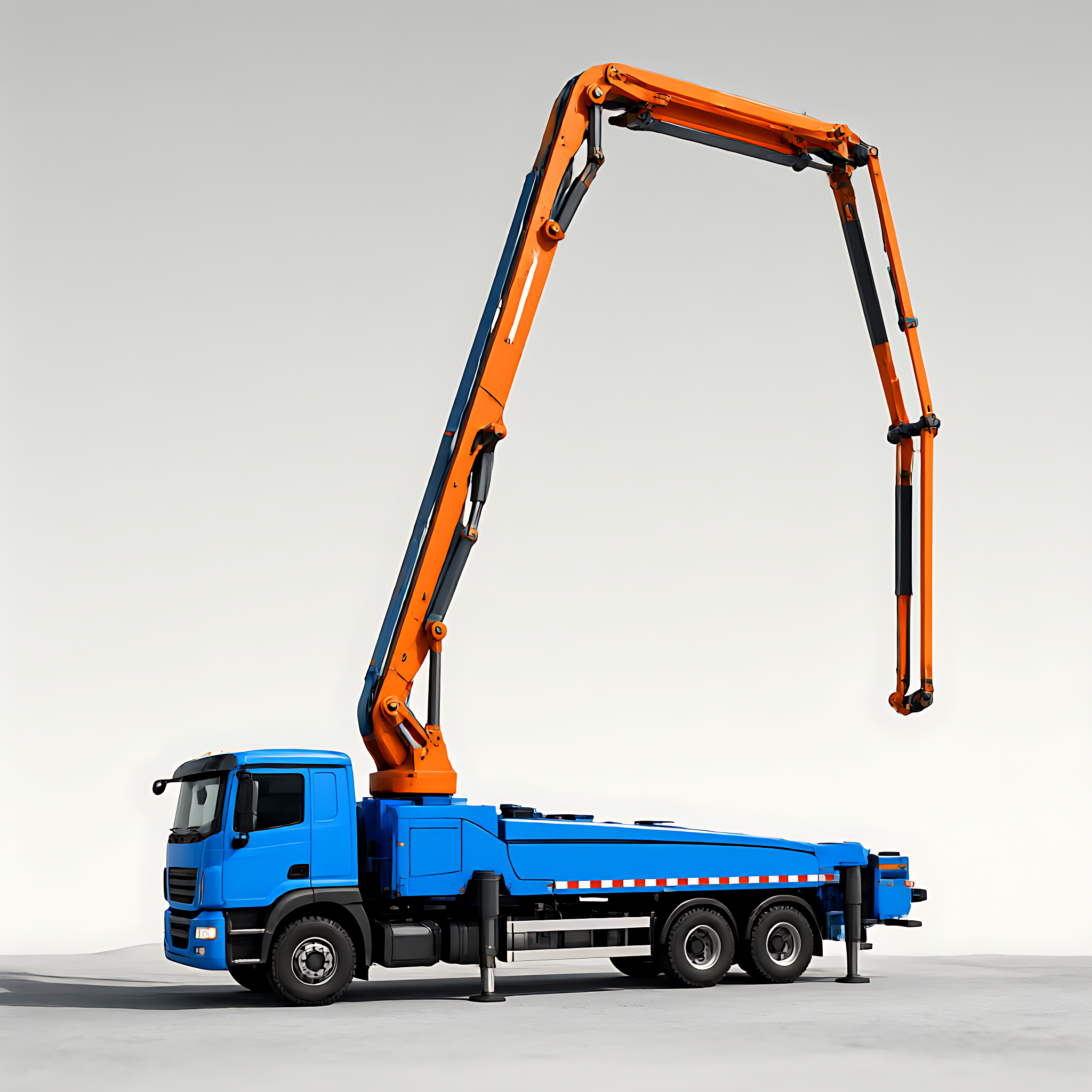
A pump truck can easily cost several million. Buy one that is too long and the idle machine bleeds money; buy one that is too short and it cannot finish the job. In March 2026, SANY unveiled the world's first smart-hybrid pump truck in Changsha, posting a tested range of 1400.5 kilometers and over 650 cubic meters of continuous pumping. The same product batch also includes a 33-meter pump truck built specifically for cramped rural job sites. Booms run from 33 meters all the way past 70, chassis range from two-axle to five-axle, and the spec sheets only get more confusing the longer you look. This article breaks pump truck selection down into five hard criteria, so you can match the machine to the working conditions.
Boom Length: Longer Is Not Always Better
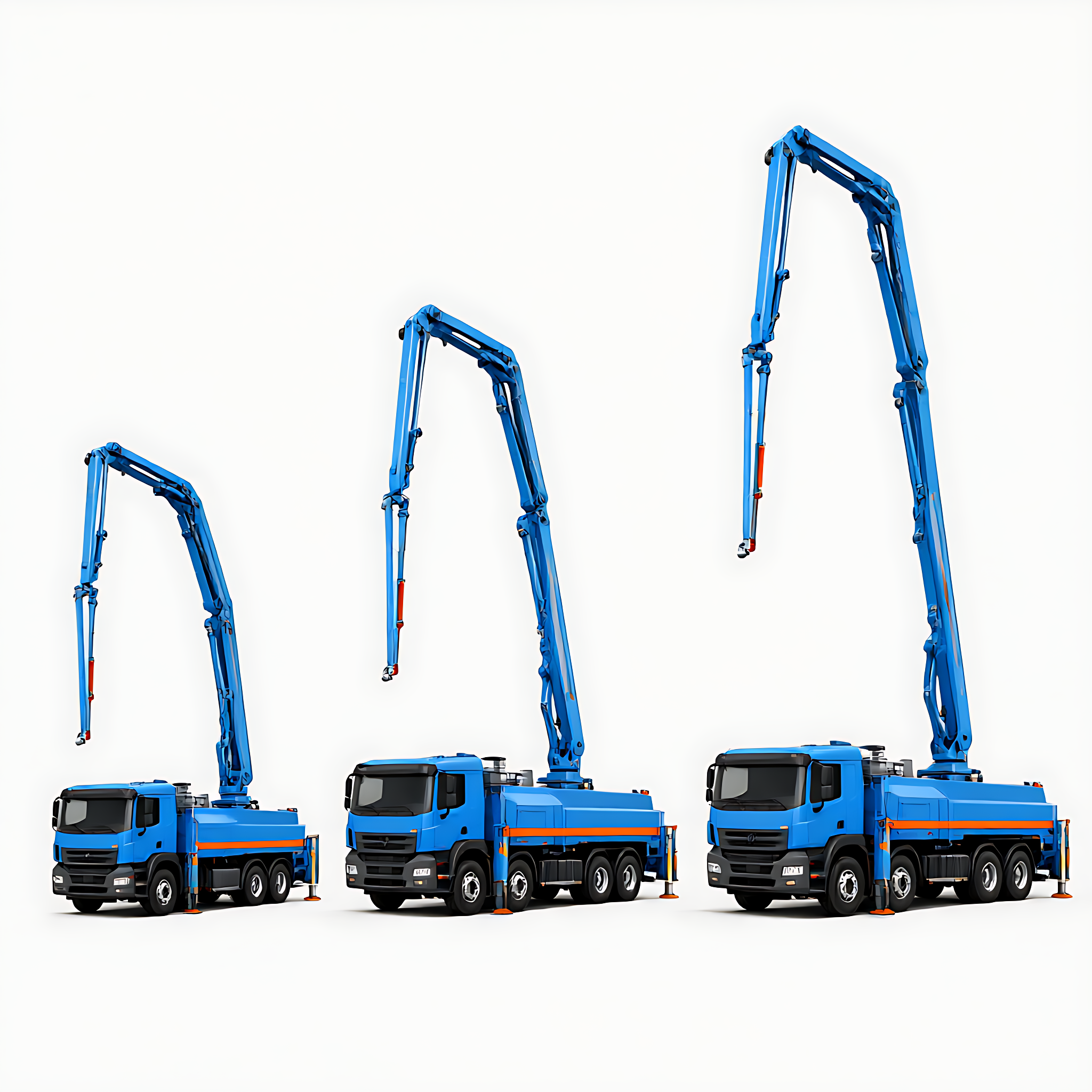
The industry's common classification is: short booms 13-28 meters, long booms 31-47 meters, extra-long booms 51-62 meters and above. Zoomlion alone covers 17 length classes — 32, 38, 40, 43, 47, 50, 52, 56, 59, 60, 62, 65, 67, 68, 70, 72 and 73 meters — while SANY offers mainstay models such as its 62-meter S-series micro-hybrid pump truck (4 axles, 61.1 meters).
When selecting a boom, look at only two numbers: vertical pumping height and horizontal placing radius. For rural projects where floor pours typically reach 3-5 stories at heights of 11-18 meters, a 34-meter-class pump truck is more than enough; only workfaces that routinely exceed 30 meters — nuclear power plants, bridge piers, supertall core tubes — require machines over 50 meters. The longer the boom, the heavier the machine, the higher the fuel burn, and the harder it is to hold resale value. If the job site has no use for it, that is pure idle cost. On the flip side, an extra-long boom has a hidden advantage: it can reach over power lines, ditches and boundary walls, saving the time and money of laying connecting pipe by hand.
SANY's 86-meter steel boom pump truck broke the Guinness longest-boom record three times in 2007 and 2011, and in 2013 it used the same machine to pump concrete to the top of the 632-meter Shanghai Tower. Record-setting machines like this show the ceiling of capability, not a purchasing answer.
Chassis and Axle Count: Hard Constraints from Regulations and Relocation
Boom length is directly tied to chassis axle count — the hard threshold most often overlooked:
| Boom length class | Common axle count | Representative models | Typical applications |
|---|---|---|---|
| 30-38 meters | 2-axle | Zoomlion 2-axle 38M | Rural self-built houses, narrow alleys |
| 43-52 meters | 3-axle | Zoomlion 3-axle 47/52M | Municipal works, multi-story housing |
| 56-63 meters | 4-axle | Zoomlion 4-axle 62M, SANY 62-meter micro-hybrid | Factory buildings, commercial complexes |
| Over 70 meters | 5-axle | Zoomlion 5-axle 70/73M | Large-scale infrastructure, nuclear power, supertalls |
The more axles, the greater the gross weight and the turning radius, which means height- and width-restricted road sections and rural roads become simply inaccessible. SANY's 206 electric mixer truck and 33-meter pump truck, launched in the same period, take a narrow-body route with turning radii of under 7 meters and 7.6 meters respectively — built for exactly this scenario. Leasing companies that relocate frequently should in particular test their regular routes in advance.
Pumping Capacity: Volume, Pressure, Cylinder Bore
Three metrics matter for pumping: cubic meters per hour, discharge pressure and cylinder bore. High-rise and supertall pumping puts steep demands on pressure — SANY's ultra-high-pressure trailer pumps are already in use on the Jeddah Tower (the world's tallest building, under construction). The smart-hybrid pump truck is rated for sustained 20 MPa high-pressure pumping and has set a record of 84 consecutive days of nonstop operation, cumulatively pumping over 120,000 cubic meters.
In actual procurement, do not fixate on peak figures. For routine work averaging 50-100 cubic meters per day, fuel consumption and pipeline wear drive the cost; only at 100-200 cubic meters per day of continuous operation does pumping efficiency get to call the shots. Wear-part costs must be counted in as well — concrete delivery pipes, S-valves and eye plates are all high-consumption items. After SANY acquired Germany's Putzmeister in 2012, the full pumping technology and parts system were integrated, so it is worth asking clearly about the stability of after-sales parts supply.
Outriggers and Site Conditions: The Easiest Trap to Fall Into
A pump truck must set its outriggers before working, and the outrigger spread determines whether the site is big enough. Many selection processes only measure the height of the building and forget the site: basement roof slabs need load-bearing verification, roadside work needs road-occupation approval, and sites adjacent to excavations require checking the slope distance. However long the boom is, it is just a prop if the outriggers cannot spread.
A practical order of operations: measure the site first, then decide outrigger configuration and axle count, and only then pick the boom length class. Doing it in reverse is the easiest way to buy the wrong machine.
Electrification and Smart Hybrids: The New Variable in 2026
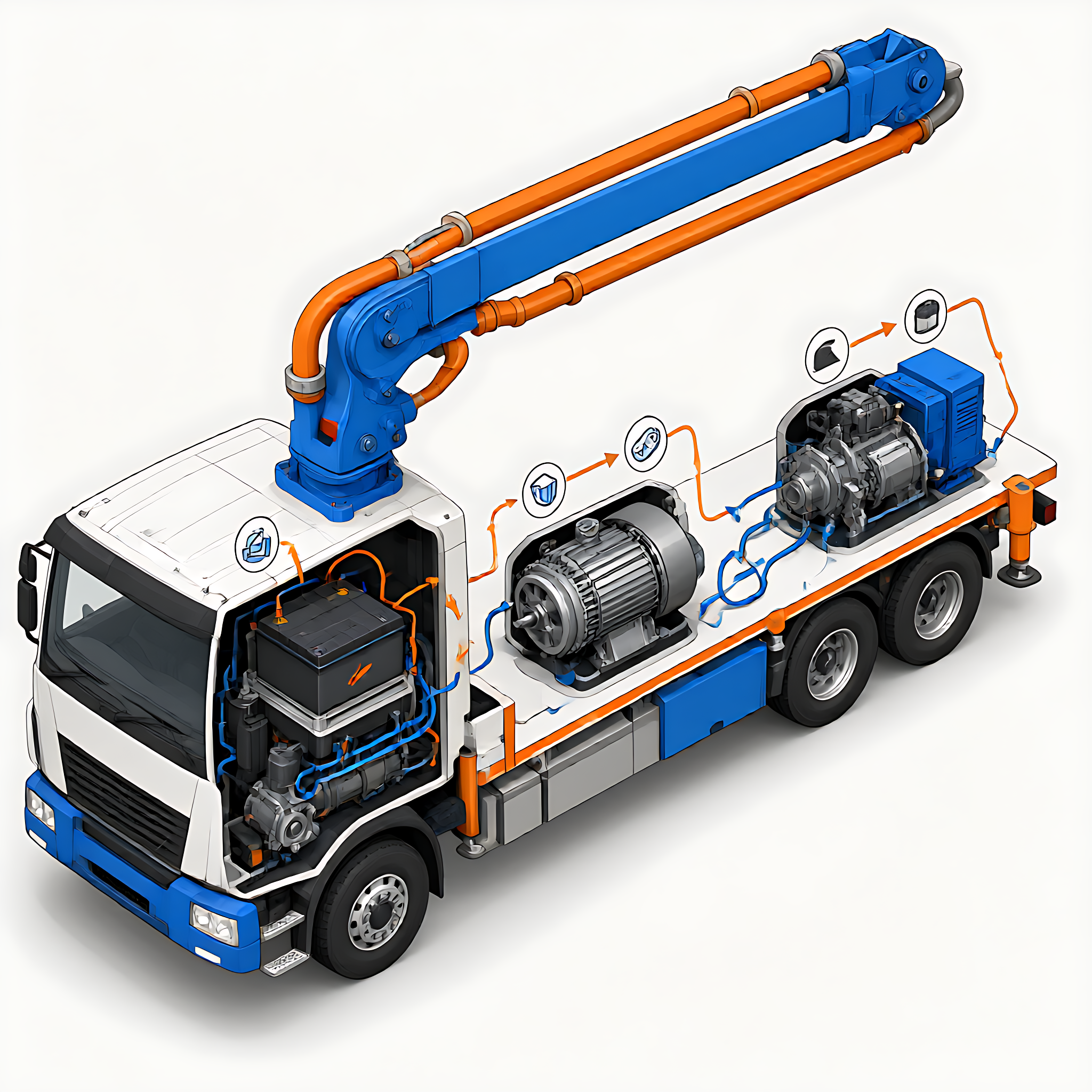
Battery-electric pump trucks have always been stuck on range; the smart-hybrid route sidesteps this deadlock with range-extended hybrid power. SANY's smart-hybrid pump truck posts a tested maximum range of 1400.5 kilometers and over 650 cubic meters of continuous pumping, cutting operating costs by 50%-75% at 50-100 cubic meters per day and by 30%-50% at 100-200 cubic meters per day. The 2026 electric mixer truck on the same stand carries an EBI intelligent braking system with energy recovery of up to 30%.
Fortune Business Insights' truck-mounted pump market report pushes its research horizon out to 2034, listing the major players as Putzmeister, Zoomlion, SANY, LiuGong and Shantui — Chinese manufacturers account for more than half. Hybrid and battery-electric units will first roll out at fixed job sites and in areas under strict environmental enforcement; leasing companies will have to face this question sooner or later.
Match the Machine to the Job
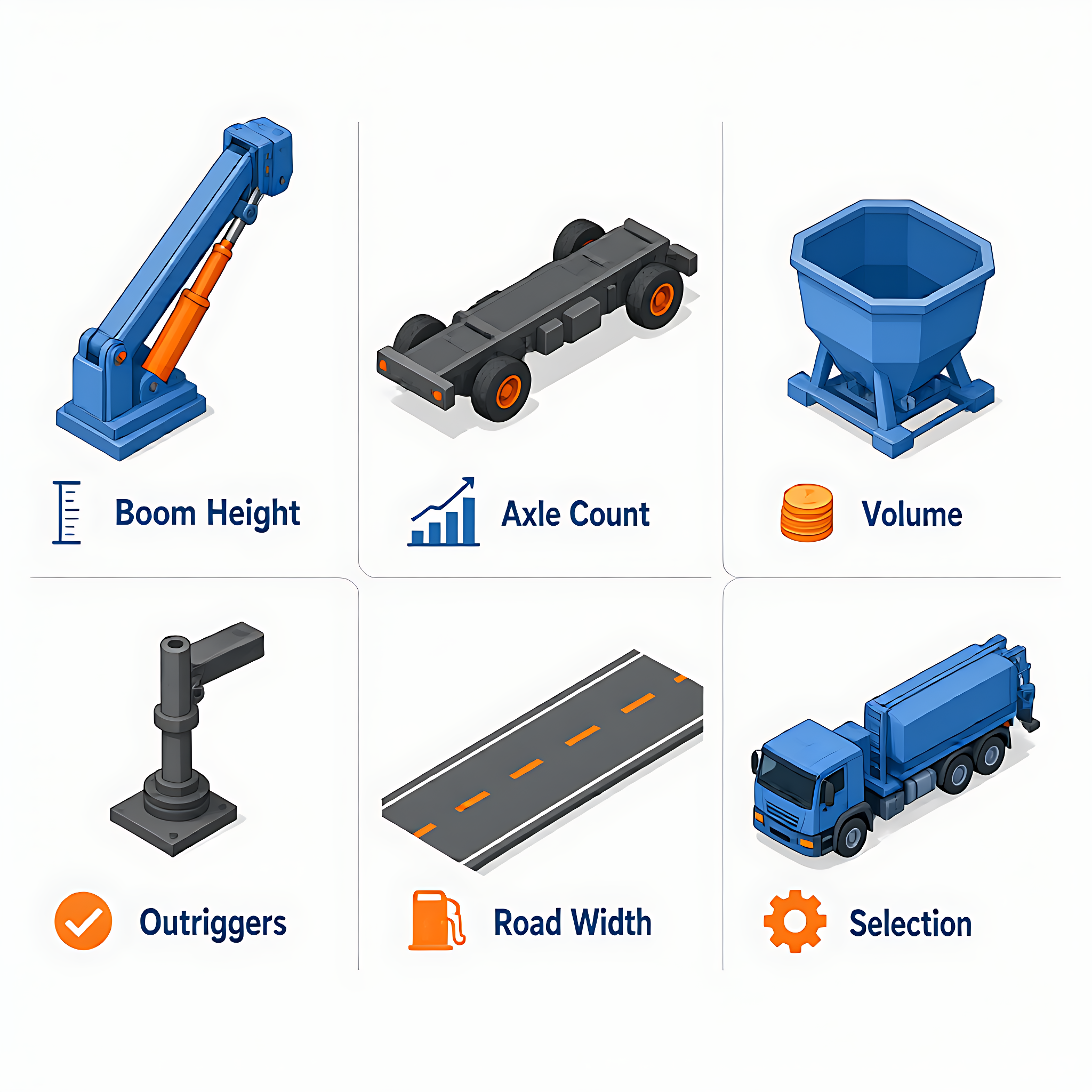
- Rural self-built houses, narrow alleys: 33-38 meters, 2-axle, prioritize turning radius
- Municipal works, multi-story housing: 47-52 meters, 3-axle, the most versatile sweet spot
- Factory buildings, continuous ready-mixed concrete work: 56-62 meters, 4-axle, judge by volume, not height
- Nuclear power, supertalls, mass concrete pours: over 70 meters, 5-axle, paired with ultra-high-pressure pumping
- Fixed job sites plus environmental restrictions: go straight to smart-hybrid or battery-electric, and calculate operating cost, not just purchase price
Buying a pump truck is essentially buying "reach and access." Once you have the three field-measured numbers — site, route and volume — the spec sheet narrows itself down to two or three boom classes.
For detailed configurations and pricing on SANY and Zoomlion pump trucks, please contact our sales team; we can run a selection calculation based on your working conditions. To first get to grips with the hydraulics of the whole machine, see How Does an Excavator Work? A One-Stop Guide to Operating Principles and Selection; for sizing small equipment by tonnage, see Why Are Mini Excavators So Popular Overseas? Tonnage Classes and Selection Explained; and for drivetrain differences in the new-energy direction, see Why Did Electric Loaders Drop the Torque Converter? A Drivetrain Explainer.