Excavator Undercarriage Guide: Wear Checks for Track and Rollers
When you buy a 20-ton excavator, the thing its owner fears most is actually not an engine overhaul — with proper service, an engine typically doesn't need a major rebuild until tens of thousands of operating hours. What really "eats money" hour by hour is the undercarriage: industry data from equipment manufacturers estimates that undercarriage parts can account for one-third to one-half of an excavator's lifetime repair costs. The harsher the working conditions, the higher that share becomes. In quarry stripping, sand and gravel loading and similar scenarios, the life of track links and rollers may be only half what they deliver in earthmoving duty. Undercarriage parts are not expensive per piece — they are expensive because they "take turns failing": a carrier roller leaks oil today, an idler chews up its flange tomorrow, track link clearance goes out of spec the day after, and every stoppage to change parts is machine-hour cost. This piece lays out clearly how to judge wear on the "four wheels and one track" and how to pace the maintenance. Measure the numbers you can measure yourself — don't wait until the dealer's quote lands on your desk to regret it.
Four Wheels and One Track: What "Undercarriage Parts" Actually Means
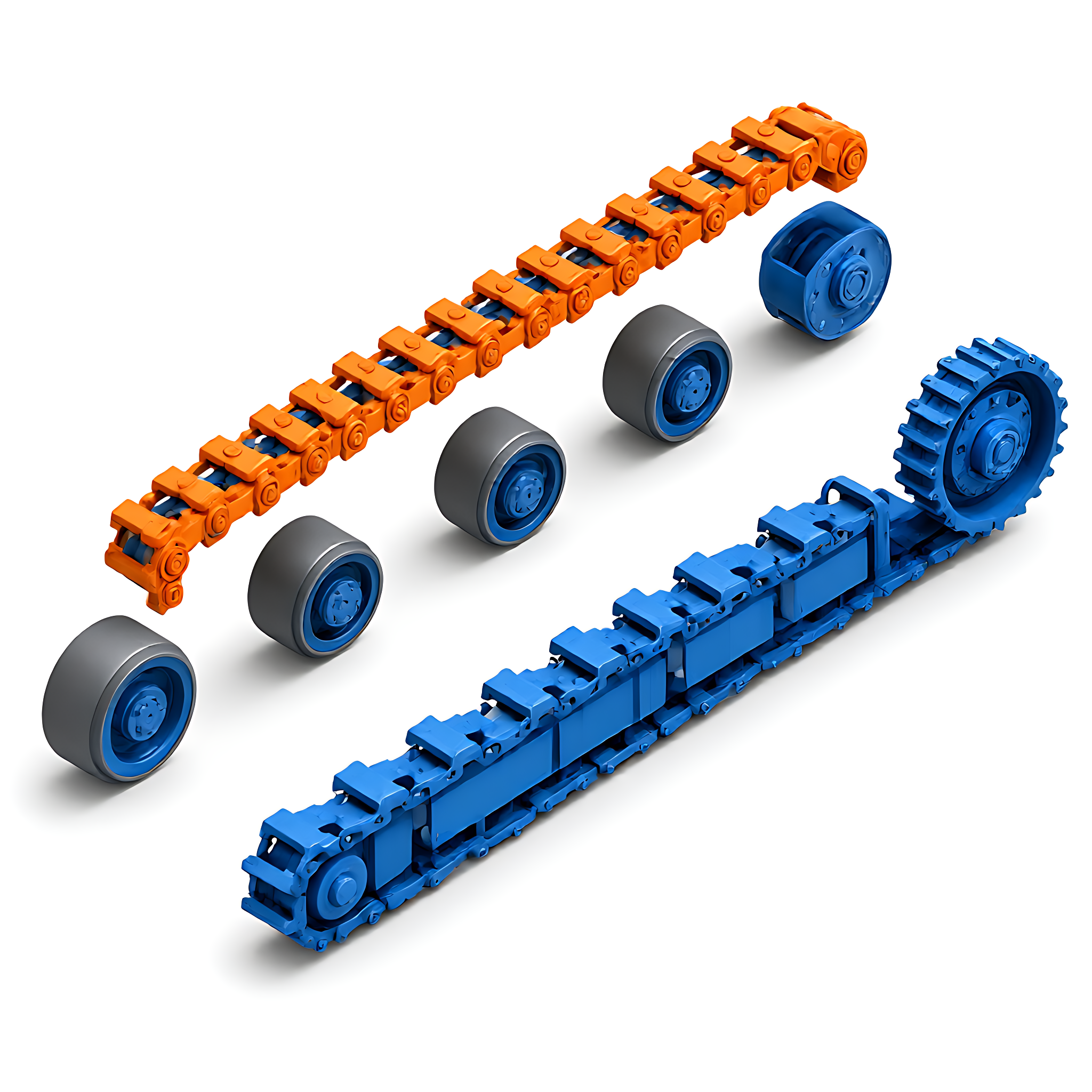
"Four wheels and one track" is the industry shorthand for undercarriage parts. The four wheels are the track rollers, carrier rollers, front idlers and sprockets; the one track is the track chain assembly (including track links, pins, bushings and track shoes).
- Track rollers: the machine's full weight presses down on them as they roll along the chain, while their flanges also resist lateral track slip. There are a dozen or more on the machine, and they are a hotspot for oil leaks and wear.
- Carrier rollers: they support the upper run of the track and prevent excessive sag. There are few of them, but once one seizes it quickly grinds a "cut rail" groove into the chain.
- Front idler: it guides the track at the front of the machine and, working with the tensioning device, cushions shock. Flange edge damage on an idler usually means the tension has been out of adjustment for a long time.
- Sprocket (drive wheel): it meshes with the track links to transmit travel power. Once the tooth profile wears, the track "skips teeth" — travel drift and abnormal noise both start here.
- Track chain assembly: the fit clearance between pin and bushing is the core indicator of undercarriage life. Once clearance goes out of spec, the track stretches, tension is lost, and the whole undercarriage enters a vicious cycle of accelerated wear.
Wear Assessment: Three Numbers You Can Measure Yourself
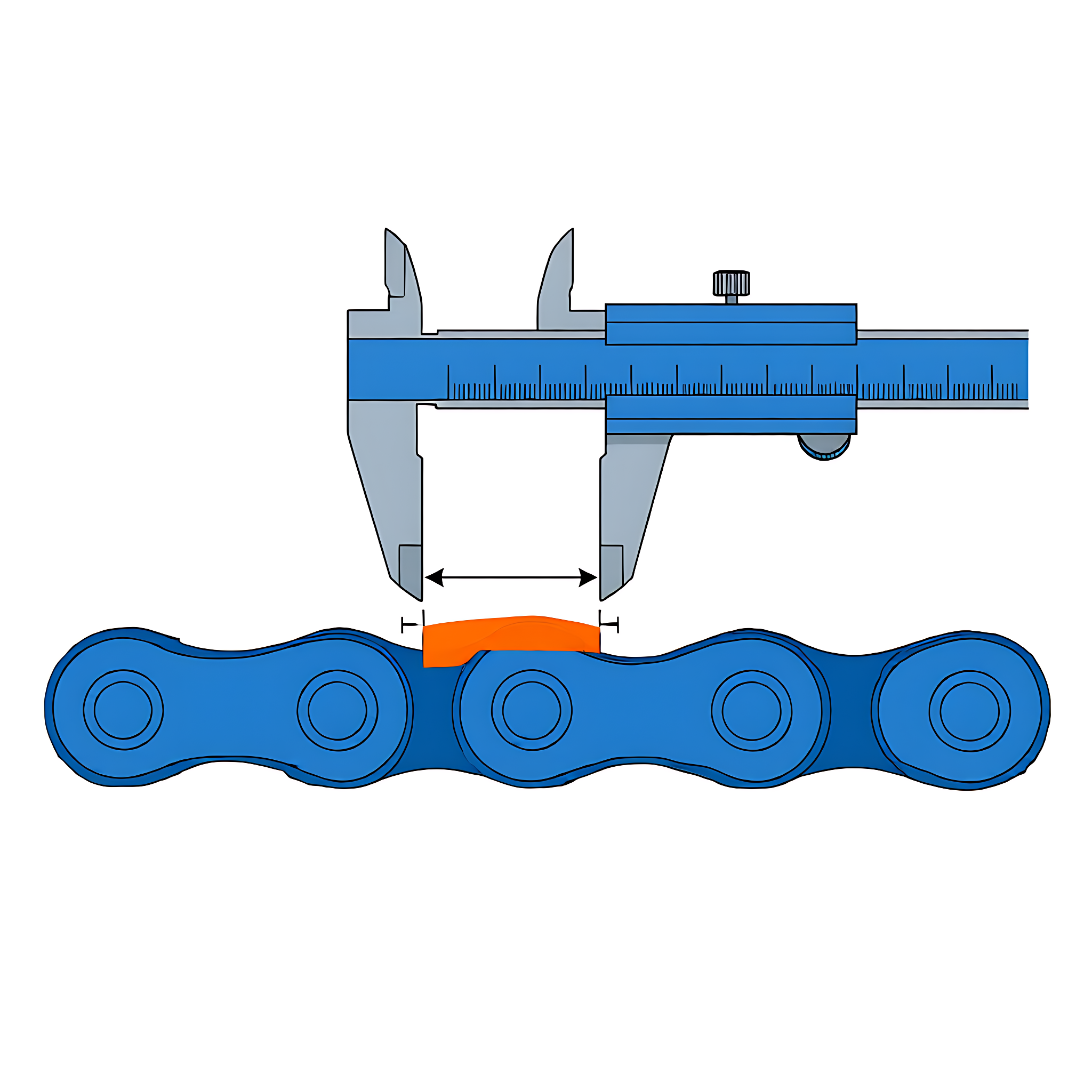
Test one: pin-to-bushing clearance. Jack up one side of the track, rotate the track links, and use a feeler gauge or visual check to judge how much the pin and bushing move against each other. The common industry scrapping reference is a pin-bushing fit clearance of 2-3 times the factory value, or total elongation of a single track run exceeding 3% — translated against the roughly 60-link track length of most models, once elongation exceeds the equivalent of one or two links it is time to evaluate the whole set for replacement. On track chain with out-of-spec clearance, "saving money by replacing a few links" is pointless; mixing new and old links concentrates the wear in a sudden burst.
Test two: check the flanges. Track rollers and idlers have factory wear-limit marks on their flange thickness. Once wear passes half the depth, or a clear one-sided "uneven wear" pattern appears, log it in the maintenance ledger. A front idler worn down on one side is usually not a part problem — it is long-term one-sided loading or incorrect tension. Replacing the part without finding the cause simply gives the new part a short life too.
Test three: measure the tension. Measure the sag between the idler and the chain; for most models the reference range is 30-50 mm (always defer to your machine's manual). Too tight increases pin-bushing wear and travel resistance; too loose invites "de-tracking" and tooth skipping. Do a visual check every shift and a measured check every week — and always re-measure after rain-season clay working conditions, because dried-on mud will push the actual tension to a completely different reading.
Maintenance Cadence: Mud Removal, Tensioning, Lubrication
- Mud removal every shift: in sticky clay and ore-powder conditions, mud packed between the track chain and the track rollers is undercarriage enemy number one — packed mud jacking up the track forcibly changes where the load is applied. Before clocking off, pressure-wash the undercarriage, and be careful not to aim the jet straight at the oil seals.
- Tension check every week: re-measure against the sag standard above, and top up the nitrogen charge in the tension cylinder promptly if the pressure is low.
- Lubricate by machine hours: follow the service manual's greasing intervals for idlers and track rollers — every missed grease point is one more ingress of sand. Deal with any existing leak during the same shift; "keep running while it leaks" is the most common opening chapter of an undercarriage rebuild.
- Keep a machine-hour ledger: create replacement records for every track roller and every section of track chain. A ledger also adds value when it comes time to appraise the machine for resale — see our Aftermarket Cost-Saving Strategies as Used-Equipment Inventory Falls 10%; in the aftermarket, only machines with transparent condition records sell for a good price.
How to Choose Parts: OEM, Brand-Name and Remanufactured
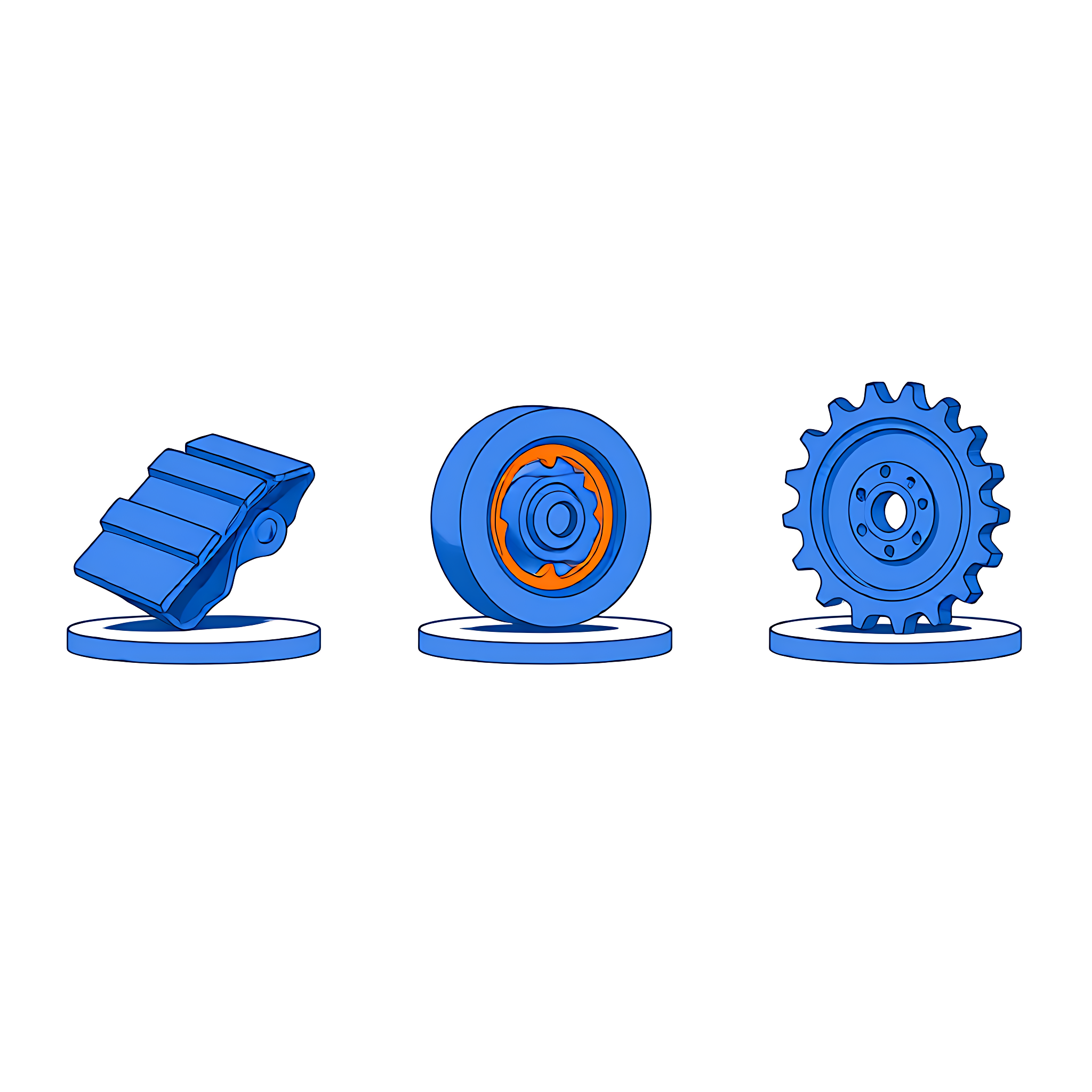
OEM parts: clear warranty and the best dimensional-fit chain, usually at the highest price — suited to machines under warranty and to core drivetrain components.
Brand-name parts: independent products from specialist undercarriage manufacturers such as Bradken and Liebherr, plus qualified parts from first-tier domestic wear-part makers — often the best value. The judging criterion is not price but material and heat treatment: the depth of the hardened layer on a track link and the bushing formula of a track roller determine machine-hour life, not the out-of-the-box feel. In October 2026, Bradken's SmartRoller solution went into service on an R996B mining excavator at a Queensland coal mine (International Mining, 2026-11-04). Integrated undercarriage designs are now filtering down from ultra-class mining machines, which shows the technical bar for brand-name parts keeps rising.
Remanufactured parts: the remanufacturing industry in Changsha Economic and Technological Development Zone has kept "going global" since 2026 (People's Daily Online, 2026-03-16). Remanufactured track links and track rollers come close to new-part performance standards at a clearly lower price tier, making them a good fit for exported equipment and cost-sensitive earthmoving work. When selecting remanufactured parts, ask for the factory inspection report and focus on the measured data for pin-bushing clearance and flange hardness — not the freshness of the paint job.
The industry itself is consolidating: in September 2026, Titan International sold its ITM undercarriage parts business to USCO SpA (International Mining, 2026-09-26). Rising concentration is not bad news for buyers — authorized channels and warranty traceability will become more standardized — but it also pays to watch for "refurbished" parts from small workshops slipping out through those same channels.
Refurbished Used Machines and the Wear-Parts Opportunity at bauma CHINA 2026
In April 2026, SANY Group publicly cracked down on the chaos of refurbished excavators in the used market (Sina Finance, 2026-04-27) — an indirect sign that refurbished machines have become common enough for OEMs to step in and police the practice. When inspecting the undercarriage of a used machine, check four things: whether the weld-repair marks on the track links match the factory steel stamps, whether there is re-sprayed paint over oil seepage on the track rollers, whether the sprocket teeth have already worn into a "hook" shape, and whether the hour meter contradicts the factory year on the data plate. European demand for used equipment rose 72% year on year in 2026 (Sina Finance, 2026-08-11), and exports of domestic used machines are running hot — undercarriage condition directly determines the export quote. The price gap between a machine with a transparent, well-documented track chain and one that is "good enough to get by" is often as much as 20% of the whole machine.
bauma CHINA 2026 is entering its countdown, and attachments and wear-resistant parts are this year's featured viewing zone (Sina Finance, 2026-10-28). If you want to see current stock and new releases of complete undercarriage parts, attachments and wear-resistant materials in one trip, going through the bauma CHINA 2026 Two-Hall Preview: What to See before the show will save you a lot of walking. If you would rather understand how the machine itself works before talking parts, How an Excavator Works has a complete breakdown of the operating principles.
EquipNode: From Complete Machines to Parts, All Set Up
Undercarriage part selection, machine-hour budgeting and used-equipment condition assessment are all everyday business at EquipNode. If you would like quotes for SANY, XCMG and other brands of complete machines and undercarriage parts, or if you are planning to fit out your existing fleet with a batch of high-value track chains and track rollers, please contact us — send us the model, the working conditions and the machine hours, and we will build the proposal around your actual wear curve, not around "sell the most expensive one."