Emission Control Zones Expand Faster as the Non-Road Machinery Phase-Out Window Closes
Autumn 2026 has brought an unusually dense stream of policy signals for non-road mobile machinery.
On August 29, Linyi issued a notice banning machinery rated China Stage II and below from the entire municipal administrative area effective July 1, 2027. On August 17, new rules took effect in Shanghai, prohibiting China II and below inside the Outer Ring and in the five "new cities." On September 14, Jinan confirmed that subsidies for retiring China II machinery will be cut to 80% from August 1, 2027. Add Jiangmen, Guangzhou and Lu'an, each of which has revised rules or opened drafts for comment, and at least six cities have moved within a single month.
This is not a scattered set of environmental actions but a clear timeline: designated-zone controls → citywide bans → subsidy phase-out → new standards taking over. For owners still holding China II or China III equipment, room to maneuver shrinks month by month.
Three Documents, Three Signals
Place the three representative documents side by side and the trend is straightforward.

Signal one: controls jump from "urban districts" to "the entire jurisdiction." The Linyi municipal government notice (Lin Zheng Zi [2026] No. 81) states plainly: from July 1, 2027, the use of China II-and-below machinery, machinery exceeding the Class III limits of GB 36886—2018, and China III-and-below in-plant diesel vehicles is prohibited within Linyi's administrative area. Note the wording "the entire administrative area" — the 2019 version designated only urban districts, and the new notice expressly repeals that older document. Comparable adjustments have already landed in Guangzhou and Jiangmen.
Signal two: the compliance test tightens, and vintage year is no longer the only criterion. One easily overlooked item in Linyi's ban: machinery whose emissions exceed the Class III limits is prohibited even if it is China III or China IV — fail the smoke opacity test and you are banned regardless. The rule of thumb "mine's China III, so I'm fine" no longer holds; spot checks must clear the GB 36886 smoke limits.
Signal three: enforcement shifts from "checking paperwork" to "tracking location." The Linyi notice requires all in-service fuel-powered machinery within the city's administrative area to be fitted with real-time positioning devices connected to the ecology and environment bureau's network, with entry and exit logged at key sites such as construction sites, mines, logistics parks, airports and railway freight yards. Controls are now granular down to the individual machine.
Shanghai is moving faster still. Shanghai Municipal Government Document Hu Gui [2026] No. 7 stipulates that from August 17, 2026 the whole city bans China I-and-earlier machinery, while inside the Outer Ring and in the five new cities — Jiading, Qingpu, Songjiang, Fengxian and Nanhui — China II-and-below machinery and China IV-and-below in-plant vehicles are banned. In the core districts of a first-tier city, there is effectively no room left for China II equipment.
Subsidy Phase-Out: August 1, 2027 Is the Watershed
Bans are the "block"; subsidies are the "channel." Jinan has put a countdown on the channel as well.
The *Jinan Implementation Plan for Encouraging the Phase-Out of China II Non-Road Mobile Machinery and Their Replacement with New-Energy Alternatives*, issued July 22, 2026, settles three things:

- A total funding cap — money runs out, program stops. Jinan's Ecology and Environment Bureau stated publicly on September 14 that subsidies are administered under a "total budget control" principle; when funds are exhausted, an early termination notice will be published. Every day of hesitation makes the pool shallower.
- A 20% step-down from August 1, 2027. If any one of the four timing milestones — scrapping and dismantling, purchasing new-energy machinery, registration coding, and subsidy application — falls on or after August 1, 2027 (inclusive), the actual subsidy = subsidy rate × 80%.
- The window stays open until August 31, 2028. Late applications are not accepted under any circumstances.
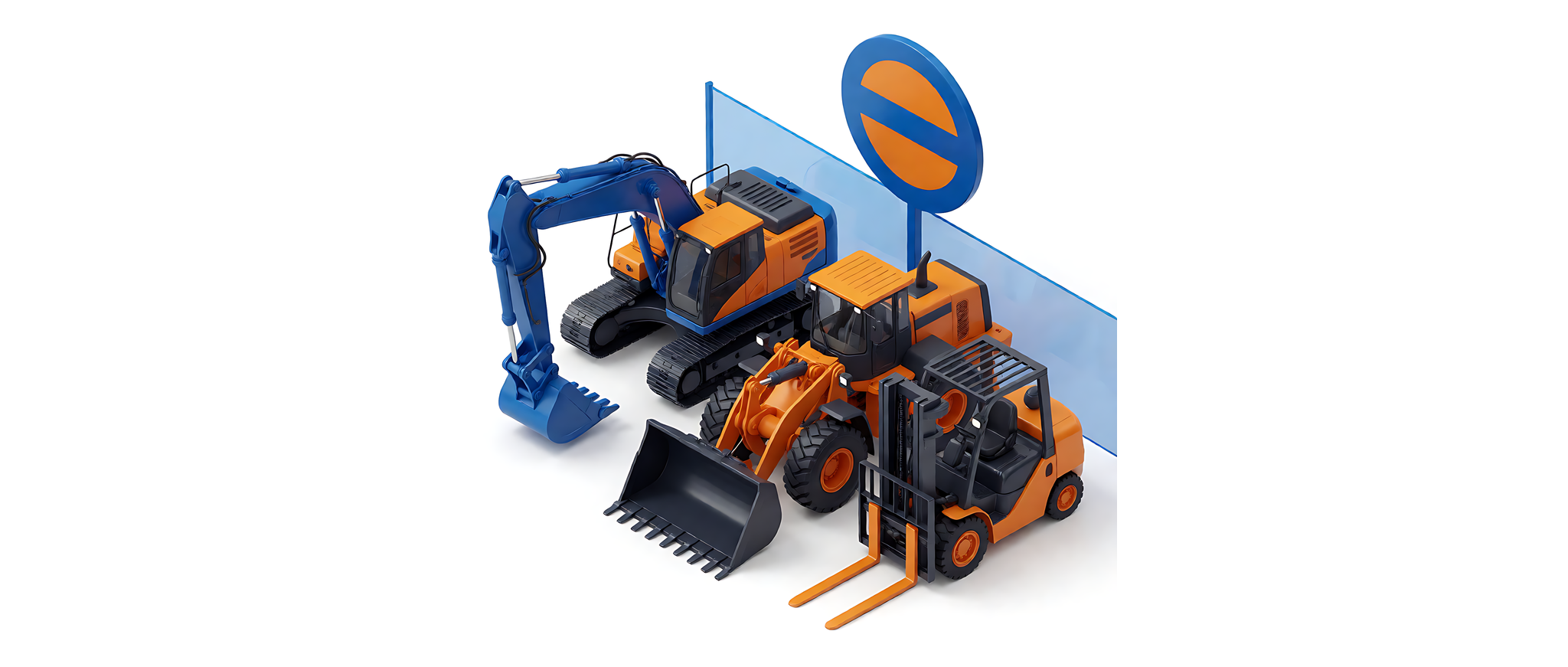
- Only three machine types qualify: forklifts, wheel loaders and excavators. No double dipping: equipment purchased purely as new-energy machinery, or already covered by the "two new" equipment-update program or other policy subsidies, is ineligible.
Linyi works the demand side instead: its notice states outright that it "encourages the use of new-energy non-road mobile machinery such as electric or hydrogen fuel-cell equipment." Subsidies and bans — one tightening, one releasing — both target the same group: rental operators and contractors holding aging diesel equipment whose job sites sit inside urban districts.
This is not an isolated case. Signals had already come from several regions earlier, and in our reading of the draft China V standard we laid out three major shifts. Local implementation is now landing faster than expected.
China V: The Compliance Line for New Equipment
Old equipment must be retired; new equipment must be compliant. That line has already entered the public-comment stage.
On June 12, 2026, the General Office of the Ministry of Ecology and Environment released the *Limits and Measurement Methods of Pollutant Emissions from Non-Road Mobile Machinery and Their Engines (China Stage V) (Draft for Comment)* — what the industry calls "Non-Road China V" — with comments closing on July 18, 2026 (Huan Biao Zheng Han [2026] No. 17). In their 2026 model catalogs, Beijing, Shanghai and other cities already require non-road mobile machinery to meet GB 20891—2014 Stage IV emission limits and their amendments.
With three layers of standards stacked, the industry's compliance logic becomes:
Installed base: China II-and-below machinery is progressively cleared out of local emission control areas through 2026–2027;
Machines in service: regardless of stage, smoke opacity must pass the GB 36886 Class III limits, and positioning devices must be installed and networked;
New purchases: China IV is already the market-entry threshold, the final China V text could land at any time, and buyers should build in upgrade headroom when procuring.
The legal basis is changing too. In the drafting notes for its emission control area adjustment, the city of Lu'an noted that once the *Ecological and Environment Code of the People's Republic of China* formally takes effect, the 2018 notice needs its legal basis updated, criteria for identifying high-emission machinery refined, and enforcement responsibility for construction sites and industrial enterprises clarified. That consultation ran from September 30 to October 30, 2026. From the national code down to local notices, the entire rulebook is being rewritten.
For the earlier policy thread, see Countdown to China VII: Where Does Emission Upgrading for Non-Road Machinery Go from Here?.
Three Types of Stakeholders, Three Responses

Individual owners / small rental operators: audit your equipment first. Three steps — check whether the environmental registration code shows China II or below; run a smoke opacity test to see whether you exceed the Class III limits; confirm the effective date of your city's emission control area notice. Jinan's window is first-come, first-served, so qualifying forklifts, loaders and excavators should file before the step-down.
Mid-size and large rental operators: run two calculations. One is residual value — after July 2027, China II equipment can basically only move across regions or be scrapped. The other is energy replenishment — the route you choose for electric equipment directly determines operating costs, and the piece on electric excavators crossing the 50-ton mark spells out the battery-swap versus charging split. Before a fleet-wide switch, segment by duty cycle: electrify fixed yards and short shifts first, and keep diesel for long-distance relocations for now.
General contractors: the risk sits in the contract. A growing number of municipal notices push responsibility onto construction sites, where entry/exit logging and networked positioning are hard requirements. Before bidding, write "emission class of machinery to be used" into the equipment list so that a banned machine does not stall the schedule after award.
One more note: before old equipment is fully retired, there is a final stretch in which it still holds value — The True Cost of Maintaining Construction Machinery: A Practical Guide to Preventive Maintenance gives a maintenance cadence you can follow directly.
How Much Time Is Left in the Window
Straighten out the timeline and there are few milestones left:
- October 30, 2026 — deadline for comments on Lu'an's emission control area adjustment
- July 1, 2027 — Linyi's citywide ban takes effect
- August 1, 2027 — Jinan subsidies step down 20%
- August 31, 2028 — deadline for Jinan subsidy applications
Counted from today, the compliant transition period left for China II equipment is under ten months. Emission control areas are expanding from urban districts to the entire jurisdiction, identification criteria from vintage year to smoke opacity, and supervision from paperwork checks to installed tracking — all three lines are tightening at once, and the direction is already irreversible.
Rather than wait for the notice to be posted on your door, take stock of your own yard first. For the latest pricing and trade-in programs on electric wheel loaders, electric excavators and new China IV machines, contact our sales team — we can verify the effective dates of emission control areas in your city.