Localization Is Now the Deciding Factor for Chinese Construction Machinery Overseas
In 2026, the story of Chinese construction machinery going overseas has reached a new milestone. Data released by the China Construction Machinery Association on September 7 showed that cumulative excavator sales reached 191557 units in January–August, up 24.2% year on year — of which 94619 units were sold domestically and 96938 units were exported. Exports exceeded domestic sales by 2319 units, overtaking the domestic market on a cumulative basis for the first time. As of January–July, exports were still 1425 units behind domestic sales; the reversal took just one month.
The volume inflection point has arrived. What decides success or failure from here on is no longer whether you can sell the machines, but whether you can put down roots overseas.
From "Selling" to "Taking Root"
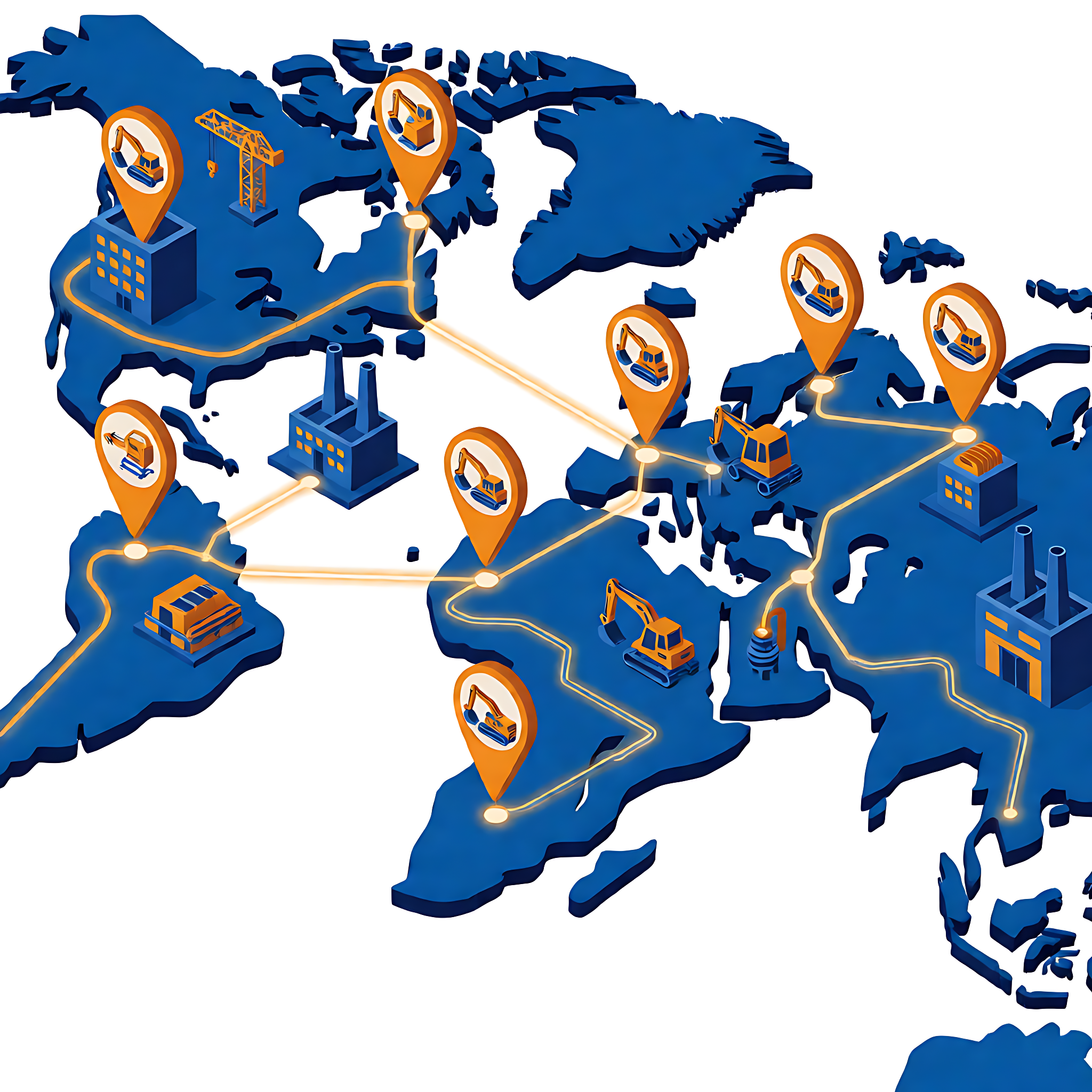
The underlying logic of export growth has already changed. In the first half of 2026, China's construction machinery exports reached 343.7 hundred million USD — USD 34.37 billion (see H1 exports of 343 billion USD), with growth driven by three lines simultaneously: mining development and urbanization infrastructure across Asia, Africa and Latin America are pulling demand for medium and large excavators; dealers in Europe and the US have entered a restocking cycle after destocking; and new scenarios such as AI data centers and plant renovation are driving purchases of small and mini excavators.
Sany's mini-excavator lighthouse factory in Kunshan is a typical example: one production line rolls out a mini excavator every 12 minutes, all 94 processes are fully digitalized, and January–August mini-excavator sales to Europe and the US grew more than 50% year on year, with the share shipped to Europe and the US rising markedly. Consecutive export data confirm this trend — the earlier exports beat domestic sales for eight straight months in Jan–Aug report already pointed out that the export growth rate is nearly twice the domestic growth rate.
But selling is only the first step. As the shift moves from "domestic production, shipped overseas" to "overseas factories + local channels + local service," companies face far more than just pricing issues.
Overseas Revenue Share Breaks 50% Across the Board
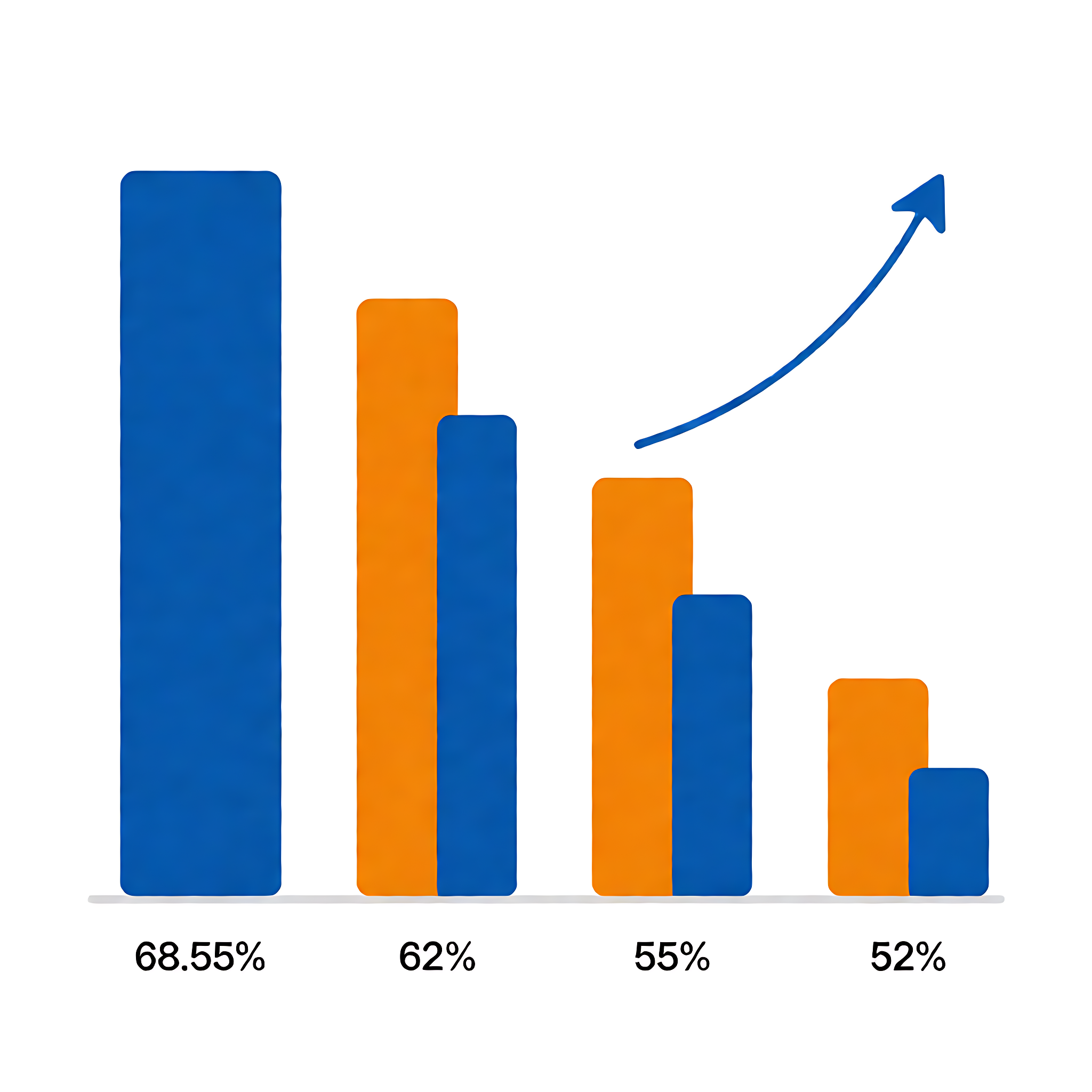
Structural changes at the company level are even more telling. In the first half of 2026, the overseas revenue shares of Sany Heavy Industry, XCMG Machinery and Zoomlion all broke through 50%, while Sunward Intelligent reached 68.55%.
- Sany Heavy Industry: overseas revenue of 320.4 hundred million yuan (RMB 32.04 billion) in the first half, up 21.8% year on year, with the overseas revenue share exceeding 60% — a record high
- Sunward Intelligent: overseas revenue share of 68.55%, making internationalization its main source of revenue
- XCMG and Zoomlion: both crossed the 50% threshold, with overseas business turning from a "supplement" into a "pillar"
For a detailed reading of the three giants' interim reports, see Reading the 2026 Interim Reports of the Three Construction Machinery Giants. When more than half of a construction machinery company's revenue comes from overseas, localization is no longer a bonus — it is a matter of survival.
RMB 4 Billion in Exchange Losses: The First Hidden Cost of Going Global
Behind the glowing headlines of overseas expansion lies an easily overlooked expense. In the first half of 2026, the three industry leaders recorded combined exchange losses of about 40.63 hundred million yuan (RMB 4.063 billion):
| Company | H1 exchange loss |
|---------|------------------|
| Sany Heavy Industry | 21.04 hundred million yuan |
| XCMG Machinery | 11.36 hundred million yuan |
| Zoomlion | 8.23 hundred million yuan |
In a period of RMB appreciation, overseas income converts back into less local currency — the more you sell, the more the exchange rate erodes. This is the true source of "the stronger the exports, the thinner the profits," rather than simple low-price competition.
There is only one answer: move production and settlement local. XCMG has raised the localization rate target for its regional plants in Brazil, India, Europe and elsewhere to above 50%; Zoomlion has built production bases in Italy, Germany, Mexico, Brazil, Turkey, the United States, Hungary and other locations — local production plus local settlement directly compresses foreign-currency exposure.
The Three Localization Cards: Factories, R&D and Service
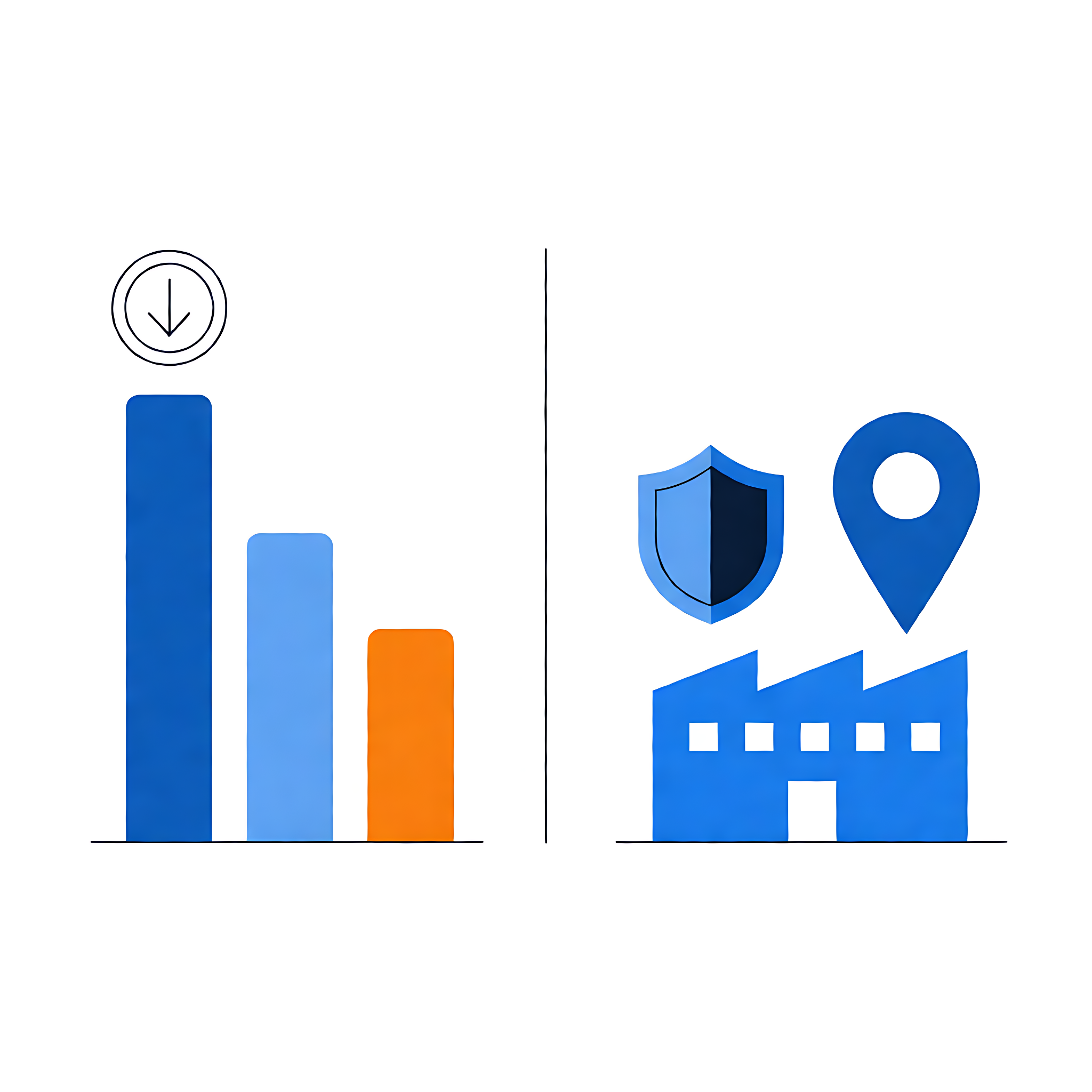
Companies that truly go deep overseas all hold the same three cards.
Card one: factories and capacity. Zoomlion's capacity utilization in regions such as Indonesia, Africa and Europe is already close to or above 100%, with products covering the 1.8-ton to 90-ton class. The significance of regional factories goes beyond tariffs — it is about adapting machines to local working conditions.
Card two: R&D centers. XCMG has five overseas R&D centers in Germany, the United States, Australia, Brazil and India, advancing pure-electric, hybrid and hydrogen powertrain lines in parallel, and has entered the supply chains of international mining giants such as BHP, Vale and Fortescue. Getting into a mining giant's supply chain depends on adaptability, not on the price tag.
Card three: service networks. Overseas job sites fear two things most: a broken machine waiting for parts, and waiting for a person who never comes. In South Africa, more than 50% of Sany's employees are local; its service network covers more than 30 countries and over 90 service outlets, the parts in-stock rate has long stayed above 90%, and it commits to on-site arrival within 2 hours and completion within 24 hours. Zoomlion has built a concrete machinery training center in Poland, and a complete-machine warehouse and spare parts center in Morocco, with a service radius covering all of North Africa.
Only when these three cards stack together do they form the full meaning of "localization": it is not about shipping the machines over, it is about moving the capability over.
Beware: Don't Take the Domestic Rat Race Overseas
As going global enters deep water, new risks are accumulating. Industry strategists warn that the three things internationalization must guard against are: stockpiling inventory, leaving exposure open, and chasing scale. Competition on low down payments and long payment terms rapidly accumulates receivables; once credit risk magnifies in sinking markets, the fruits of overseas growth will be eaten alive by collection problems.
The same holds for buyers — a low down payment often means high residual-value risk. When choosing a supplier, look beyond the quote: service outlet density, parts supply capability and whether the payment terms are healthy.
A Buyer's Perspective: Three Things to Check When Choosing Chinese Equipment
Local service capability: number of outlets, parts in-stock rate, committed arrival time. These three directly determine the equipment's effective annual operating hours
Depth of working-condition adaptation: for African mining models, look at boom strength, dust removal and heat dissipation; for the hot and humid environments of Southeast Asia, look at corrosion protection and air-conditioning systems; for European and US markets, machines must pass emissions, noise and safety certifications
Electric options: 257 electric excavators were exported in January–August, with 60 units exported in August alone. The volume is still small, but low-noise, low-emission is a rigid requirement on European and American campuses and enclosed job sites in Southeast Asia; domestic penetration of electric loaders already exceeds 60%, and overseas adoption is only a matter of time
For how to choose across different tonnages and scenarios, see How to Choose Among Four Types of Earthmoving Machinery and Loader or Excavator: Choosing the Wrong One Costs Hundreds of Thousands.
In Closing
Exports overtaking domestic sales is only the beginning. The real test for Chinese construction machinery is whether it can achieve local production, local service and local profitability overseas. The three cards — factories, R&D and service — must all be in hand: missing even one means going global is still stuck at the "selling" stage.
EquipNode serves global buyers with one-stop support covering everything from model selection and machine inspection to export logistics and aftermarket parts. For quotations and lead times on overseas models from Sany, XCMG, Zoomlion and other brands, feel free to contact us for a free customized proposal.