Wheel Loader or Excavator? Pick the Wrong One and Lose Big

title: Wheel Loader or Excavator? Pick the Wrong One and Lose Hundreds of Thousands
date: 2026-09-13
author: EquipNode
tags: [wheel loader, excavator, selection guide, construction machinery guide]
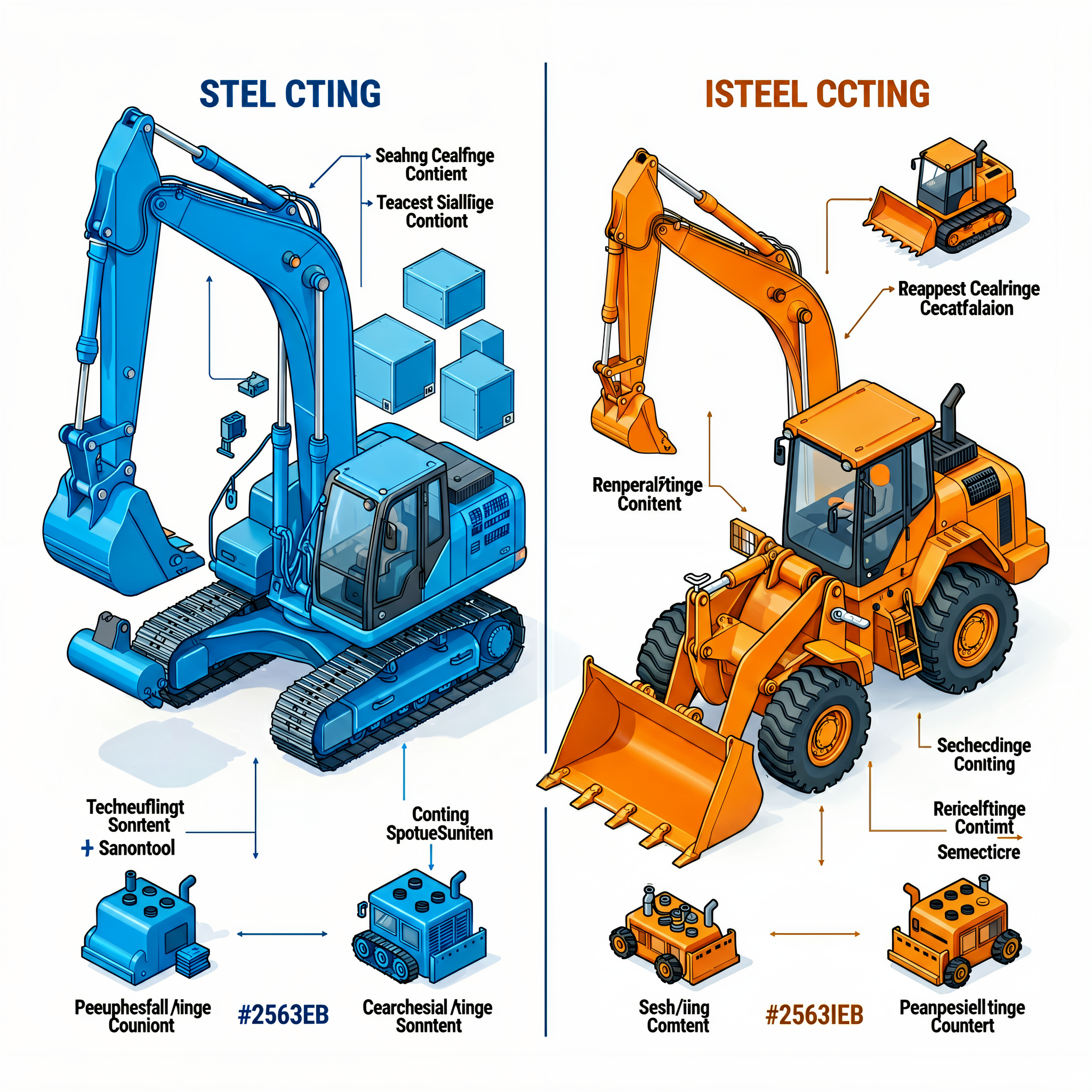
Why Are You Always Torn Between a Wheel Loader and an Excavator?
Many construction business owners face the same dilemma: you have a budget and want to buy a machine for the job, but should you choose a wheel loader or an excavator?
This is not a simple question. Both machines look like they just "scoop dirt" on a jobsite, but their working principles, applicable scenarios, and return on investment are completely different. Choose wrong, and at best you lose efficiency; at worst, you waste an entire year of work.
This article breaks down the differences across four dimensions — working principles, performance parameters, applicable working conditions, and return on investment — so you can make the right choice and avoid costly mistakes.
Working Principles: One "Digs," One "Scoops," but the Differences Go Far Beyond That
An excavator's core function is "rotary digging." It uses hydraulic cylinders to drive the boom, arm, and bucket, enabling precise excavation in three-dimensional space. Its crawler chassis allows stable operation on soft ground, and the 360° rotating platform lets it maneuver flexibly even in tight spaces.
A wheel loader's core function is "front-loading propulsion." Its bucket is mounted at the front of the machine, relying on the machine's forward thrust to push material into the bucket, then lift, transport, and dump. Its wheeled chassis enables fast repositioning, but it requires flatter, more prepared ground during operation.
Simple analogy: an excavator is like a hand that can precisely "grab" things; a wheel loader is like a shovel that uses thrust to "scoop" things.
Six Core Parameters Compared
| Parameter | Excavator (20-ton class) | Wheel Loader (3-ton class) |
|-----------|-------------------------|---------------------------|
| Operating weight | 18–22 tons | 10–12 tons |
| Bucket capacity | 0.8–1.2 m³ | 1.7–2.3 m³ |
| Max digging depth | 6–7 meters | N/A |
| Travel speed | 3–5 km/h | 30–40 km/h |
| Swing speed | 10–12 rpm | No swing |
| Fuel consumption (per hour) | 15–20 liters | 12–18 liters |
As the table shows, their "strengths" are completely different:
- Digging depth: A wheel loader has no such capability. For conditions requiring deep excavation (foundation trenches, utility trenches), only an excavator can do the job.
- Loading efficiency: A wheel loader's bucket capacity is nearly double that of an excavator in the same class. For bulk material handling, its efficiency far exceeds that of an excavator.
- Repositioning ability: A wheeled loader can drive directly onto public roads; a crawler excavator needs to be transported on a trailer.
How to Choose for Different Working Conditions: Five Typical Scenarios Analyzed
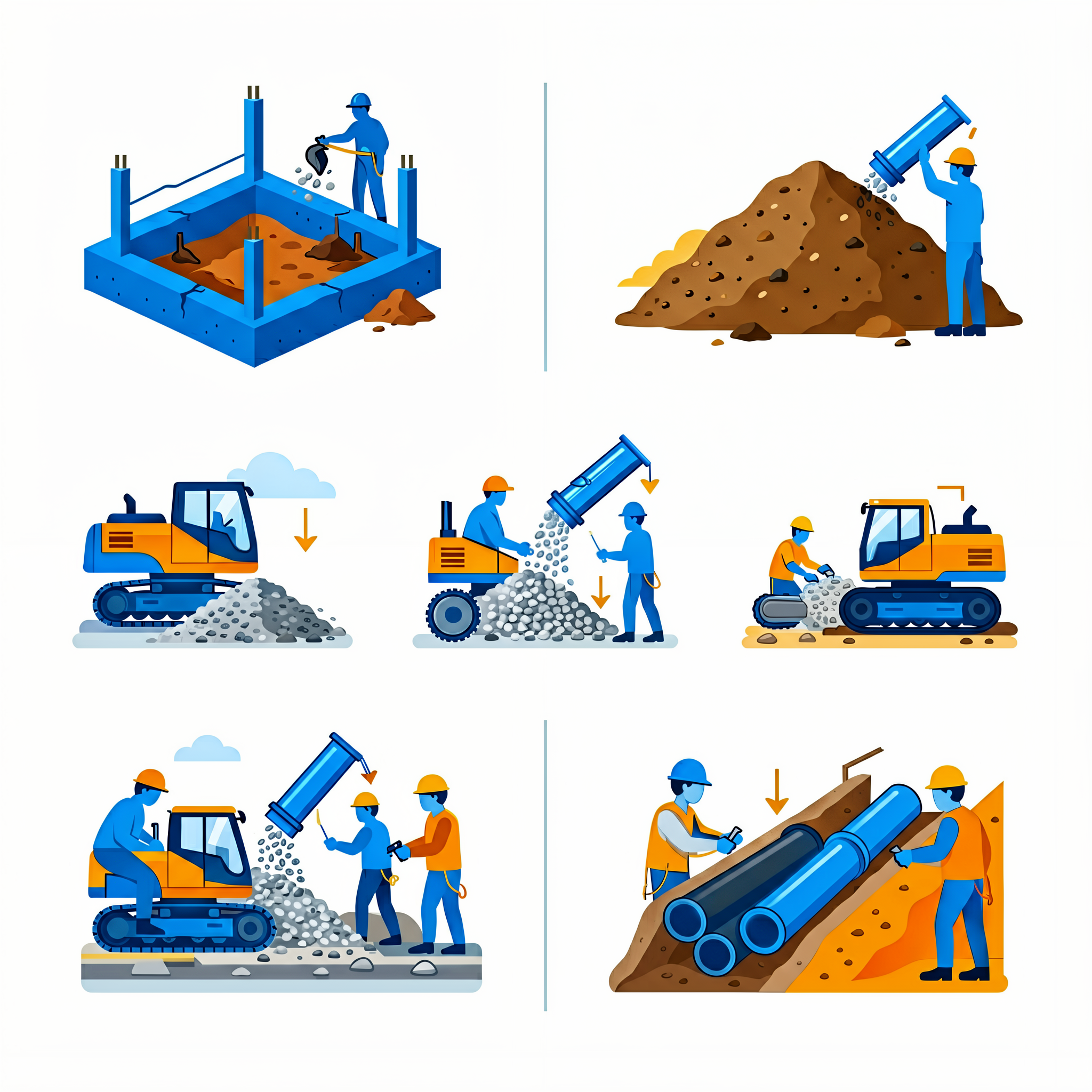
### Scenario 1: Foundation Trench Excavation
Choose the excavator — no contest. Foundation trenches require digging down 3–6 meters, which a wheel loader simply cannot do. A 20-ton class excavator equipped with a hydraulic breaker can also handle moderately weathered rock. A mainstream model like the Sany SY215C can reach a digging depth of 6.7 meters, fully covering most municipal foundation trench requirements.
### Scenario 2: Earthwork Backfill and Site Grading
The wheel loader is more suitable. Backfill doesn't require deep digging — what's needed is fast leveling and large-area spreading. A wheel loader's large bucket can scoop 2 m³ of earth in a single pass. Combined with its reverse–forward–dump cycle, its efficiency is 2–3 times that of an excavator. If the budget allows, adding a motor grader produces even better results.
### Scenario 3: Loading Gravel and Sand at a Material Yard
The wheel loader is the absolute workhorse. The typical operation at a gravel yard is: scoop from the stockpile → lift → dump into a dump truck. A wheel loader completes this cycle in 15–20 seconds, while a 20-ton class excavator takes 30–40 seconds. Loading 100 truckloads of gravel per day, a wheel loader saves 3–4 hours.
### Scenario 4: Demolition and Breaking
An excavator with a hydraulic breaker is the standard setup. Concrete pavement breaking, building demolition, and rock breaking all require hydraulic breakers. A wheel loader has no hydraulic output interface and cannot mount a breaker. The excavator wins decisively in this scenario.
### Scenario 5: Municipal Utility Trench Excavation
The excavator is more suitable. Utility trenches are typically 0.5–1.5 meters wide and 1–3 meters deep, requiring precise control of the excavation profile. A wheel loader's bucket is too wide to cut narrow trenches, and it has no downward digging capability. A mini excavator (6–8 tons) is the best choice for municipal utility trench work.
Return on Investment: Which One "Makes More Money"?
Let's do the math. Based on 2026 domestic market prices:
20-ton class excavator (e.g., Sany SY215C, XCMG XE215DA):
- New machine price: approximately 1.2–1.5 million yuan
- Monthly rental rate: 30,000–40,000 yuan
- Annual working hours: 1,500–2,000 hours
- Day rate: approximately 2,000–2,500 yuan/day
3-ton class wheeled loader (e.g., SDLG LG936L, Longgong LG855N):
- New machine price: approximately 350,000–500,000 yuan
- Monthly rental rate: 15,000–20,000 yuan
- Annual working hours: 1,800–2,500 hours (easier repositioning means higher utilization)
- Day rate: approximately 1,200–1,800 yuan/day
Key takeaways:
- Excavators have higher unit prices and day rates, but wider applicability. Payback period is typically 18–24 months.
- Wheel loaders have lower unit prices and higher utilization rates (due to faster repositioning). Payback period is typically 12–18 months.
- If your work is mainly earthwork hauling, a wheel loader offers better value for money.
- If working conditions vary (digging, breaking, backfilling, grading), the excavator is the "jack of all trades."
Three Common Mistakes Beginners Make
Mistake 1: "An excavator can do everything."
An excavator is indeed versatile, but in scenarios like bulk material loading and site grading, its efficiency is far below that of a wheel loader. Using an excavator to load 100 truckloads of gravel will cost significantly more in both fuel and time.
Mistake 2: "A wheel loader is cheaper, so I'll just buy that."
Cheap doesn't mean suitable. If your primary work condition is deep excavation, a wheel loader simply can't do the job — no matter how cheap, it's a waste.
Mistake 3: "A used machine in roughly okay condition will do."
Construction machinery components — hydraulic systems, engines, structural parts — all have lifespans. A used machine without complete maintenance records may end up costing more in repairs than the machine itself is worth. It's recommended to purchase through reputable channels, or choose inspected used machines provided by EquipNode.
Conclusion: There's No "Best" — Only "Most Suitable"
Choosing between a wheel loader and an excavator comes down to three key questions:
Does your work require deep excavation? Yes → Excavator
Is your work mainly bulk material hauling? Yes → Wheel loader
Do you need to reposition frequently? Yes → Wheeled loader
If your budget only allows one machine and working conditions vary, choose the excavator first. It covers 80% of construction scenarios. Once business stabilizes, add a wheel loader to boost efficiency.
For specific equipment pricing or selection advice, feel free to contact our professional team for a customized solution based on your actual working conditions.