Electric Excavators Push Into 50-Ton Class as Power Strategies Diverge
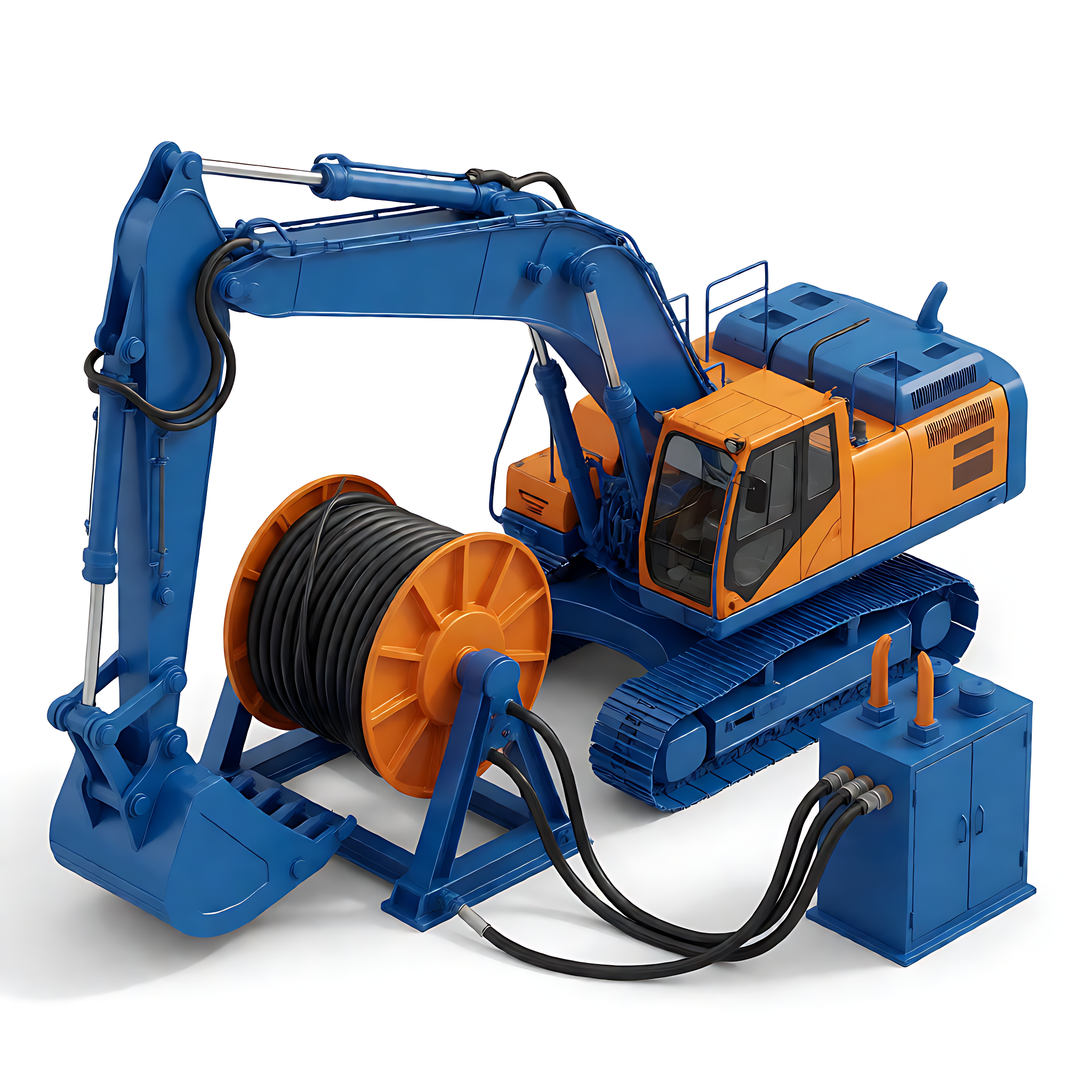
In the second half of 2026, new product launches in electric construction machinery have accelerated noticeably. Volvo has taken its electric excavator to the 50-tonne class, Hitachi has fitted a 13-tonne electric excavator with a "battery + grid" dual-mode system, and LiuGong's all-electric equipment plant in Indonesia has broken ground. Electrification is no longer just a trial run in the small and mid-size classes — leading manufacturers are now attacking the mainstream job-site applications head-on.
But behind the rush of new models, a rift in technical routes is emerging: battery fast-charging, direct cable connection, or dual-mode hybrid — which path will actually work?
Volvo EC500 Electric: 50 Tonnes, 35-Metre Cable Directly Connected to the Grid
In September, Volvo Construction Equipment announced that the EC500 Electric pre-production machine had entered field testing in Norway, covering quarrying, road construction, and tunnel engineering. This 50-tonne electric excavator matches the performance of the diesel EC500, with two core design features:
- Onboard high-voltage battery: supports 2-3 hours of continuous operation
- 35-metre cable reel: once connected to a 400V grid supply, it can keep working across shifts with no charging needed
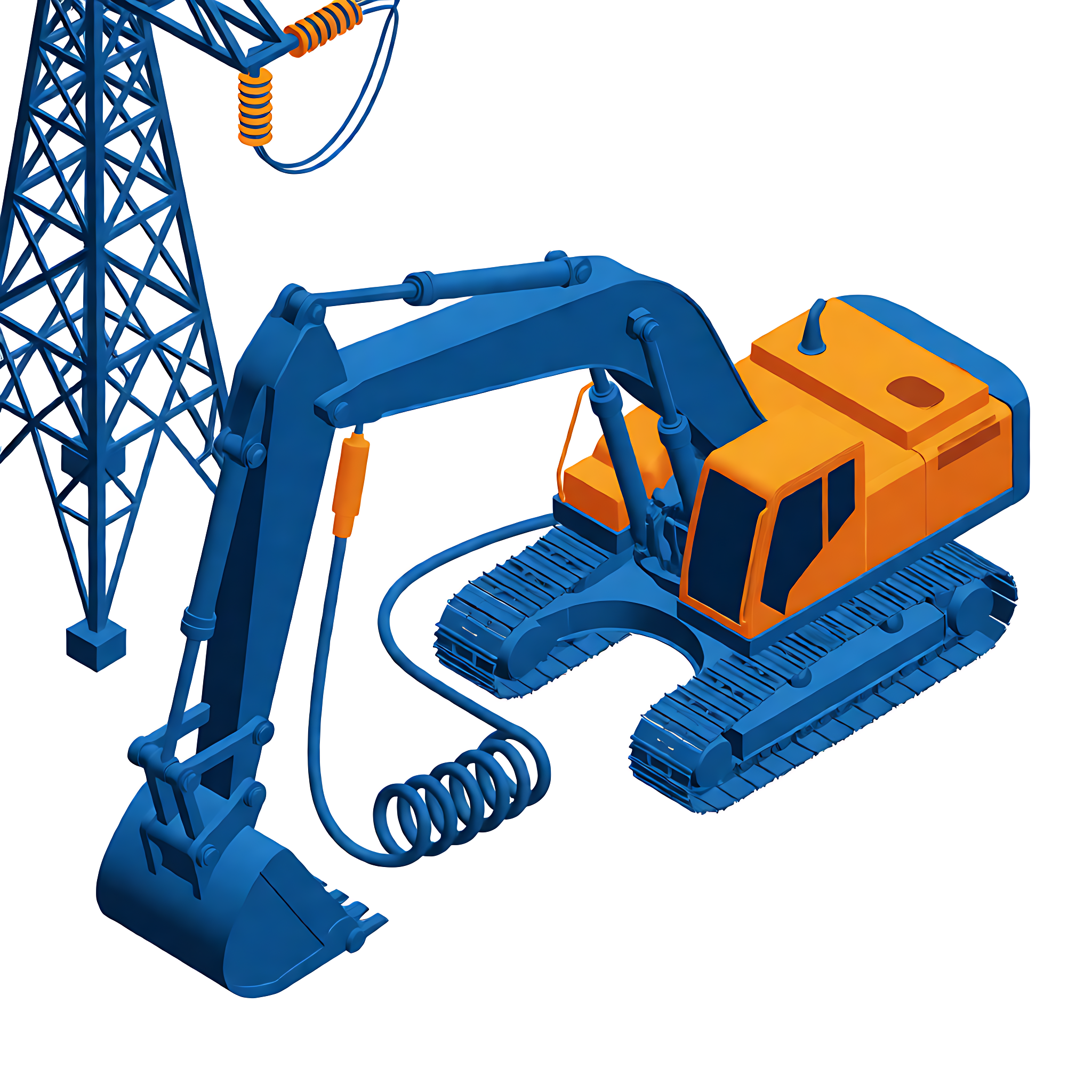
In other words, the EC500 Electric follows a "battery + direct grid connection" combined route: the battery handles short-distance manoeuvring, while the cable powers long-duration work at fixed job sites. Volvo has also equipped it with an intelligent battery system that can adapt to grid voltage fluctuations — power conditions on job sites have always been unstable, and this design directly addresses buyers' biggest concern: how to keep the machine powered.
The production version is planned for launch in spring 2027. Until then, test data from Norway will continue to feed back for final tuning.
Hitachi ZX135-7EB: Dual-Mode Design, 24-Hour Non-Stop Operation
Hitachi's approach is more aggressive. Released in February, the ZX135-7EB is its largest battery-electric excavator — a 13-tonne machine built around dual-mode operation:
Pure electric mode: powered by a 198 kWh lithium-ion battery — zero emissions, low noise, ideal for work in urban and residential areas
Grid-assisted mode: connected to a CEE 400V three-phase AC supply, so continuous operation is no longer limited by battery capacity
Switching between the two power systems lets the machine handle strict environmental scenarios while also running back-to-back on sites with a stable power supply. Performance matches the diesel ZX135-7, with lower maintenance costs — no more servicing burden from engine oil, filters, or exhaust aftertreatment systems. The electric drive system supports remote monitoring, with battery status and motor load rate visible in real time.
The machine debuted at CONEXPO in Las Vegas in March 2026. Hitachi's zero-emission lineup already covers the ZX17U-6EB, ZX55U-6EB, and ZX85-6EB, plus the ZE17/ZE55/ZE85 hydrogen-powered models developed in partnership with Kiesel.
China Market: Sales Surge, but Penetration Stands at Just 0.21%
Behind the wave of new models sits a set of contrasting statistics. According to the China Construction Machinery Association:
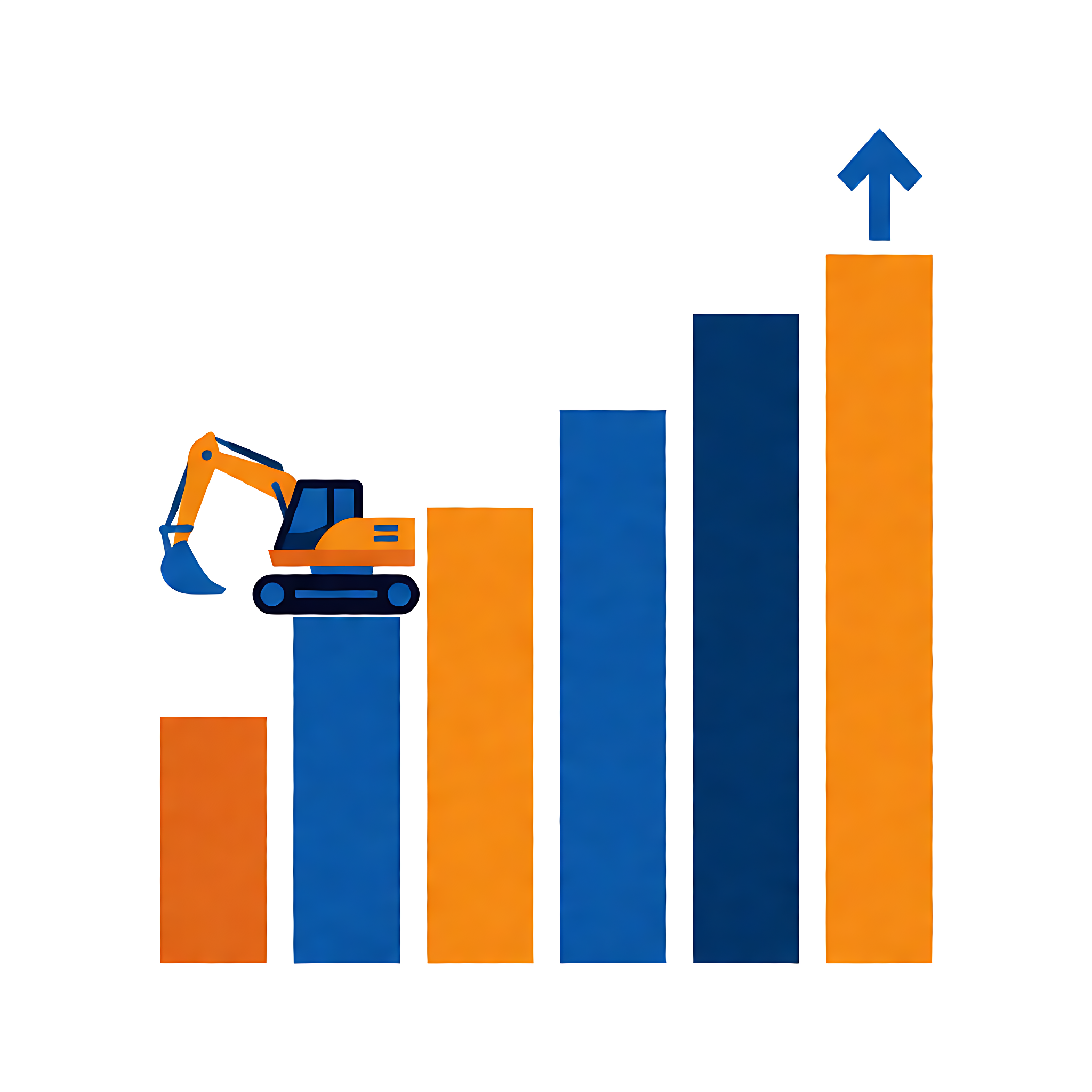
- 2025: total excavator sales of 235,257 units, up 16.97% year on year; electric excavators accounted for just 285 units, a surge of 231.40% year on year
- H1 2026: total sales of 152,320 units, up 26.39% year on year; electric excavators reached 321 units, up 129.29% year on year
- Penetration rate: 0.04% in 2023 → 0.12% in 2025 → 0.21% in H1 2026
Growth is explosive, but the base is tiny. For comparison: in January–February 2026, electric loaders sold 5,132 units for a penetration rate of 24.1%, and in the domestic market that figure broke through the 50% mark. In that same period, electric excavators sold just 70 units.
The root of the gap lies in job-site conditions. The main battlefield for electric loaders is fixed sites such as ports and material yards — stable conditions, convenient charging, and a business case that closed long ago. Excavators, by contrast, work scattered sites and relocate frequently, demanding far more flexibility in how they are recharged. Purchase cost is another barrier — electric models typically cost about twice their diesel equivalents, a sensitivity that hits especially hard in an excavator market dominated by small independent buyers.
On the export side, in H1 2026 there were 186 units sold domestically (57.94%) and 135 exported (42.06%), with the overseas share now exceeding 40%. QYResearch forecasts a compound annual growth rate of 23.4% for the global construction machinery electrification market from 2026 to 2032.
Three Recharging Routes: Choose Based on Job-Site Conditions
Volvo's and Hitachi's new models show that recharging technology for electric construction machinery has now diverged into three routes:
Route 1: Large battery + fast charging. Suited to short shifts and fixed sites. The bottleneck is battery energy density and charging speed — market acceptance will only cross over once batteries can sustain a mid-size excavator through one full continuous shift.
Route 2: Direct cable connection to the grid. Volvo EC500 Electric's approach. Suited to quarries, tunnels, and fixed demolition work where a stable power supply exists — it eliminates range anxiety entirely, at the cost of mobility limited by cable length.
Route 3: Dual-mode hybrid. The direction represented by Hitachi's ZX135-7EB and Sunward's world's largest range-extended electric rotary drilling rig. The battery handles manoeuvring, while the grid or a range extender handles endurance — more complex in structure, but with the broadest range of applications.
The selection logic hasn't changed: look at the job site first, then at the recharging conditions. Fixed sites favour direct cable connection; environmentally sensitive urban projects should go pure electric; and for variable job sites with frequent relocation, dual-mode is currently the most practical choice. To compare the trade-offs across different power routes, see our excavator engine selection analysis.
Chinese Brands' Electrification Push
Chinese domestic manufacturers are moving just as fast. LiuGong's all-electric heavy equipment plant in Indonesia broke ground in July, while the company is also pushing electric loaders and excavators into the US market; SANY India exhibited 31 machines and 13 new models in one go at bauma CONEXPO INDIA 2026; and Sunward unveiled the world's largest range-extended electric rotary drilling rig. XCMG, LiuGong, and Zoomlion are all investing in both pure-electric and hybrid lines at the same time — the competitive landscape is far from settled.
Overseas demand is expanding in step. Electric excavators already accounted for more than 40% of exports in H1, and Chinese brands are using the electrification window to break into premium markets in Europe, the United States, and Southeast Asia — a trend consistent with what we analysed in our export data article.
In Closing
The "spring" of the electric excavator hasn't truly arrived yet — a 0.21% penetration rate says it all. But the arrival of 50-tonne-class models, the maturation of dual-mode technology, and the rising export share all point to the same conclusion: the market's breakout is only a matter of time, and the choice of recharging route will determine who gets out in front first.
For the latest quotes and configuration plans on electric excavators or conventional diesel models, please contact the EquipNode sales team. We offer one-stop procurement for both new and used equipment.