Excavator Engine Selection: Why Japanese Power Still Dominates
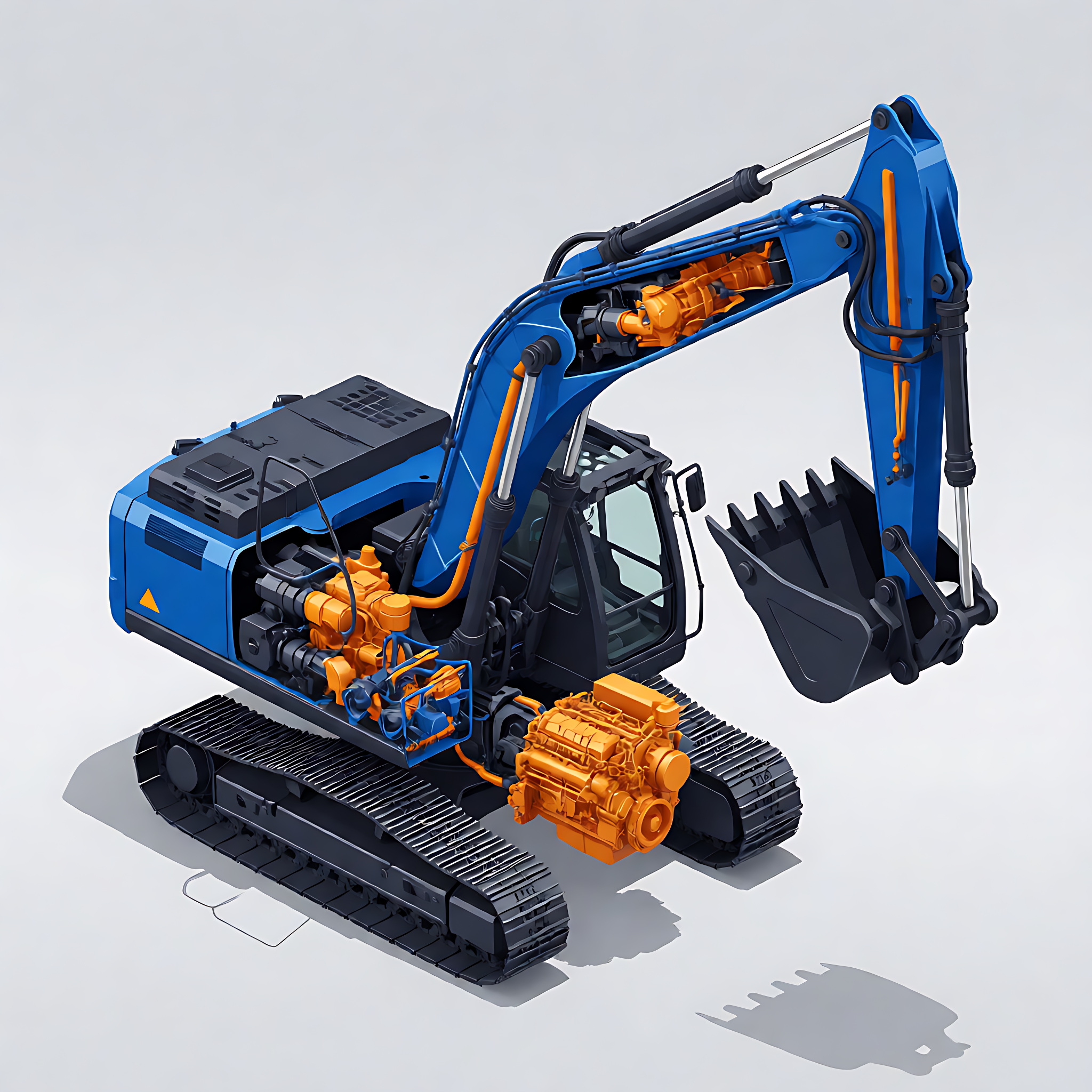
In the purchase price of a 20-ton-class excavator, the powertrain (engine + hydraulics) typically accounts for three to four tenths. Many operators and buyers do a double-take the first time they open the spec sheet: the machine is domestically built, yet the engine badge reads Isuzu, Cummins, or Yanmar. "China can build aircraft carriers — why does an excavator still need a Japanese engine?" The question has been debated in industry forums for years, and the real answer is far more complicated than "worship of foreign brands."
This article takes the excavator powertrain apart in depth: what makes these engines so demanding, where each mainstream brand sits in the ecosystem, exactly where the China–Japan gap lies, and how the selection calculus has changed since China Stage IV emissions took effect.
Why Are Excavator Engines So "Picky"?
Automotive diesel engines and construction-equipment diesel engines are two different species. A passenger-car diesel may chase power-per-liter in the 2,200–2,600 rpm range, but an excavator doesn't need to be fast — it needs to be strong and tough:
- Low speed, high torque: Excavator engines are generally rated around 2,000 rpm — several hundred rpm below an automotive diesel of the same output. They need a wide torque plateau so the hydraulic pump can draw power during combined motions without lugging the engine.
- High transient-response requirements: The instant the bucket bites into the ground, load spikes. The engine has to recover that torque within a fraction of a second or the machine feels sluggish. Calibrating for this is a hard test of engineering capability.
- Power matching with the hydraulic system: The engine's output curve must mesh with the hydraulic pump's power-absorption curve. A poor match means either wasted fuel or a machine that bogs down — OEMs guard this calibration as a core trade secret.
- Sustained high-load operation: In quarrying and rock-breaking duty, engines run in the high-load zone year-round. Mean time between failures (MTBF) requirements are far above those of commercial vehicles.
Put simply, an excavator engine is an endurance athlete: reliability, fuel consumption, and aftertreatment durability matter far more than peak power.
The Mainstream Brands: Who Supplies the "Heart"
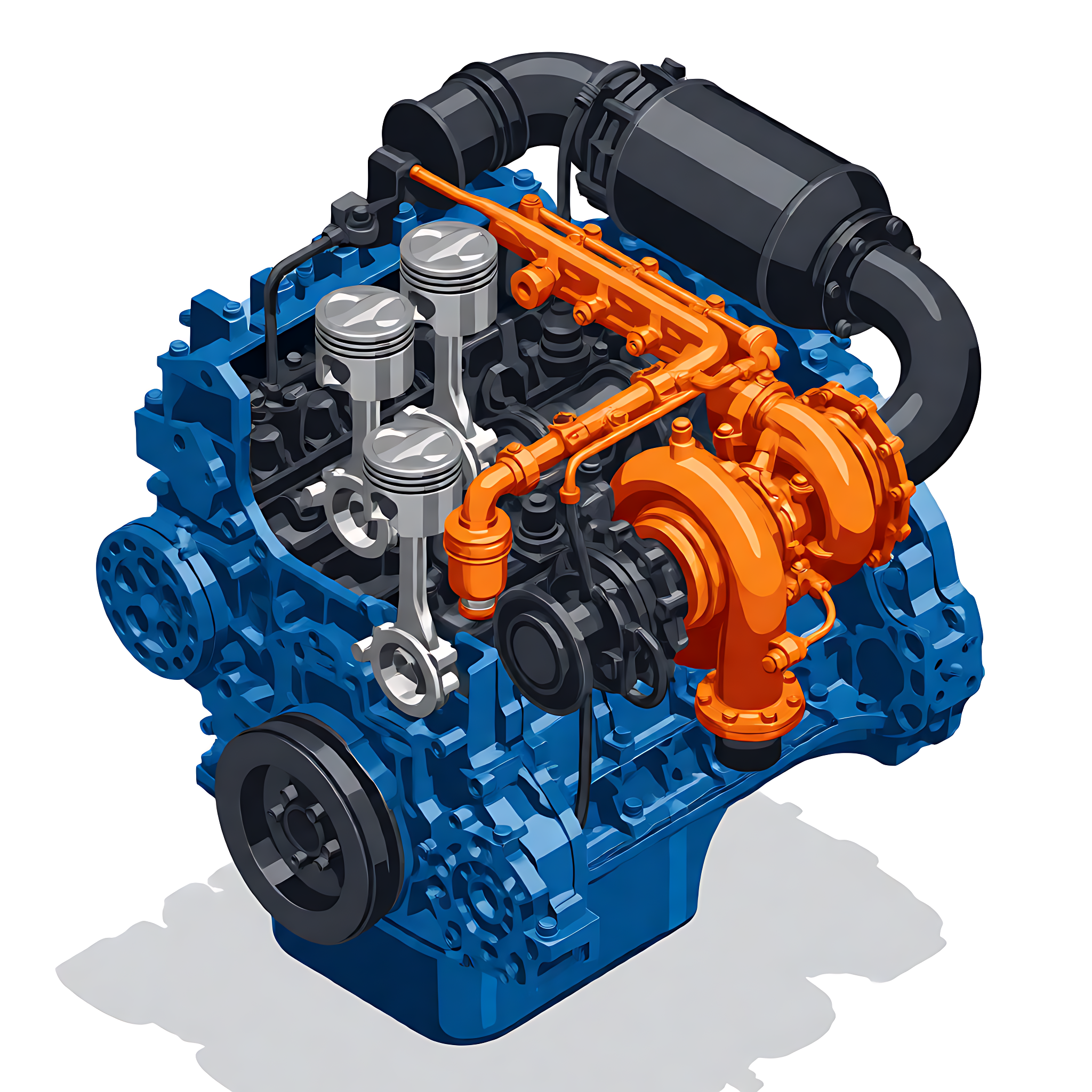
Isuzu: The go-to powerplant for Japanese- and Korean-built excavators. Large numbers of Hitachi Construction Machinery, Kobelco, and Doosan (now Develon) models come standard with Isuzu 4JJ1 and 4HK1-series engines, and domestic OEMs commonly spec them on their mid-size excavators. The hallmarks: ruggedness, strong residual values, and a dense global parts network.
Cummins: A regular on large excavators and premium models. Cummins power can be found across many of SANY and XCMG's 30-ton-plus excavators, as well as certain Caterpillar models, and its mature aftertreatment packages have continued to expand its share in the China Stage IV era.
Yanmar: The de facto standard in mini excavators. In the 3–8-ton class, the Yanmar 4TNV series is almost standard equipment — compact, fuel-efficient, and inexpensive to maintain.
Kubota: King of the compact excavator. A wide range of 1–3.5-ton urban-application machines run Kubota engines, which share platforms with agricultural equipment, keeping costs tightly controlled.
Domestic camp: Weichai, Yuchai, and Yunnei Power already have deep penetration in loaders, forklifts, and cranes, but their share of the factory-fitted excavator market remains low. In recent years, the Weichai WP series and Yuchai Zhanyu series have begun to scale up on large excavators from certain domestic brands — the progress is visible to the naked eye — but displacing Isuzu and Cummins will take several more years of dyno data and market reputation.
It's worth noting that powertrain routes are diversifying. In August 2026, the UK's JCB announced that its hydrogen-fueled internal-combustion engine hit 406 mph (about 653 km/h) in high-speed testing, demonstrating the performance ceiling of hydrogen ICEs. On the electrification front, SANY America's next-generation equipment and New Holland's electric mini excavator, both shown at CONEXPO 2026, are pulling the "engine" component away from diesel's dominance toward a multi-route coexistence.
Where Does the China–Japan Gap Really Lie?
The gap isn't in cast iron or machining tolerance — it lies in three areas of "soft power":
1. High-pressure common rail systems. The common rail system is the diesel engine's "brain," long dominated by a handful of suppliers such as Bosch and Denso. Injection pressure, multiple-injection strategies, and calibration in coordination with aftertreatment — domestic suppliers are still playing catch-up.
2. Aftertreatment calibration experience. Calibrating DPFs (diesel particulate filters) and SCR (selective catalytic reduction) requires a massive diet of real-world operating data. Imported brands have run their engines for over a decade across every fuel grade, climate, and altitude on the planet — calibration libraries that domestic powertrain makers cannot simply buy off the shelf in the short term.
3. Durability validation systems. Before an imported engine is finalized, it goes through thousands of hours of test-bench and machine-level validation. Domestic manufacturers generally compress these cycles; early products showed higher failure rates in harsh duty such as quarrying, and rebuilding that reputation takes time.
That said, the gap is closing. The industry widely estimates that domestic engines of the same class cost 15–30% less to purchase than imports — already an attraction for price-sensitive users. The push by OEMs such as SANY to develop in-house engines is also forcing the supply chain to level up.
China Stage IV: The Watershed in Powertrain Selection
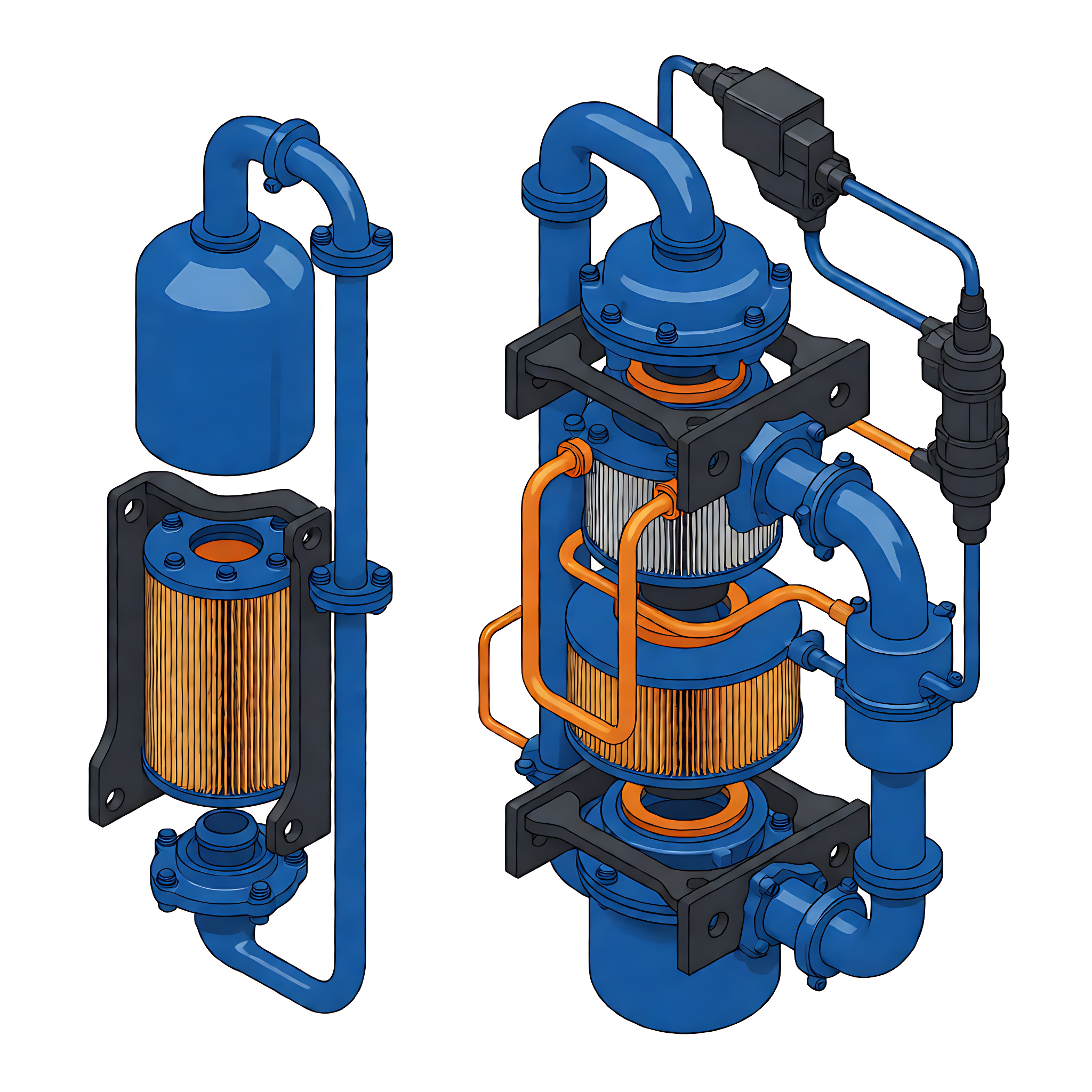
Since December 1, 2022, China has fully implemented the Stage IV emission standard for non-road mobile machinery. This is a watershed for excavator powertrain selection:
- The dominant technology route is DPF + SCR; aftertreatment systems grew larger and more expensive, and the industry broadly estimates machine-level costs rose 5–10% as a result;
- DPFs require periodic regeneration, which imposes tighter requirements on fuel sulfur content and oil ash — using the wrong fluid will plug them directly;
- Calibration experience accumulated by imported brands on Euro IV and EPA Tier 4 certifications transfers directly, making failure rates more controllable;
- The used-equipment market has developed a "Stage III / Stage IV" divide: Stage III machines face access restrictions in restricted zones, and residual values have diverged sharply.
After Stage IV, the "buy the cheapest engine" math has to be recalculated: one aftertreatment repair can cost as much as the price difference you saved in the first place.
Hydraulic Systems: The Other Half of the "Heart"
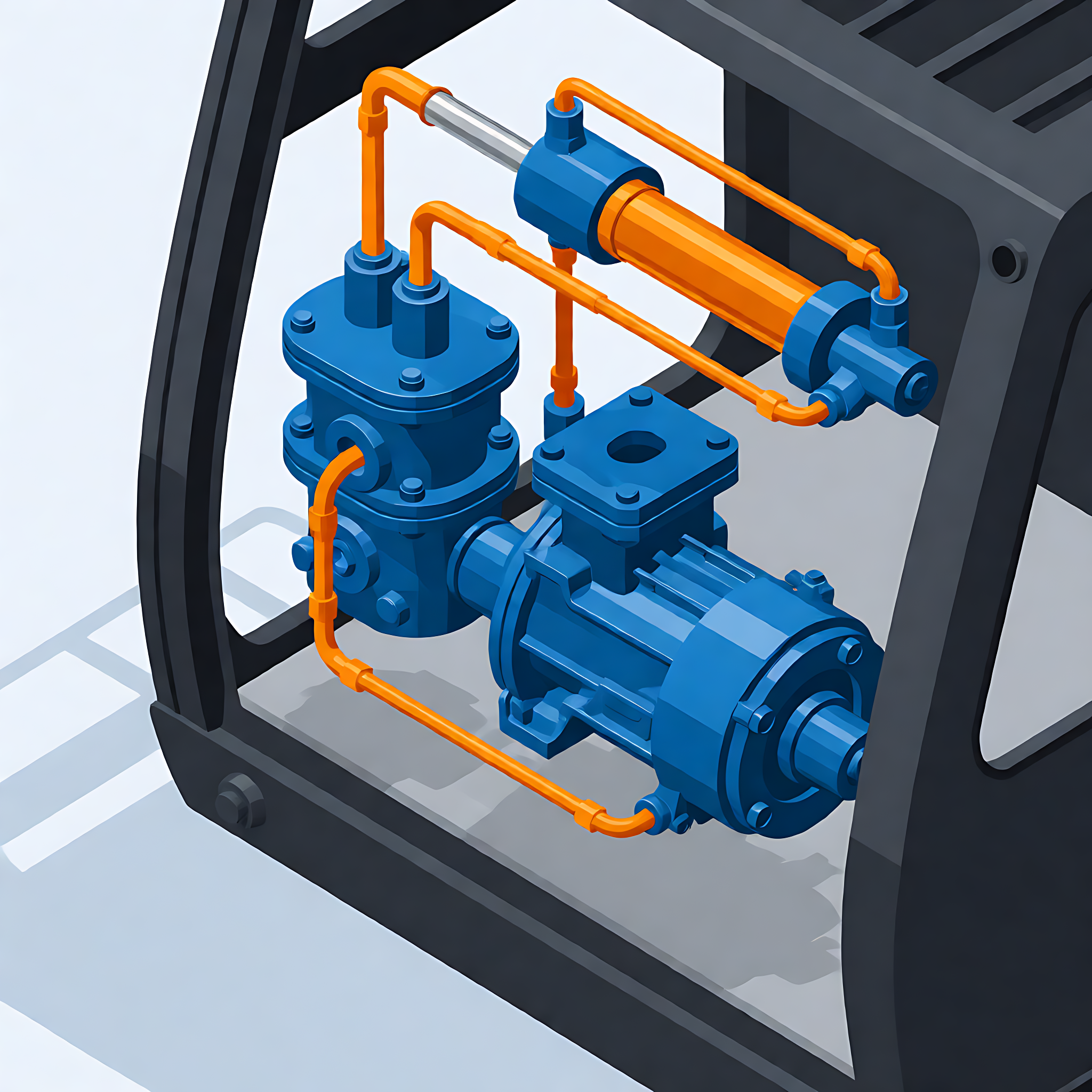
The engine is only half; the other half lives in the hydraulic system. The mainstream suppliers of excavator main pumps and main control valves are Kawasaki Heavy Industries (Japan), Bosch Rexroth (Germany), and Hengli Hydraulic (China). Kawasaki pumps dominate Japanese-built machines for the same reason Isuzu engines do: mature, stable, and backed by a complete global service network.
Hengli Hydraulic is the biggest variable of recent years — China's domestic leader in hydraulic components, already integrated into several OEMs' supply chains, with an obvious price-to-performance advantage. Whether a machine's movements feel "connected to your hand," and whether combined motions flow smoothly, depends on the joint calibration of engine and hydraulics. That is the OEM's true moat.
Purchase and Maintenance: Four Practical Tips
Match power to duty: For quarrying and rock-breaking, prioritize large-displacement platforms like Cummins and Isuzu; for small urban jobs, Yanmar and Kubota are more economical.
Mind the parts radius: Imported-engine parts can generally reach any provincial-capital-level city within 48 hours; in remote mining districts, confirm stock of high-wear parts in advance.
Never skimp on maintenance for Stage IV equipment: Oil must meet low-ash specifications (CK-4 or above), and cutting fuel-filter replacement intervals by a third is not an exaggeration. For a systematic overview of maintenance intervals, see our [guide to buying and appraising used equipment](blog-news-20260523.html).
Residual-value reference: Used machines with Isuzu or Cummins power trade hands noticeably faster than those with niche brands — a hidden premium worth factoring into your original purchase.
Chinese excavator exports have outperformed domestic sales for several consecutive months (see our analysis of exports exceeding domestic sales for eight straight months). Overseas users' powertrain preferences will, in turn, reshape the domestic supply chain.
In Closing
The real answer to "why do excavators still use Japanese engines?" is this: across the three dimensions of reliability, aftertreatment calibration, and global service networks, imported powertrains still offer greater certainty today. But certainty has a price, and the cost-effectiveness of domestic powertrains is rewriting that equation. For buyers, there is no "best" powertrain — only the configuration that best fits the duty, the budget, and the after-sales radius.
For engine configuration plans and current pricing on flagship excavators from SANY, XCMG, Caterpillar, and other brands, please contact the EquipNode sales team. We provide one-stop service covering selection advice, export customs clearance, and global after-sales support.