Excavator Selection Guide
title: Excavator Selection Guide
date: 2026-07-26
tags: [excavator, selection guide, industry education, construction machinery]
Why Choosing the Right Excavator Matters
In the world of construction machinery, the excavator is one of the most common and versatile pieces of equipment. From urban pipeline installation to deep rock mining, excavators of different tonnages and types handle vastly different tasks. Choosing the wrong machine not only hurts construction efficiency but also significantly drives up operating costs.
In 2026, the global excavator market continues to grow. According to Equipment World's buyer guide, over 15 new models were launched in the North American market alone. In China, micro excavator exports from brands like SANY, XCMG, and LiuGong surged by over 30% year-on-year. With such a rich array of options, how do you find the one that's right for you? This article breaks down the decision along three dimensions — tonnage, operating conditions, and configuration — to help you find your bearings.
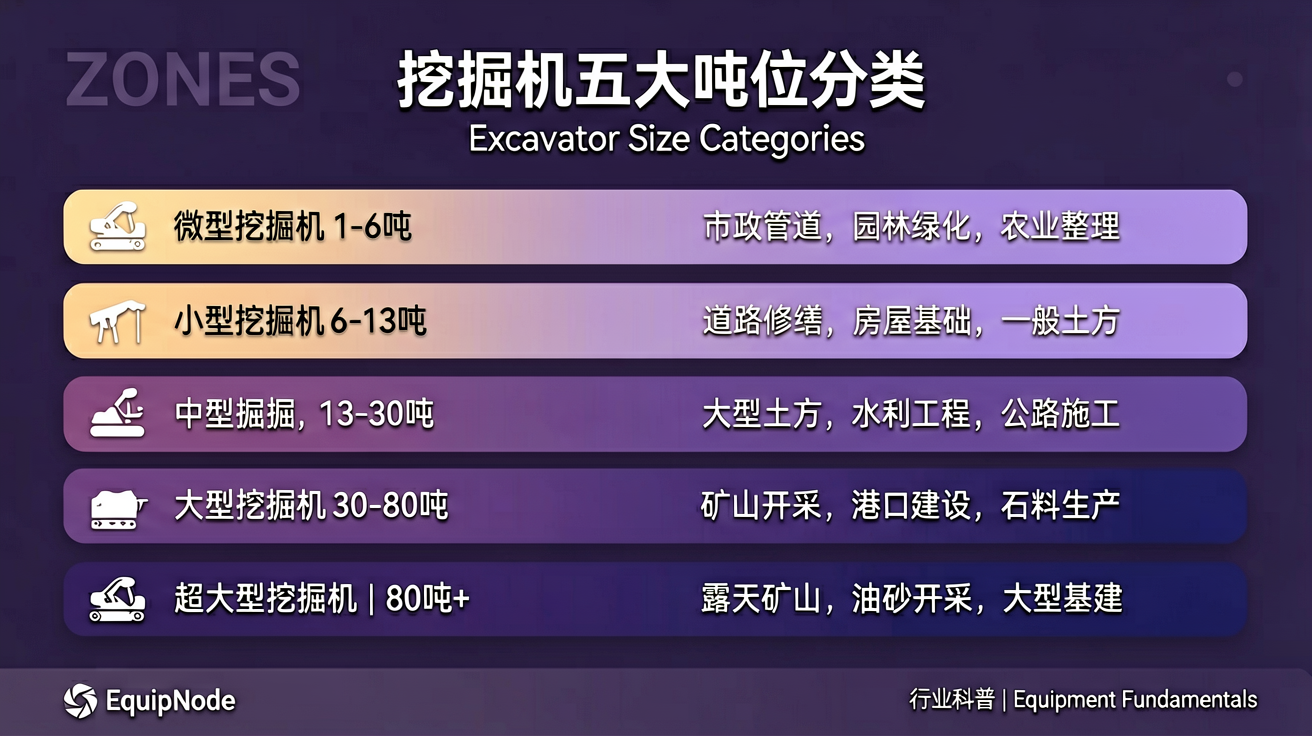
Micro Excavators (1–6 tons): The Urban Workhorse
Micro excavators have been the fastest-growing category in recent years. Their compact size, easy transportability, and low noise make them especially suited for confined urban spaces.
Typical Applications:
- Municipal pipeline laying and repair
- Landscaping and garden construction
- Agricultural land preparation
- Indoor demolition work
Key Parameters:
- Track width: typically 300–450 mm, can fit through standard doorways
- Swing radius: under 1.5 m for most models
- Engine power: 15–45 kW
- Bucket capacity: 0.01–0.3 m³
Selection Tips: The core advantage of a micro excavator is "fits in, gets the job done." When purchasing, focus on passability (overall machine width and height), working flexibility (swing angle and digging depth), and fuel efficiency. For municipal engineering users, it's recommended to choose models with auxiliary hydraulic interfaces for quick attachment changes such as hydraulic breakers and grapples.
For detailed pricing on SANY, XCMG, and other brand micro excavators, feel free to contact our sales team.
Small Excavators (6–13 tons): The Best Value for Money
Small excavators are the most frequently purchased tonnage range by construction teams. They balance work capability with transport convenience, earning them the nickname "jack-of-all-trades" machines.
Typical Applications:
- General earthwork projects
- Road repair and renovation
- Building foundation construction
- Small-scale mining support operations
Key Parameters:
- Standard bucket capacity: 0.3–0.8 m³
- Maximum digging depth: 5–6.5 m
- Engine power: 45–90 kW
- Overall weight: 6,000–13,000 kg
Selection Tips: The small excavator market is highly competitive, with price gaps of 30%–50% between domestic Chinese brands and Japanese brands. According to rippa.com's latest buyer reviews, domestic micro excavators have matched or even surpassed some Japanese brands in reliability and after-sales response speed. When purchasing, focus on: hydraulic system brand (Kawasaki and Bosch Rexroth are preferred), engine make (Kubota and Yanmar are preferred), and dealer parts supply capability.
Medium Excavators (13–30 tons): The General-Purpose Mainstay
Medium excavators are the core equipment of large construction enterprises. They can handle the vast majority of earthwork and rockwork projects and are also the primary models in the export market.
Typical Applications:
- Large-scale earthwork projects
- Mining operations (non-blasting)
- Water conservancy construction
- Highway and railway construction
Key Parameters:
- Standard bucket capacity: 0.8–1.8 m³
- Maximum digging depth: 6.5–8 m
- Engine power: 90–160 kW
- Overall weight: 13,000–30,000 kg
Selection Tips: When purchasing a medium excavator, pay close attention to the working attachment configuration. A standard arm suits general earthwork, an extended arm suits deep trench operations, and a short arm suits heavy-load conditions. Additionally, whether the machine is equipped with a GPS remote monitoring system and supports features like one-key start are important selection factors in 2026.
Large Excavators (30–80 tons): The Mining Heavyweight
Large excavators are the primary equipment for mining and major infrastructure projects. They are known for high efficiency and high reliability, with a single machine capable of excavating and loading thousands of tons of material per day.
Typical Applications:
- Open-pit coal and iron mines
- Large-scale water conservancy hub projects
- Port and dock construction
- Quarry aggregate production
Key Parameters:
- Standard bucket capacity: 1.8–5.0 m³
- Maximum digging depth: 8–10 m
- Engine power: 160–400 kW
- Overall weight: 30,000–80,000 kg
Selection Tips: For large excavators, the core principle is "matching." The excavator's bucket capacity must be matched to the hauling trucks' payload — ideally, one excavator is paired with 3–5 dump trucks. Moreover, fuel consumption and maintenance costs for large equipment are extremely high, so it's advisable to prioritize models with remote diagnostics and preventive maintenance features to minimize downtime losses.
Extra-Large Excavators (80 tons and above): The Mining Behemoth
Extra-large excavators are the "crown jewels" of construction machinery. Weighing hundreds of tons each and priced in the tens of millions of yuan, they serve primarily large-scale mining and special engineering projects.
Typical Applications:
- Large open-pit coal and iron mines
- Oil sands extraction
- Large-scale infrastructure earthwork projects
Key Parameters:
- Standard bucket capacity: 5.0–30 m³
- Engine power: 400–1,500 kW
- Overall weight: 80,000–300,000 kg
- Some models use electric drive
Selection Tips: Choosing an extra-large excavator goes beyond equipment-level decisions — it requires comprehensive consideration of mine planning, hauling system coordination, power supply conditions, and more. Currently, Caterpillar, Komatsu, and Liebherr dominate this segment, while Chinese domestic brands are accelerating their catch-up efforts.
Five Core Selection Dimensions
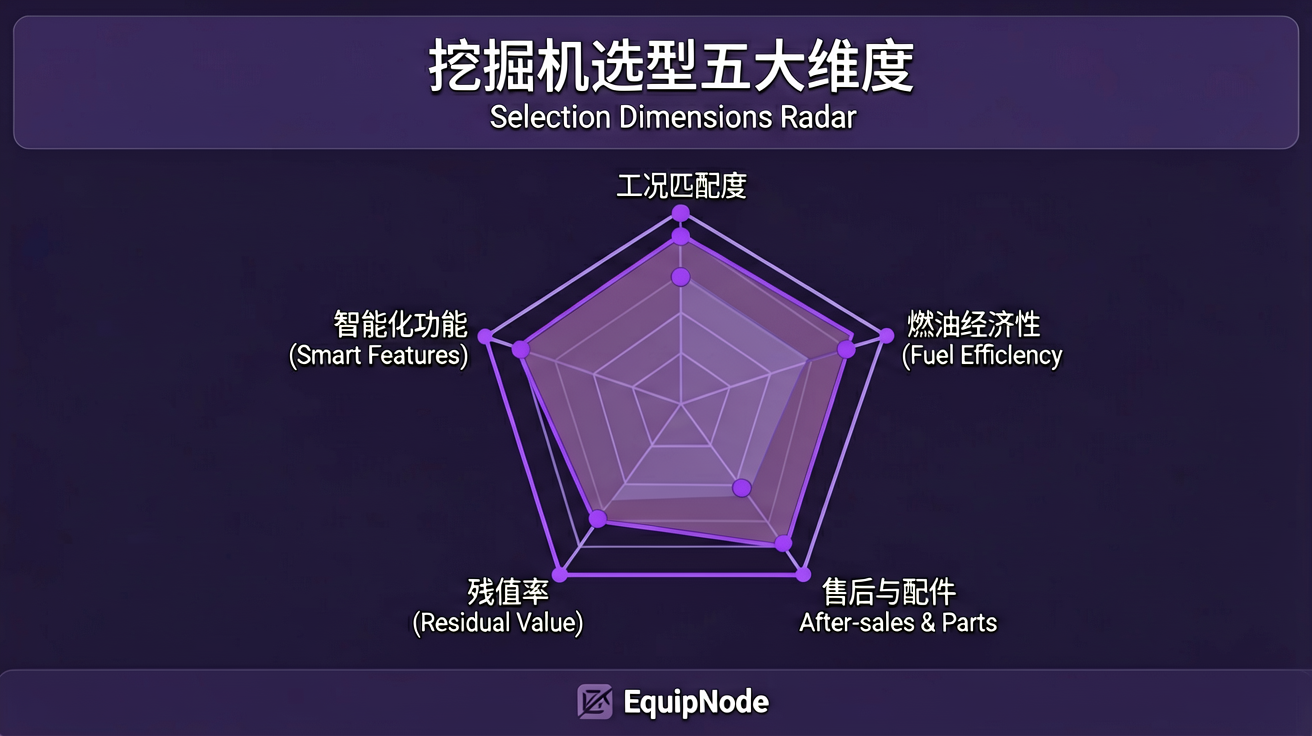
No matter which tonnage range you're considering, it's recommended to evaluate excavators across these five dimensions:
1. Operating Condition Match
Analyze your primary work content: What percentage is earthwork? What percentage is rockwork? Are there special conditions (such as underwater operations or high-temperature environments)? The job should determine the machine, not the other way around.
2. Fuel Economy
Take a 20-ton class excavator as an example: domestic brands consume roughly 12–15 liters per hour, while joint-venture brands use about 10–13 liters. Based on 2,000 working hours per year, the fuel cost difference can amount to thousands of dollars.
3. After-Sales Service and Parts
Construction machinery is an industry of "30% buying, 70% maintaining." A dealer's service network coverage, parts inventory, and repair response speed directly affect equipment uptime.
4. Residual Value
Residual value varies significantly by brand. At 5 years of age, Caterpillar and Komatsu machines can retain 40%–50% of their value, while some domestic brands hold only about 25%–35%.
5. Smart Features
In 2026, more and more excavators are equipped with intelligent features such as GPS positioning, remote monitoring, and fuel consumption analytics. For enterprises managing multiple machines, these features can significantly boost management efficiency.
Conclusion: The Best Machine Is the One That Fits You
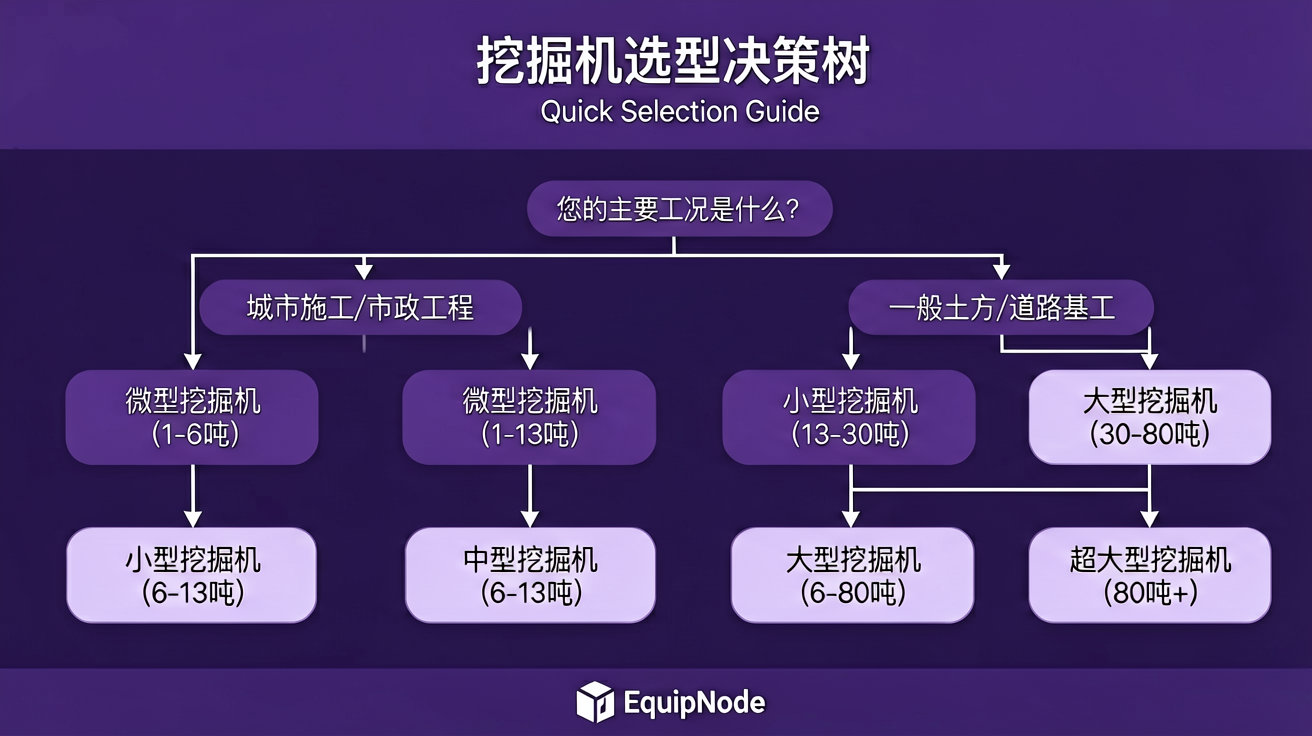
There is no "best" excavator — only the "most suitable" one. We recommend that before purchasing, you first clarify your primary operating conditions, budget range, and long-term operational needs, then make a comprehensive judgment based on brand reputation, after-sales service, and residual value performance.
As a professional construction machinery trading platform, EquipNode offers multi-brand, multi-tonnage excavator selection solutions. For detailed specifications and the latest pricing on specific equipment, please don't hesitate to contact us.
*This article draws on data from Equipment World's 2026 Buyer Guide, rippa.com buyer reviews, and publicly available industry resources.*