China Construction Machinery Exports Surge

title: China's Construction Machinery Exports Reach New Heights
date: 2026-07-22
author: EquipNode
category: Overseas Trade
tags: [construction machinery, exports, Belt and Road, Africa market, electrification]
In the first half of 2026, China's construction machinery exports delivered an impressive performance. According to data from the China Construction Machinery Industry Association, cumulative excavator sales in the first six months exceeded 152,000 units, a year-on-year increase of 26%, with export volumes hitting a single-month record high in June. Meanwhile, SCMP reports show that Chinese excavator exports surged 33% year-on-year in the first half, with electric products rapidly gaining penetration in overseas markets.
Behind these numbers lies a profound transformation in China's construction machinery industry — from "selling products" to "building ecosystems."
Africa Market Surges, Leading Global Growth
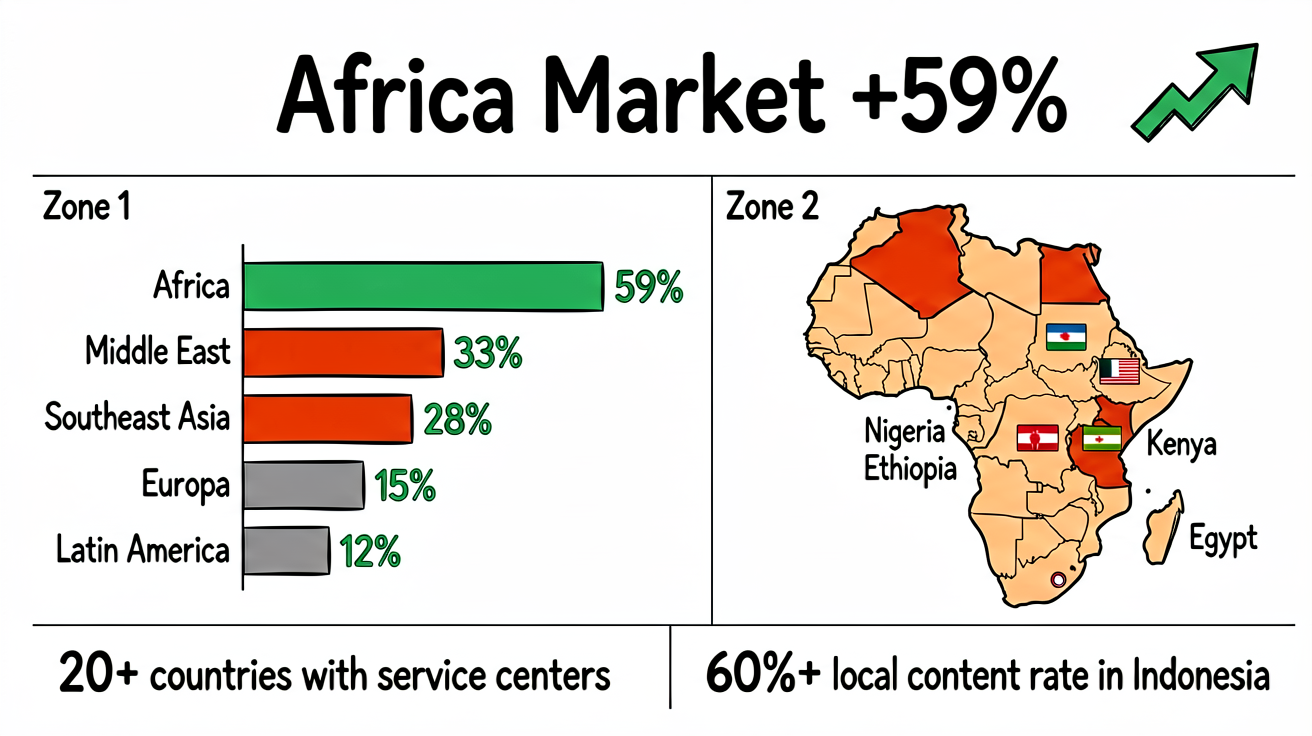
Africa has become the fastest-growing regional market for Chinese construction machinery going overseas. In the first half of 2026, China's construction machinery exports to Africa grew 59% year-on-year, far exceeding the global average. From the Lagos Light Rail in Nigeria to the extension of the Mombasa-Nairobi Railway in Kenya, from industrial parks in Ethiopia to construction sites at Egypt's New Administrative Capital, Chinese-brand excavators, loaders, and concrete pump trucks can be seen everywhere.
Shantui recently delivered a batch of mixer trucks to Egypt for local Belt and Road infrastructure project upgrades. SANY Heavy Industry, XCMG Group, and Zoomlion have established localized service centers covering more than 20 countries across Africa. Localization is not simply about setting up offices — it means training local operators, establishing parts warehouses, and providing financial support. These are the foundations of long-term competitiveness.
Electrification Wave Reshapes the Overseas Landscape
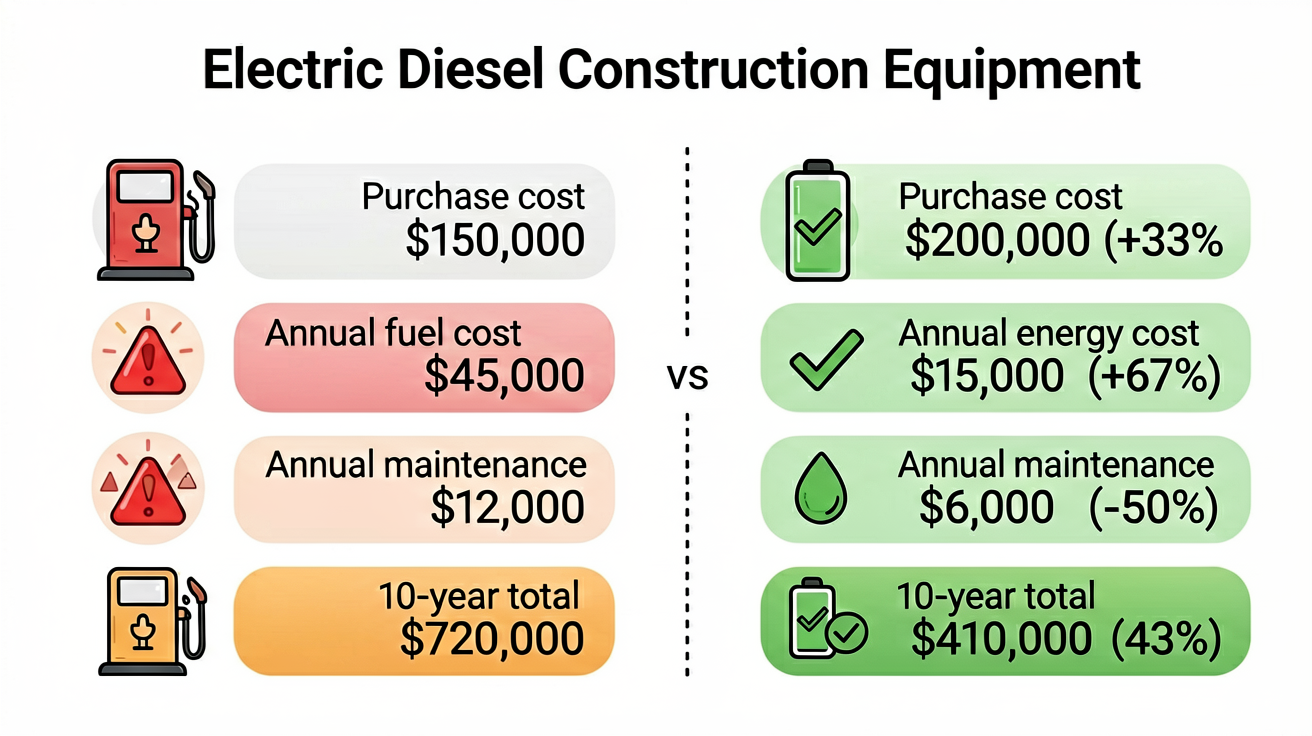
New-energy construction machinery has become a new engine for export growth. In the first half of 2026, exports of electric excavators and electric loaders doubled year-on-year, with Southeast Asia and the Middle East markets showing the highest adoption rates. Infrastructure projects in Thailand, Indonesia, Saudi Arabia, and other countries have begun purchasing Chinese electric equipment in bulk. The reason is straightforward: electric equipment's total cost of ownership is 30%–40% lower than diesel equipment over its full lifecycle, offering a clear advantage in regions with high oil prices.
SANY Heavy Industry's SY750E electric excavator delivers over 8 hours of runtime and has entered the European rental market. Zoomlion's electric mixer trucks and pump trucks have also secured bulk orders in Southeast Asia. Electrification not only reduces operating costs but also helps Chinese brands break through emission barriers in European and American markets.
From Product Exports to Deep Localization
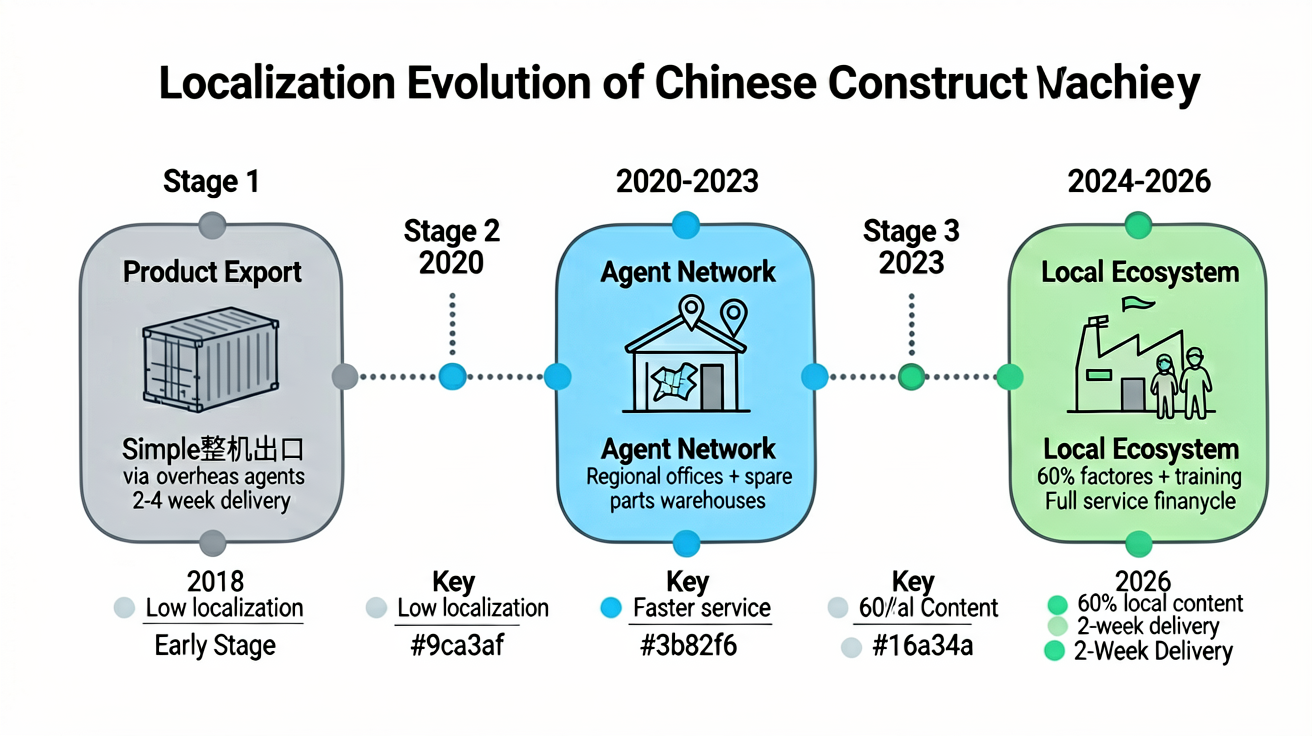
The overseas expansion logic of 2026 differs fundamentally from five years ago. The past model was "whole-machine exports + distributor sales." The current model is "overseas manufacturing plants + local production + service ecosystems." SANY Heavy Industry has manufacturing bases in Indonesia, India, Germany, and the United States; XCMG Group's factories in Brazil, Poland, and Mexico are already operational; and LiuGong's European headquarters in Poland serves as a springboard for the Eastern European market.
What does this shift mean? Take Indonesia as an example: SANY's Indonesian factory has achieved a localization rate exceeding 60%, not only reducing tariffs and logistics costs but also enabling product customization for local operating conditions. Locally, ordering a SANY excavator takes just 2 weeks from order to delivery, whereas shipping a complete machine from China takes at least 6 weeks. This is the speed advantage of localization.
Central-Eastern Europe and Southeast Asia: Advancing on Two Fronts
According to General Administration of Customs data, China's trade with Central and Eastern European countries grew for the 10th consecutive year in the first half of 2026, reaching a total value of 580.12 billion yuan. Construction machinery was one of the fastest-growing categories. Poland, Hungary, Serbia, and other countries have strong infrastructure development needs, and Chinese-brand cranes, rollers, and concrete equipment are capturing an increasing share in these markets.
The Southeast Asian market is equally hot. In May 2026, the first batch of domestically produced construction vehicles departed from Xiamen Port bound for Indonesia, marking a new phase in China's construction machinery exports to Southeast Asia. Urbanization is accelerating in Vietnam, Thailand, and the Philippines, driving sustained growth in demand for mid-sized excavators and loaders.
Trade Show Strategy to Seize Global Influence
In 2026, Chinese construction machinery companies have been exceptionally active at overseas trade shows. At KOMATEK 2026 (Turkey International Construction Machinery Exhibition), Chinese brands including SDLG made a strong presence, showcasing product portfolios spanning the European, Asian, and African markets. bauma SHANGHAI 2026 will be held in Shanghai in November and is expected to attract exhibitors and buyers from over 60 countries worldwide.
Trade shows are not just about selling products — they are about building brands. At ConExpo 2026, Zoomlion achieved $1.2 billion in delivery value, setting a new record for Chinese companies at a single exhibition in the North American market. XCMG similarly leveraged the ConExpo platform to drive its North American expansion. These figures demonstrate that Chinese brands are transitioning from "exhibitors" to "protagonists."
Globalization: Opportunities and Challenges Coexist
Behind the high export growth, risks also lurk. Currency exchange fluctuations are the primary challenge — in the first quarter of 2026, several construction machinery giants reported foreign exchange losses that eroded export profits. Additionally, trade barriers against Chinese products are rising in some countries, with markets like India and Brazil already imposing anti-dumping duties on Chinese construction machinery.
Overall, however, the globalization dividends for China's construction machinery far outweigh the risks. According to the Yellow Table 2026 rankings, 13 Chinese companies are among the global top 50, with their combined share continuing to climb. From Africa to Central-Eastern Europe, from Southeast Asia to Latin America, Chinese construction machinery is building a global network of manufacturing and service capabilities.
In Closing
2026 is a pivotal year for Chinese construction machinery going overseas. An export growth rate of 33%, a 59% surge in the Africa market, and a doubling of electric product sales — these numbers paint a picture of Chinese manufacturing accelerating onto the global stage. But going overseas is not the destination; it is a new starting point. Whoever can truly take root in local markets and build sustainable service ecosystems will ultimately prevail in this global competition.
For specific equipment pricing or overseas procurement solutions, feel free to contact EquipNode for professional services.