Construction Equipment Maintenance Cost Guide: Preventive Maintenance in Practice
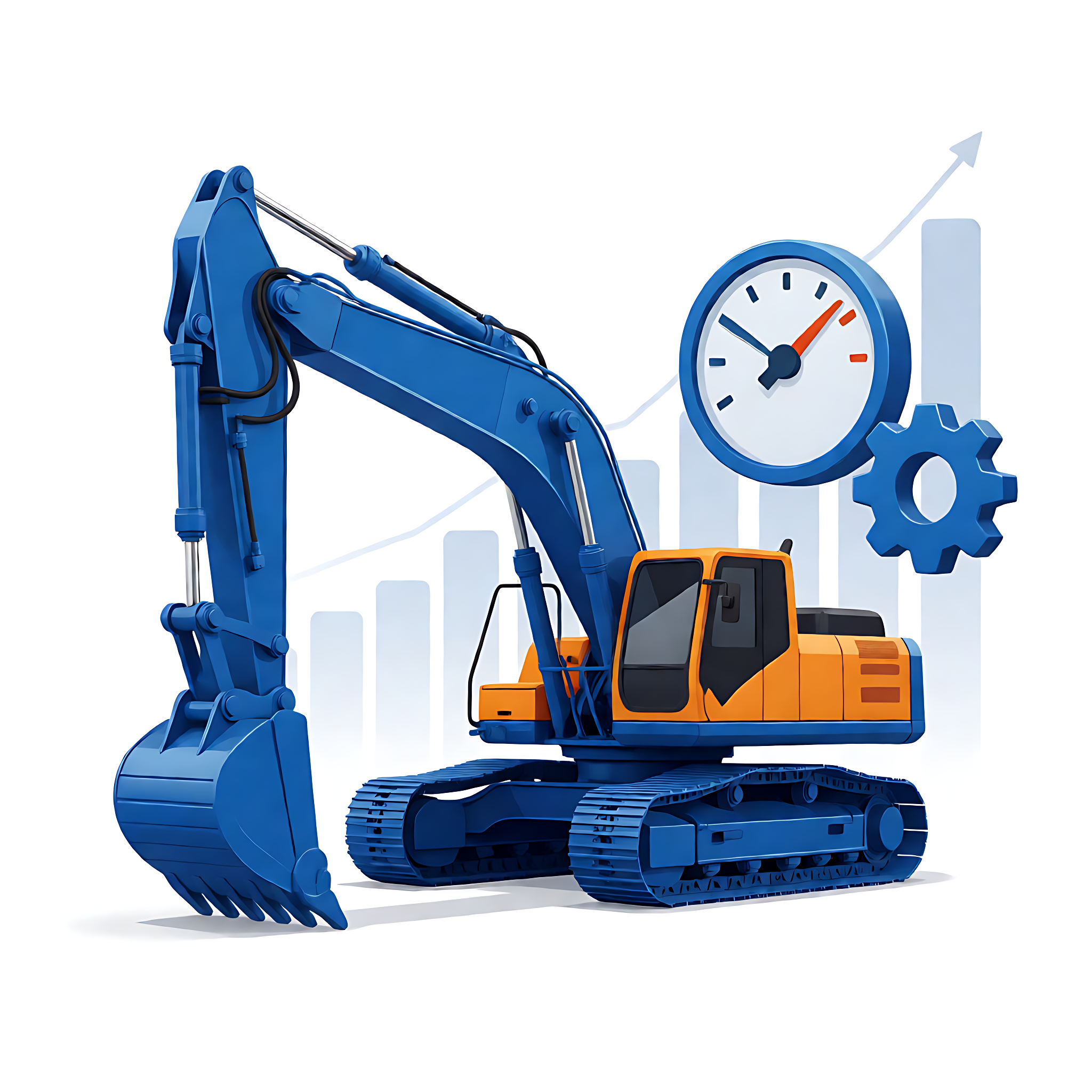
Buying equipment is easy; keeping it running is hard. Many equipment owners bank on "repair it when it breaks," and the result is that after five years, the overhaul costs on a single excavator exceed the money saved on maintenance several times over. According to a report published by Global Market Insights in August 2026, the global construction machinery repair and maintenance market stood at roughly US$37.3 billion in 2026 and is projected to reach US$54.3 billion by 2035, a compound annual growth rate of 4.3%. Behind that number, equipment owners around the world are all recalculating the same ledger: is preventive maintenance really worth it?
The answer is almost unanimous. The report estimates that condition-based predictive maintenance can reduce unplanned downtime by 30%-45%. For a 20-ton excavator that works 10 hours a day and generates RMB 500-800 of output per hour, a single unexpected breakdown that takes it out of service for 3 days results in direct losses exceeding RMB 10,000 — not even counting the emergency-repair surcharge and schedule-penalty costs.
Why "Repair When It Breaks" Only Gets More Expensive
The equipment fleets of mature markets are aging fast. According to data from the Association of Equipment Manufacturers (AEM), the average age of heavy earthmoving equipment in North America and Western Europe has reached 8-11 years. Failure rates for hydraulic systems and drivetrain components rise significantly once a machine is out of warranty, and repair frequency doubles. China's equipment fleet, while relatively younger, is now entering the high-repair-cost window en masse — the machines sold during the sales boom of recent years are all coming of age at once.
The bad news is that repair costs do not grow linearly. A small bearing that is not dealt with in time can bring down an entire hydraulic pump within three months; an ordinary oil leak left unrepaired can develop into a scored cylinder liner. The equipment maintenance world has a rule of thumb: reactive repair costs 3-5 times as much as preventive maintenance. This is exactly why savvy owners are willing to pay for a maintenance schedule.
Three Tiers of Preventive Maintenance
Preventive maintenance is not a vague concept. In practice it divides into three tiers, each with its own level of investment and return.
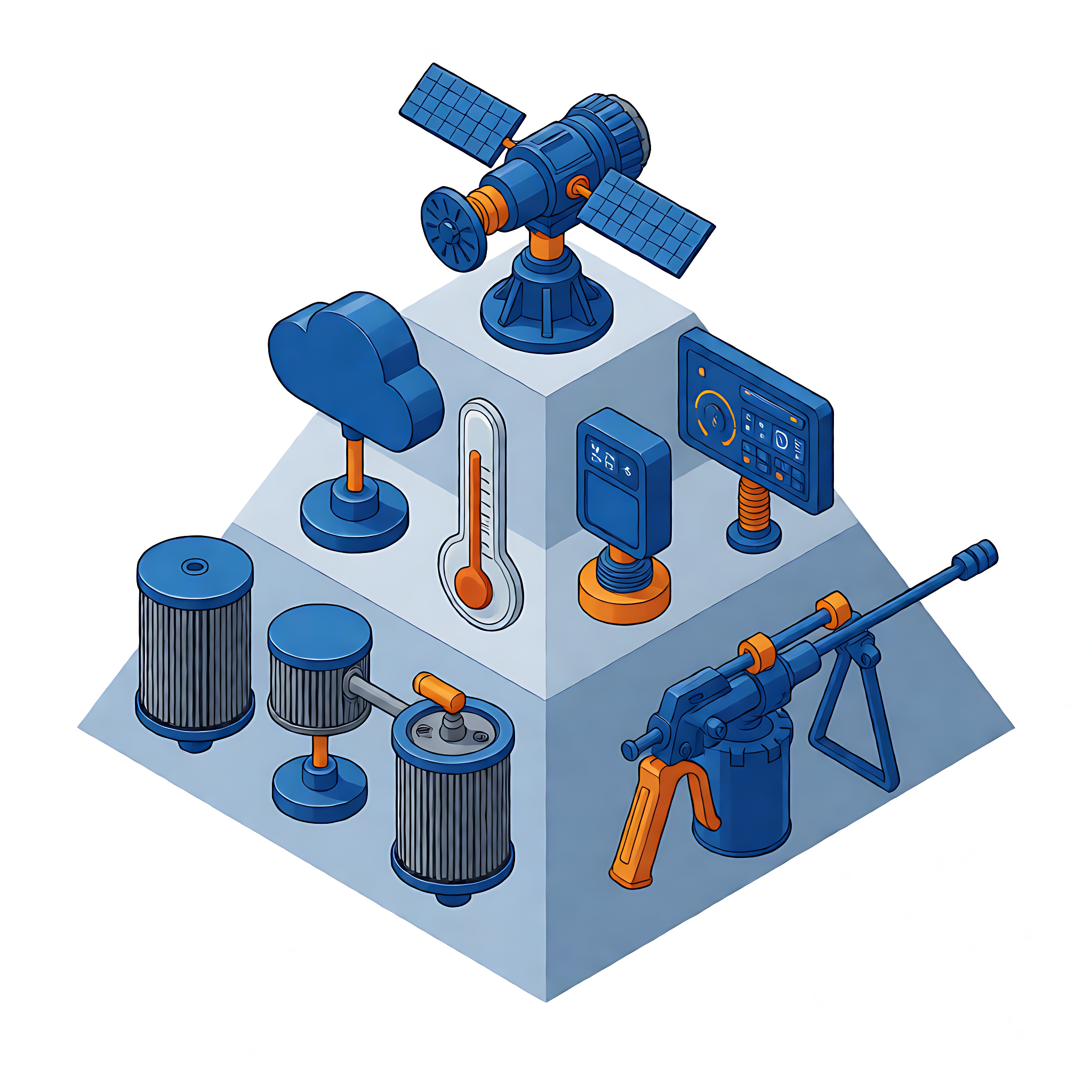
Tier 1: Scheduled maintenance. Engine oil, filter, and grease changes performed on an hour-based schedule — the routine items at 500/1000/2000 hours. The cost is lowest and the barrier to execution is lowest as well, yet many operators and owners fail to complete even this tier. Missing a single oil filter change can cost the engine its entire lifespan.
Tier 2: Condition monitoring. Detecting anomalies before a failure happens through oil analysis, vibration analysis, and infrared thermography. A single fluid analysis typically costs RMB 200-500, yet it can give several hundred hours' warning of wear in gears or hydraulic systems. In recent years, Hitachi Construction Machinery has launched a 3D parts catalog in Japan, turning hydraulic excavator components into 3D models — in essence, helping users make more precise condition judgments and prepare parts accordingly.
Tier 3: Predictive maintenance. Relying on onboard sensors and telematics to continuously monitor hydraulic pressure, oil temperature, fuel consumption, and structural loads, and using data to predict failure windows. Smart service contracts from brands like Volvo and SANY have already productized this tier — the manufacturer commits to an uptime guarantee and backstops repair costs with data. The GMI report notes that remote diagnostics combined with planned intervention are becoming standard in service contracts, which is why the top five manufacturers — Caterpillar, Komatsu, Volvo, and others — collectively hold 29.6% of the repair and maintenance market.
A 500-Hour Maintenance Checklist You Can Use Right Away
Rather than theory, here is an actionable checklist. Taking a common 20-ton tracked excavator as an example, the 500-hour maintenance should be checked item by item:
- Engine oil and oil filter: Replace in full — do not make do with "just topping up"; at the same time check the oil pan for metal debris
- Diesel filter and water separator: Drain the water and replace the filter; in conditions where diesel quality is poor, consider shortening the interval to 250 hours
- Hydraulic return filter: Check for deformation and whether the bypass valve has opened — a bypass opening means the filter has already failed
- Slew ring and central swivel joint: Grease and inspect the seals; unusual slewing noises are an early warning signal
- Track tension: Too tight accelerates pin and bushing wear; too loose risks throwing a track. Inspect each track roller and carrier roller visually
- Cooling system: Clean the radiator and check the thermostat — especially critical in high-temperature summer conditions
- Electrical and sensors: Check for harness wear and connector oxidation; leave interfaces in place for future condition-monitoring add-ons
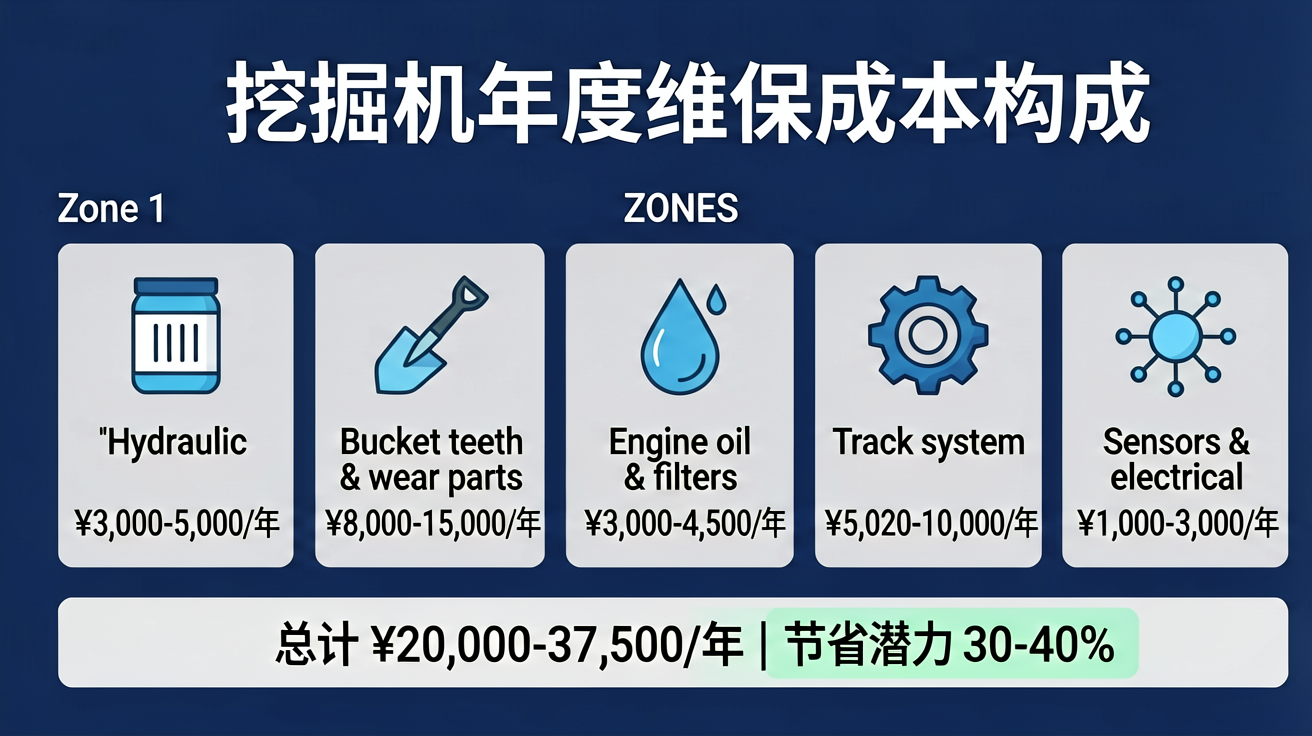
Executing this checklist costs roughly RMB 1,500-3,000 (including labor and consumables). Compare that: market quotes for a full hydraulic pump overhaul typically run RMB 20,000-40,000, and engine overhauls cost even more. Maintenance saves small money; skipping it loses big money.
Parts Selection: OEM, Branded Aftermarket, or Remanufactured
Maintenance inevitably involves buying parts — this is the aftermarket's biggest profit pool, and also where owners are most likely to get burned.
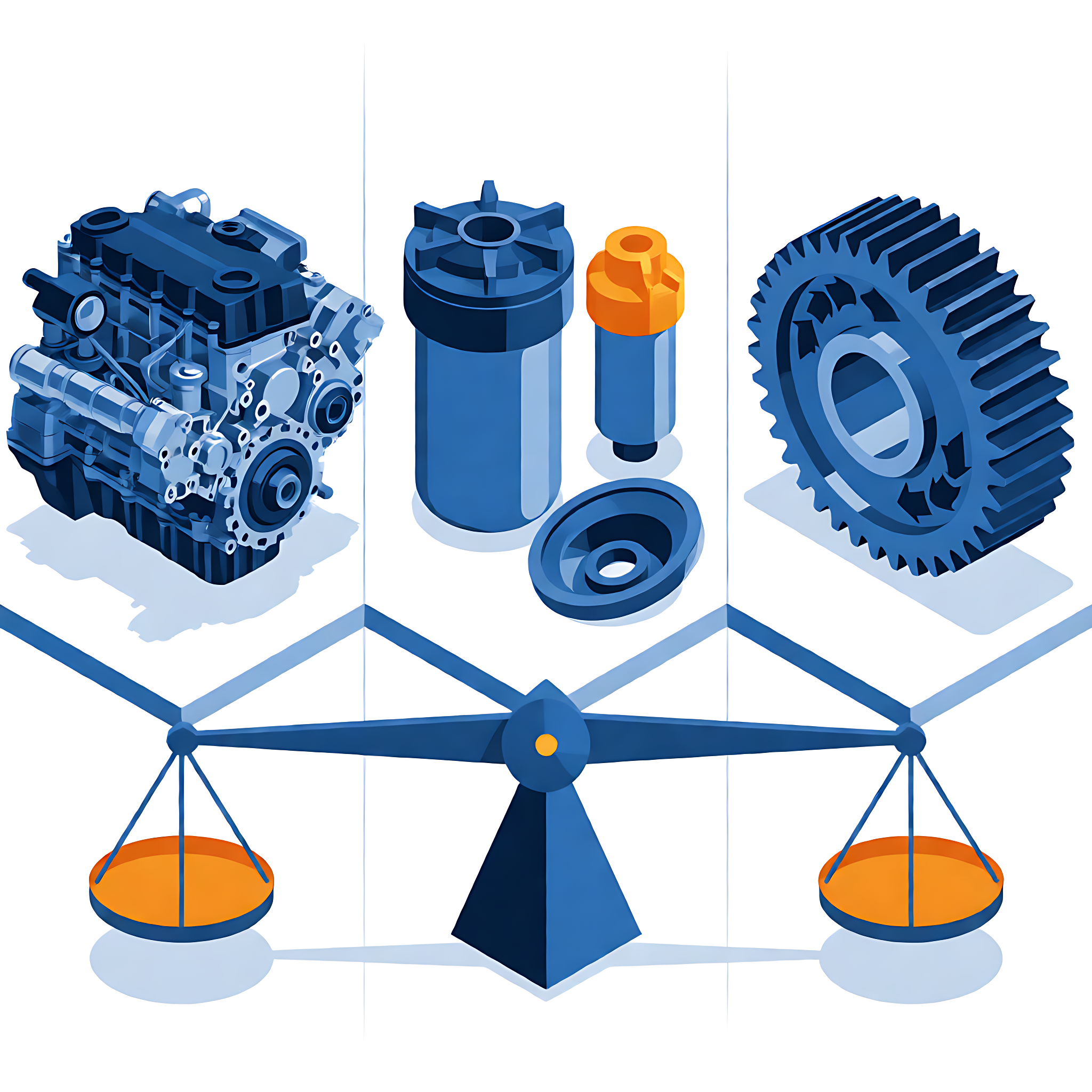
OEM parts: The best fit, with clear warranty coverage — but typically 2-3 times the price of aftermarket parts. For core components (hydraulic pumps, main control valves, engine assemblies), stick to OEM or OEM-certified channels.
Branded aftermarket parts: The mainstream choice for consumables like filters, bushings, bucket teeth, and rubber parts. Look for suppliers with a track record of supplying the major OEMs — the price-performance advantage is clear, and China's domestic supply chain is already globally competitive in this category.
Remanufactured parts: Old parts are recovered, disassembled, and restored to OEM performance standards, typically at 50%-70% of the price of new parts. H-E Parts, a subsidiary of Hitachi Construction Machinery, even uses laser hardening technology to repair used gears, achieving performance on par with or better than new parts. Remanufactured parts enjoy high acceptance in the European and American markets; the domestic market is still in an education phase, but they are worth serious consideration for non-core, high-value components.
Two iron rules when buying: first, look up the part number, not the model number — parts for the same model can differ across production batches. second, keep your paperwork; invoices and warranty cards from legitimate channels translate directly into a valuation premium when the equipment is resold.
Used-Equipment Buyers Should Look at Maintenance Records Too
The value of preventive maintenance is realized directly when the equipment is resold. Two excavators of the same model and year — the one with complete maintenance records and full fluid-analysis reports typically commands a 10%-20% higher valuation in the used market. Volvo's Approved Used certified pre-owned program in Asian markets centers its selling point on manufacturer-endorsed maintenance history and inspection processes, making buyers willing to pay a premium for "full visibility."
Conversely, when acquiring used equipment, missing maintenance records are the biggest reason to negotiate the price down — and the biggest risk signal. When inspecting a machine, beyond the test-drive actions and fuel consumption, be sure to pull the maintenance archive: hydraulic oil change records, overhaul history, sensor alarm history — none of them can be left out. This point continues the logic of our earlier analysis on used concrete equipment going overseas — assessment capability is becoming the new barrier to entry in the aftermarket.
Action Recommendations for Equipment Owners
If you only remember three things, make it these three:
Write maintenance into the contract: In equipment leasing and subcontracting agreements, clearly specify who is responsible for maintenance and to what standard — avoid the gray zone of "whoever uses it fixes it"
Master Tier 1 before talking about Tier 3: Putting a predictive maintenance platform in place before scheduled maintenance is even complete inverts the priorities; data systems only amplify existing management habits
Let hourly cost do the talking: Divide annual maintenance spending by actual working hours to get the hourly maintenance rate, compare horizontally against fleets working the same conditions, and investigate outliers first
Competition in the construction machinery aftermarket is shifting from "selling iron" to "selling services." For equipment owners, this means maintenance finally has a clear return on investment for the first time. Starting the ledger now is not too late. For more detail on the shape of the aftermarket, see our analyses of the aftermarket battle and parts demand trends.
For maintenance plans and parts quotes for specific equipment, feel free to contact the EquipNode sales team. We will provide maintenance recommendations and parts supply plans based on your model and working conditions.