China Construction Machinery Going Global: From Selling Equipment to Solutions
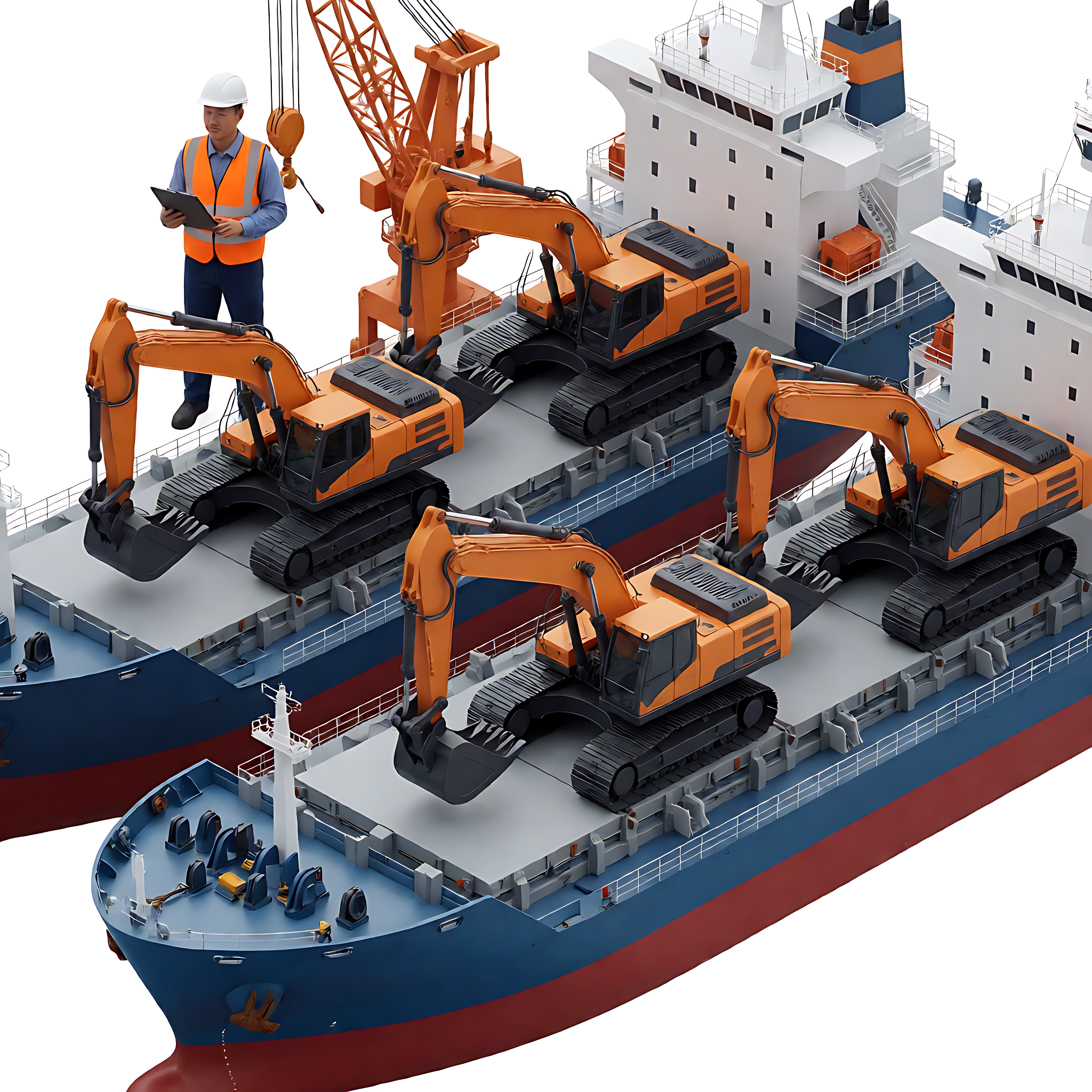
title: "China's Construction Machinery Going Global: The Leap from Selling Equipment to Selling Solutions"
keywords: "construction machinery exports, Belt and Road Initiative, Sany Heavy Industry, overseas market, electric construction machinery"
description: "In H1 2026, China's construction machinery exports reached $34.373 billion, with excavator exports up 33%. Sany's overseas revenue now exceeds 60% of total revenue, as the industry shifts from product exports to full industrial expansion overseas."
date: "2026-09-23"
author: "EquipNode"
In 2026, the story of China's construction machinery industry going global is turning a new page. According to data from the General Administration of Customs, China's construction machinery exports reached $34.373 billion in the first half of 2026, a year-on-year increase of over 24%. Excavator export growth hit 33%, a record high in recent years.
But the changes behind the numbers are even more noteworthy than the numbers themselves — Chinese construction machinery companies are transitioning from simply "selling equipment" to "selling solutions." This leap is not only reshaping the global image of Chinese brands, but also restructuring the competitive landscape of the international construction machinery market.
Export Landscape: Southeast Asia Remains the Main Battlefield, Africa Emerges as a New Growth Engine
In terms of regional distribution, Southeast Asia remains the largest market for China's construction machinery exports. Infrastructure demand in countries such as Thailand, Indonesia, and Vietnam continues to run strong, providing a steady stream of orders for Chinese brands.
However, the rise of the African market is even more noteworthy. Recent data disclosed by XCMG and Sany Heavy Industry show that both companies have achieved strong growth in their African operations. Accelerating urbanization across the African continent, combined with infrastructure projects launched under China's Belt and Road Initiative, is creating enormous incremental demand for construction machinery exports.
The Middle East market also cannot be overlooked. Saudi Arabia's Vision 2030 plan continues to advance, with a large number of infrastructure projects being launched, and Chinese companies' participation is growing. According to Caixin, Chinese firms have already contracted half of the projects of Saudi Arabia's largest power company, with construction machinery equipment following projects overseas.
Sany Heavy Industry: Overseas Revenue Share Surpasses 60%
Among Chinese manufacturers going global, Sany Heavy Industry's performance is particularly striking. Data disclosed by Yahoo Finance shows that Sany's revenue reached $7.89 billion in H1 2026, up 19.49% year-on-year. More critically, overseas revenue as a share of total revenue has reached 61.33% — meaning Sany has effectively become a company that operates primarily overseas.
Five years ago, this ratio was below 30%. Sany's globalization path, in many ways, represents the overall transformation direction of China's construction machinery industry.
Sany's success is no accident. The company has established comprehensive sales and service networks overseas, with regional headquarters in key markets including Southeast Asia, Africa, and the Middle East. At the same time, Sany has actively pursued localized production — setting up manufacturing bases in Indonesia, India, Germany, and other locations — making the leap from "Made in China, exported globally" to "globally localized manufacturing."
Electrification: The New Growth Engine for Going Global
If localization was the main theme of China's construction machinery going global over the past five years, electrification is emerging as the next growth engine.
According to the Global Times, exports of Chinese electric construction machinery continue to grow, contributing to the global green transition. Electric excavators, electric loaders, and electric forklifts are gaining increasingly higher acceptance in overseas markets.
The logic behind new-energy construction machinery going global is straightforward: carbon emission regulations in European and American markets are becoming stricter, and conventional diesel equipment faces compliance pressure. Meanwhile, China's accumulated expertise in lithium batteries and electric motors provides a natural technological advantage for electric construction machinery.
According to the Securities Times, "e-intelligent integration" (electrification + smart technology) is reshaping the industry landscape. Chinese companies are leading in this area — Sany's electric concrete mixers have entered the European market, and XCMG's electric mining trucks are now in operation in Australia.
Exchange Rate Risk: The Hidden Pitfall on the Road Overseas
Going global is not without its challenges. A Caixin report highlighted a frequently overlooked issue: foreign exchange losses.
As the scale of China's construction machinery exports expands, currencies collected by companies overseas face exchange rate fluctuation risks. Since 2025, multiple emerging-market currencies have depreciated significantly against the U.S. dollar, while Chinese companies' export contracts are mostly settled in U.S. dollars or local currencies. Exchange rate volatility directly erodes profit margins.
The more aggressively companies export, the thinner their profits become — this seemingly contradictory phenomenon is fundamentally a test of exchange rate management capabilities. For small and medium-sized export enterprises, establishing a professional foreign exchange risk management mechanism is no longer "optional" but "essential."
From Product Exports to Industrial Expansion Overseas
An in-depth report by the Securities Times raised a thought-provoking point: China's construction machinery is evolving from "product exports" to "industrial expansion overseas."
"Product exports" means selling equipment overseas; "industrial expansion overseas" means building a complete industrial chain abroad — including R&D centers, manufacturing bases, sales networks, and after-sales service systems. Although this model requires larger upfront investment, it establishes deeper market barriers and yields higher profits.
Sany Heavy Industry is a typical representative of this transformation. From initial product exports, to building factories in Indonesia, acquiring Putzmeister in Germany, and establishing joint ventures in India, Sany's globalization path clearly illustrates the evolution logic of "industrial expansion overseas."
Practical Recommendations: How Exporting Companies Can Navigate Challenges
For construction machinery companies that are already going global or planning to, the following areas deserve attention:
Localized Operations: It's not just about building factories — it's about understanding local market demands, cultural norms, and regulatory requirements. Product design should be adapted to local conditions, and after-sales service must respond quickly.
Exchange Rate Risk Management: Build a professional team or partner with financial institutions, using tools such as forward contracts and options to hedge exchange rate risk. Exchange rate adjustment mechanisms can also be built into contract terms.
Electrification Strategy: Lay out electric product lines as early as possible. Compliance thresholds in European and American markets will only continue to rise, and early preparation is key to seizing first-mover advantage.
Digital Services: Leverage IoT technology to provide overseas customers with value-added services such as remote monitoring and predictive maintenance — shifting from selling equipment to selling services.
Conclusion
China's construction machinery going global in 2026 is no longer simply about "shipping equipment overseas." From Sany Heavy Industry's overseas revenue share surpassing 60%, to electric construction machinery gaining traction in European markets, Chinese brands are occupying an increasingly important position on the global construction machinery map.
But the road overseas has never been smooth. Exchange rate risk, localization challenges, and compliance requirements — each is a topic that demands serious attention. For China's construction machinery companies, true globalization has only just begun.
For more details on China's construction machinery overseas market, or to inquire about export pricing for related equipment, feel free to contact the EquipNode sales team. We specialize in providing globalization solutions for Chinese construction machinery brands, supporting your journey overseas.
*Data sources for this article: General Administration of Customs, Yahoo Finance, Caixin, Global Times, Securities Times, SCMP. For more industry news, visit EquipNode.com.*