Excavator Selection 101: Tonnage vs Conditions

title: "Excavator Selection 101: Matching Tonnage to Operating Conditions"
date: 2026-08-30
author: EquipNode
description: "A detailed guide to excavator tonnage classification, application scenarios, and selection criteria — from mini to ultra-large, helping you find the ideal machine for your job."
keywords: excavator selection, excavator tonnage, construction machinery guide, excavator types, equipment purchasing
Why Choosing the Right Excavator Matters
Excavators are the undisputed workhorses of the global construction equipment market. According to Construction Equipment Guide, excavator sales accounted for over 35% of total construction equipment sales worldwide in 2026. Whether you're working on municipal pipeline projects, rural home construction, or mining operations, choosing the wrong tonnage not only wastes money but directly impacts project timelines and safety.
Many newcomers to the industry often ask: What size excavator should I buy (or rent) for my job site? Is 20 tons enough? Would 10 tons be too small? These questions seem simple on the surface, but they actually involve three dimensions: operating condition analysis, economic calculations, and equipment matching.
Today, we'll break down excavator selection in plain terms so anyone can understand it.
How Is Tonnage Classified? A Quick-Reference Guide
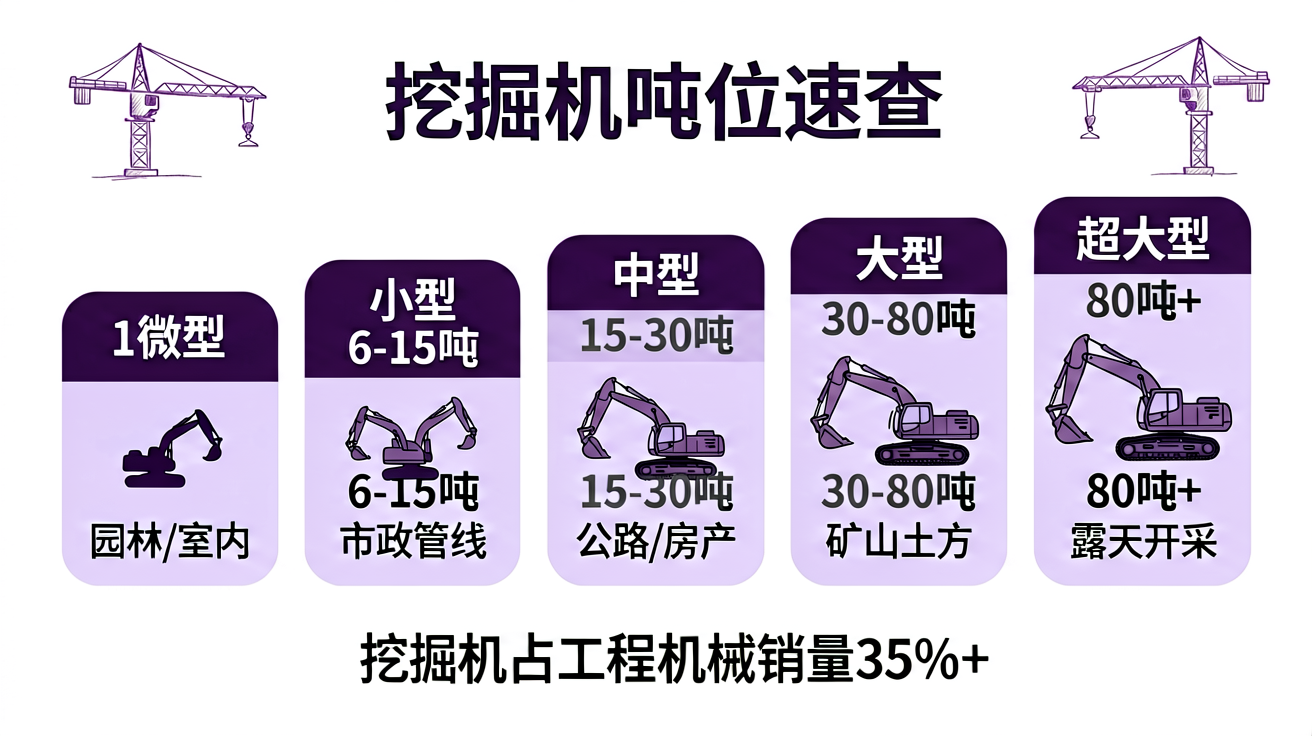
Excavators are categorized by their total operating weight into several main classes:
Mini Excavators (1–6 tons): Ideal for indoor demolition, landscaping, and small-scale earthworks in rural areas. Body width is typically under 1.5 meters, allowing them to fit through elevators and narrow alleys. For example, the SANY SY16C mini excavator weighs just 1.7 tons and is widely popular in urban renovation projects across Japan and Europe.
Compact Excavators (6–15 tons): The backbone of municipal engineering. Pipeline installation, road repair, and small foundation excavation all rely on this class. This tonnage range is the most active segment in the rental market.
Mid-Size Excavators (15–30 tons): The most versatile class overall. Highway construction, real estate development, and river channel management are all within its wheelhouse. The SANY SY215 and SY245 series are benchmark products in this category and represent the largest installed base in China.
Large Excavators (30–80 tons): Purpose-built for mining overburden removal and large-scale earthworks. When equipped with extended booms or rock buckets, efficiency skyrockets.
Ultra-Large Excavators (80 tons and above): Heavy-duty equipment for open-pit coal and iron mines, with unit prices in the tens of millions. These are typically purchased by major mining conglomerates.
How an Excavator Works: The Hydraulic System at Its Core
Many people are fascinated by that articulated "big arm" and wonder how it moves. The answer is the hydraulic system.
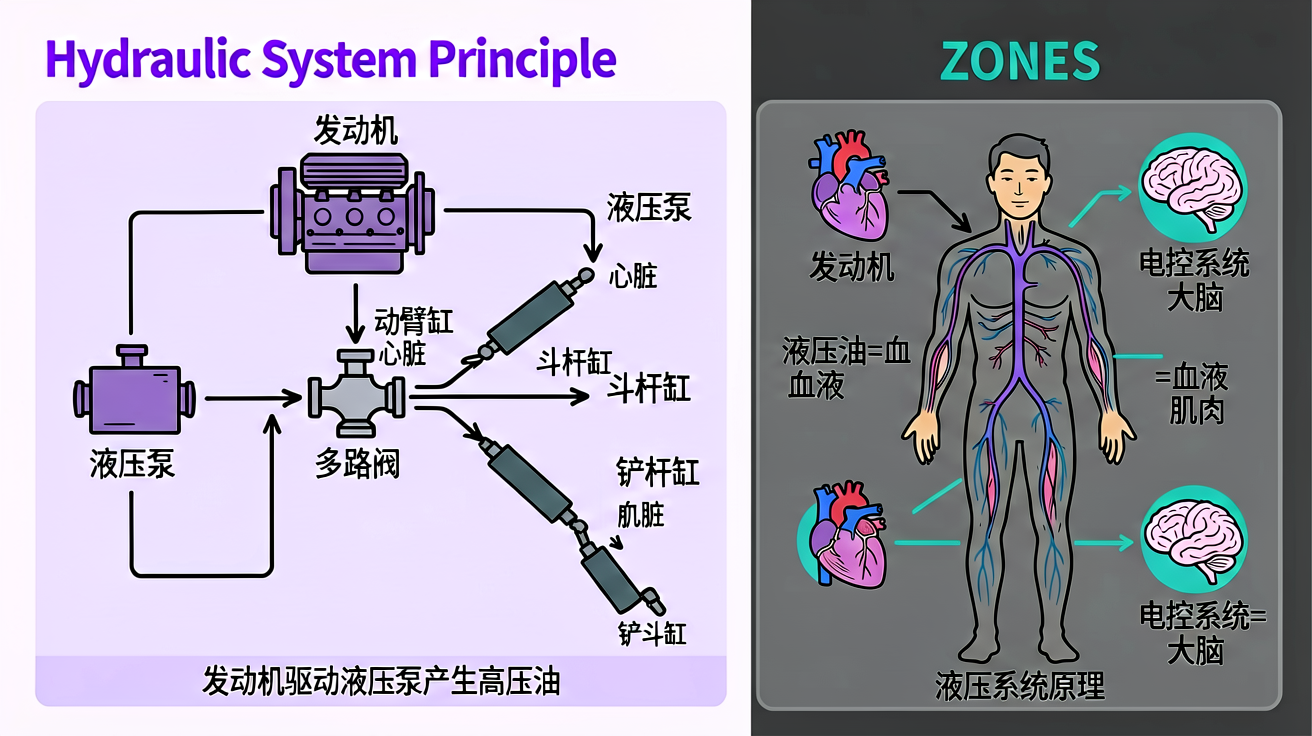
The engine drives a hydraulic pump that generates high-pressure oil, which is distributed through a multi-way valve to various hydraulic cylinders (boom cylinder, arm cylinder, bucket cylinder) and to the travel/swing motors. The operator's control levers govern valve spool openings, determining oil flow direction and volume, which in turn controls the speed and force of each movement.
Think of it this way: the hydraulic system is like the human circulatory system — the engine is the heart, hydraulic oil is the blood, and the hydraulic cylinders are the muscles. The difference is that an excavator's "muscles" can produce tens of tons of pushing force, while control precision can be maintained at the millimeter level.
Modern excavators also incorporate electronic control systems (such as SANY's SYMC intelligent control system), which use sensors to monitor engine RPM, hydraulic pressure, oil temperature, and other parameters in real time, automatically adjusting power output. This is why the latest generation of excavators typically achieve 15%–20% lower fuel consumption.
How to Match Tonnage to Operating Conditions: A Three-Step Method
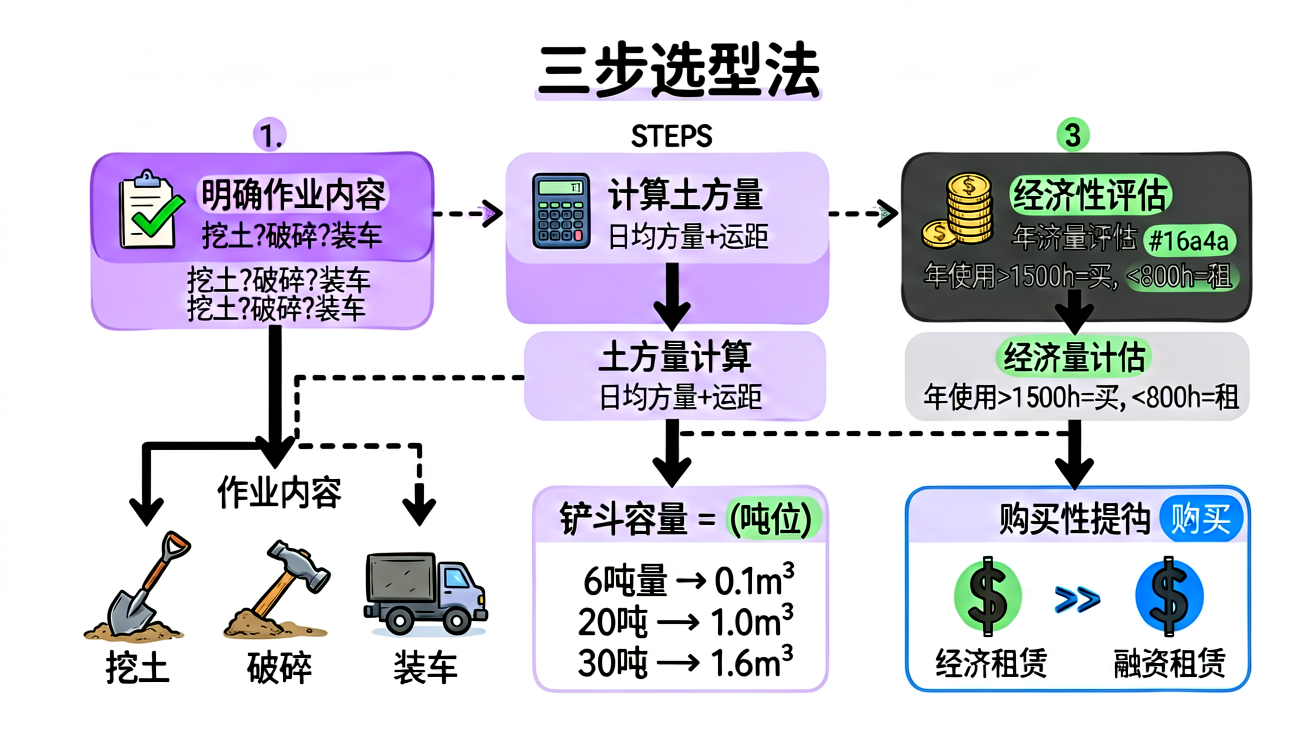
Step 1: Define the task. Are you digging, breaking, loading trucks, or lifting? Different tasks place very different demands on an excavator. For instance, demolition and breaking work requires heavier tonnage to withstand reaction forces, while trenching for pipes prioritizes whether the body width can fit through the workspace.
Step 2: Calculate earthwork volume and haul distance. Daily earthwork volume determines the bucket capacity you need. When haul distances exceed 200 meters, it's advisable to coordinate with a loader or dump truck. Approximate bucket capacity-to-tonnage pairings: 6 tons pairs with 0.1–0.2 m³, 20 tons with 0.8–1.0 m³, and 30 tons with 1.2–1.6 m³.
Step 3: Consider economics. Buy or rent? Usage frequency is key. Equipment used more than 1,500 hours per year is generally worth purchasing; below 800 hours, renting is more cost-effective. SANY Heavy Industry offers flexible financing and leasing plans, with monthly payments starting in the low ten-thousand-yuan range — a great option for small and medium construction firms looking to lower the barrier to entry.
The Compact Trend Is Reshaping the Industry
A clear trend emerged in the 2026 excavator market: the share of compact and mini excavators continues to rise.
According to Equipment World's 2026 Buyer's Guide, compact excavators have become the fastest-growing category in the North American market. The driving force behind this shift is the surging demand for smaller equipment in urban renewal, older residential neighborhood renovation, and rural construction projects.
Electrification is also rapidly penetrating the compact excavator segment. Electric mini excavators offer zero emissions and low noise, making them especially suitable for indoor demolition and nighttime construction. Domestic Chinese brands such as SANY and LGMG have already launched multiple fully electric compact excavator models, with battery life reaching 6–8 hours — enough to cover a full standard workday.
Key parameters to evaluate when purchasing: breakout force (kN), maximum digging depth (mm), swing speed (rpm), and fuel/battery range. Compare these specs against your actual operating conditions, and you'll find the best match.
Common Misconceptions and Practical Advice
Misconception 1: Bigger is always better. Using a 20-ton excavator on a job suited for 6 tons simply wastes fuel and accelerates wear.
Misconception 2: Focus only on price. A cheap machine with a high failure rate can cost you more in downtime than the price difference of a more reliable one.
Misconception 3: Ignore after-sales service. Construction equipment operates under high-intensity conditions, making regular maintenance and rapid repair response absolutely critical.
Advice: When choosing a brand, pay close attention to the density of local service centers and spare parts availability. SANY Heavy Industry operates over 200 service centers worldwide, with parts inventory covering 95% or more of common components for mainstream models. In practical use, this translates to shorter downtime and higher equipment utilization rates.
For specific equipment selection guidance or a full SANY excavator product quote, feel free to contact the EquipNode professional consulting team.