China Machinery Export Surge: 36% Growth

title: Construction Machinery Goes Global Faster: Overseas Orders Surge 36%
description: In Q1 2026, China's construction machinery exports grew 24.3% year-over-year, with excavator exports surging 36%, as the continued expansion of overseas markets is reshaping the global competitive landscape.
keywords: construction machinery exports, overseas orders, Belt and Road, global expansion, localization
date: 2026-07-01
In the construction machinery industry of 2026, one trend is clearer than ever: the overseas market is shifting from being a "supplement" to becoming the "main engine."
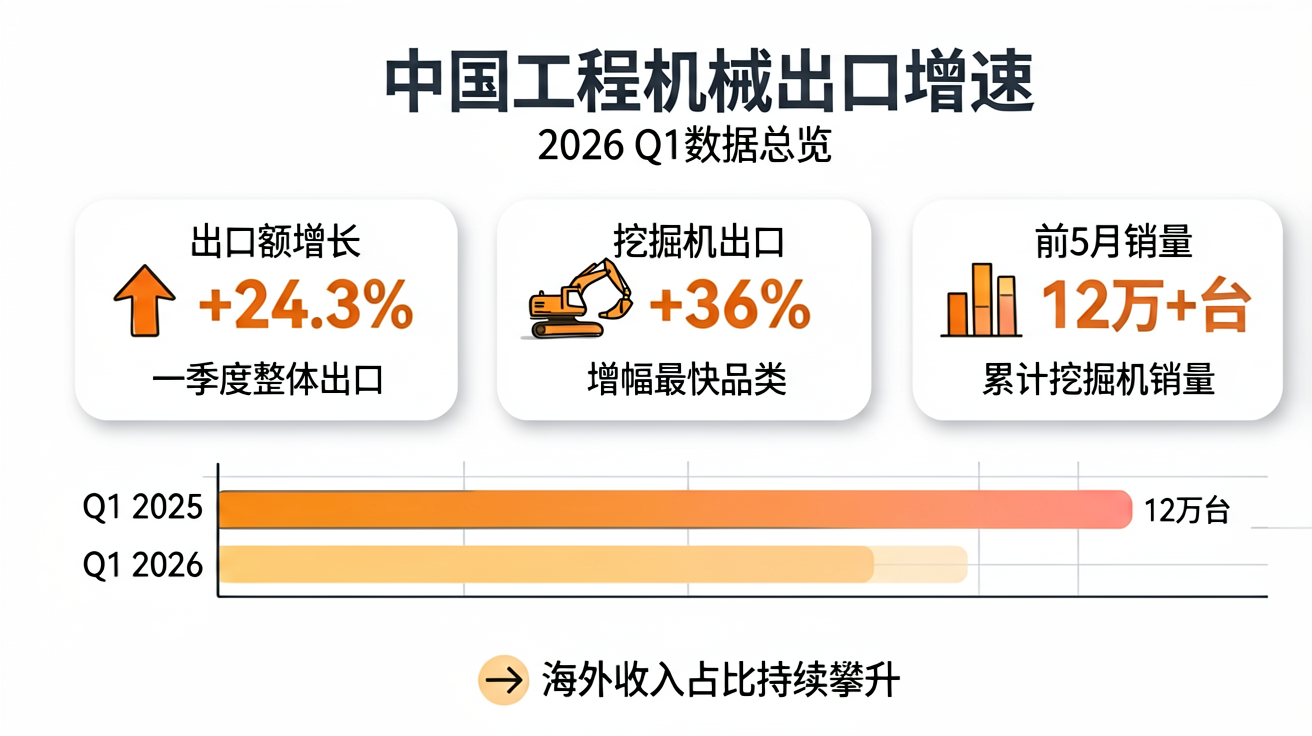
In the first quarter, China's construction machinery product exports grew 24.3% year-over-year, with excavator export growth surging past 36%. It's not just about selling equipment — Chinese brands are building factories abroad, setting up service networks, and running localized operations. From Southeast Asia to Africa, from the Middle East to South America, Chinese-made construction machinery is undergoing a true globalization.
1. Overseas Data Blooms Across the Board
The Q1 2026 export data can be described as "blooming across the board." According to statistics from the China Construction Machinery Association:
- Overall exports: Q1 Chinese construction machinery exports grew 24.3% year-over-year, continuing the high-speed growth trend seen since 2025
- Excavator exports: Q1 excavator exports surged more than 36% year-over-year, making it the fastest-growing category
- Cumulative first five months: From January to May, cumulative excavator sales exceeded 120,000 units, with the contribution from overseas markets continuing to climb
- May single-month: May excavator sales surged 36% year-over-year, exceeding market expectations, with overseas demand as the core driving force
Behind these numbers lies a structural shift: the share of overseas revenue in China's construction machinery is rising rapidly. Leading enterprises such as Sany Heavy Industry, XCMG, and Zoomlion are generally seeing overseas revenue growth rates more than 20 percentage points higher than domestic growth rates.
2. Global Top 50: 13 Chinese Companies Make the List
The 2026 Global Top 50 Construction Machinery Manufacturers (Yellow Table) ranking has been released, with 13 Chinese companies making the list — a record high.
The changes in this ranking reflect profound adjustments in the global construction machinery competitive landscape. A decade ago, Caterpillar and Komatsu firmly held the top two positions, with Chinese companies still playing catch-up. Today, Sany Heavy Industry has broken into the global top three, XCMG follows closely behind, and companies like Zoomlion and LiuGong are steadily climbing in the rankings.
The rise in Yellow Table rankings is not just a change in revenue figures — it represents an increase in brand recognition among global customers. At infrastructure construction sites in Southeast Asia, mining operations in Africa, and urban construction projects in the Middle East, Chinese equipment is appearing with increasing frequency.
3. Localization: From Selling Equipment to Building Ecosystems
Simply exporting equipment is no longer enough. Chinese construction machinery companies are accelerating their overseas localization efforts, upgrading from "selling products" to "building ecosystems."
Taiyuan Heavy Industry announced the establishment of a South African subsidiary in early 2026, marking the company's formal entry into the African market. Choosing South Africa as its African foothold reflects the long-term growth potential of Africa's infrastructure investment.
SDLG (Shandong Lingong) made a high-profile appearance at the KOMATEK 2026 exhibition, covering the Eurasian and African markets. KOMATEK is one of the largest construction machinery exhibitions in Turkey and the surrounding region. SDLG's participation demonstrates that Chinese companies are paying increasing attention to the Central Asian and Middle Eastern markets.
Overseas mini excavators are gaining popularity. According to a China Daily report, overseas demand for Chinese mini excavators continues to rise. Mini excavators are widely used in municipal engineering, agricultural operations, and small-scale construction projects, and Chinese brands have clear advantages in terms of cost-effectiveness and product variety.
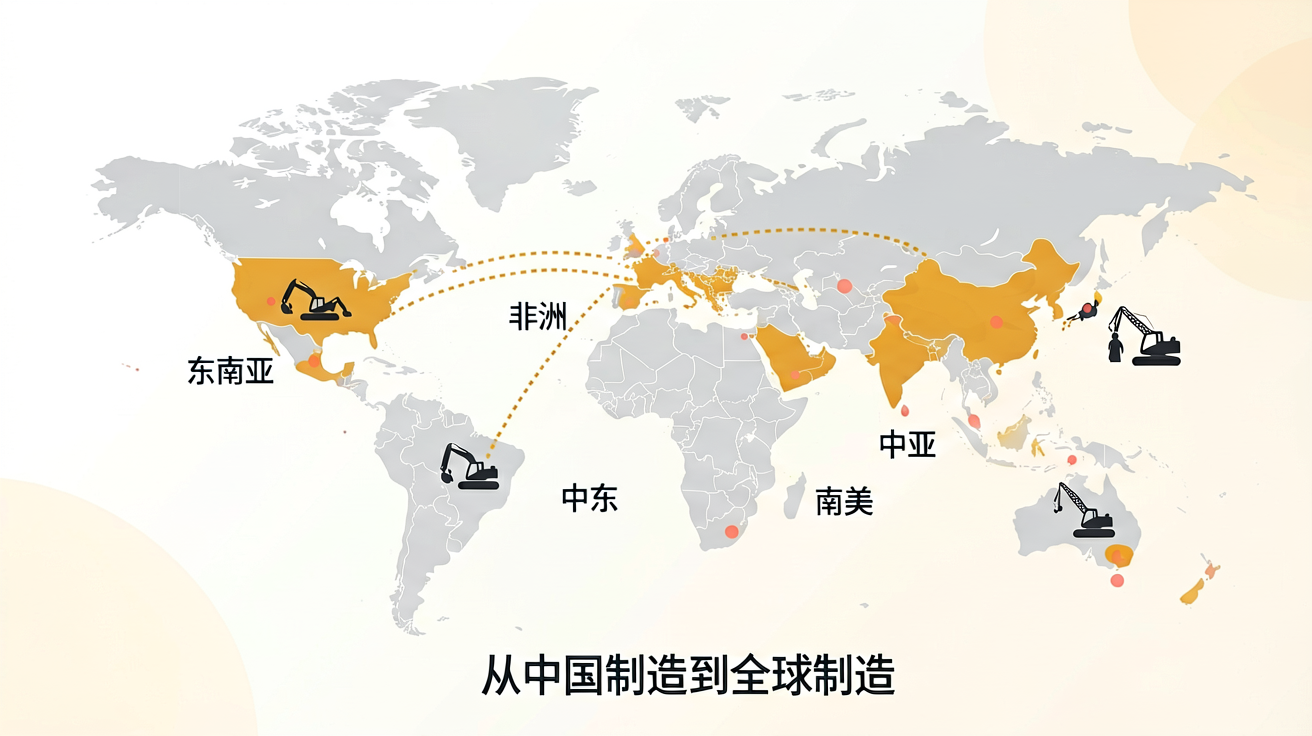
4. Belt and Road 2.0: From Infrastructure to Industry Chains
The Belt and Road Initiative is entering its fourteenth year, and the pathway for construction machinery going overseas is also evolving.
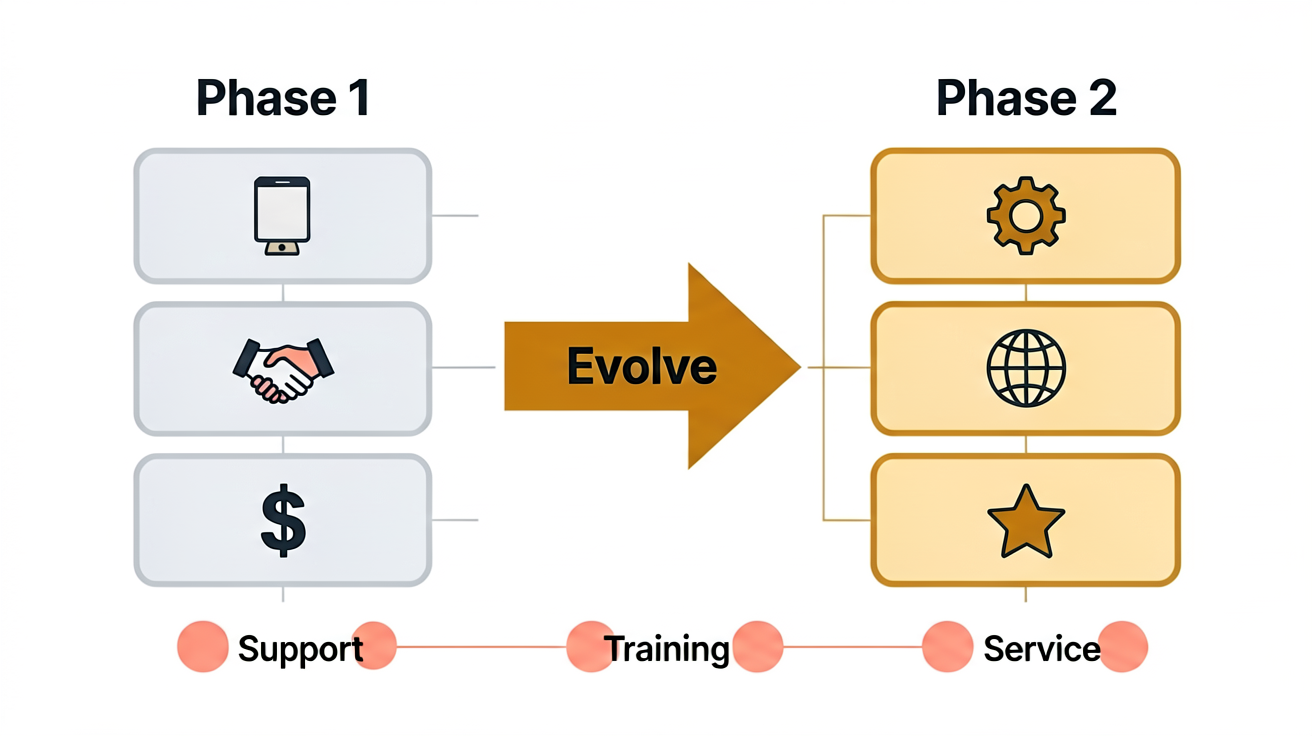
The early model was "projects carry equipment" — Chinese companies took on infrastructure projects overseas and brought along their own construction machinery brands. The current model is more like "industry chain going global": not only selling equipment overseas, but also establishing parts centers, training systems, and after-sales service networks abroad.
This transformation is driven by two forces:
First, upgraded market demand. Overseas customers are no longer focused solely on equipment prices; they care more about total cost of ownership. Whoever can provide timely parts supply and professional maintenance services can win long-term orders.
Second, competitive pressure. Caterpillar and Komatsu have been deeply established overseas for decades, with service networks spanning the globe. For Chinese brands to gain a firm foothold in these mature markets, they must keep pace on service.
From Saudi Arabia to Brazil, from Indonesia to Poland, the number of overseas service locations for Chinese construction machinery companies has doubled over the past two years.
5. Challenges: Exchange Rates and Compliance
The high growth in overseas expansion is not without concerns. Recent Caixin reports indicate that foreign exchange losses are eroding the profits of construction machinery giants. In Q1 2026, several leading companies experienced a situation of "revenue growth without profit growth," with one of the main causes being exchange losses from RMB exchange rate fluctuations.
Additionally, as China's equipment exports continue to rise, the risk of international trade friction is also increasing. Anti-dumping investigations, technical standard barriers, and carbon emission requirements in European and American markets could all become obstacles on the road ahead.
The countermeasure is to accelerate overseas localized production. Establishing factories in target markets can not only mitigate tariff risks, but also shorten delivery cycles, reduce logistics costs, and better comply with local regulatory requirements.
6. Outlook: From "Made in China" to "Made Globally"
Overall, China's construction machinery going overseas has entered Phase 2.0. From simple product exports to industry chain deployment, from price competition to value competition, from passive response to proactive offense.
In the second half of 2026, with the global economic recovery and continued growth in infrastructure investment, the overseas construction machinery market will maintain its expansion trajectory. For Chinese companies, this is both an opportunity and a test — whether they can truly establish brand barriers and service capabilities during the globalization process will determine the competitive landscape for the next decade.
EquipNode continues to monitor construction machinery going-global developments, providing global clients with the latest market insights and equipment procurement services. For specific overseas quotations and configuration plans for particular equipment, please feel free to contact our sales team.
*Data sources: China Construction Machinery Association, Global Times, China Daily, Reuters, ARC Advisory Group*